

Think of your resume as a movie trailer. It is a quick summary of your career highlights. Your career portfolio is the full movie. It shows real proof of what you can do. It provides concrete examples of your skills and accomplishments.
Understanding the Power of a Career Portfolio

A career portfolio is a powerful tool in a competitive job market. It can make a big difference. It changes your application from a list of claims to a real demonstration. For example, instead of saying "I'm a great project manager," you can show the project you managed. You can include the final report and its results.
This collection of your best work helps you stand out. It gives hiring managers solid proof that you have the skills they need. They can see the quality of your work before they even talk to you.
The Purpose of a Portfolio
A good portfolio is more than just a folder of documents. It is a strategic tool for your career. It is a collection of your work that proves your abilities. It also shows how you have grown as a professional. A portfolio offers more depth than a resume.
You can learn more from this definition of career portfolios to understand their full value.
"A professional portfolio is your personal highlight reel. It showcases your projects, achievements and skills in a clear and engaging way."
A portfolio connects saying you have a skill with proving you have it. It helps you tell a strong story about your career. This story is supported by real examples.
Resume vs. Portfolio at a Glance
Your resume, cover letter, and portfolio work together as a team. Each has a specific job. A resume provides a brief overview. The portfolio delivers the detailed proof that persuades a hiring manager to contact you.
This simple comparison shows the difference between the two.
Resume vs. Portfolio at a Glance
| Feature | Resume | Career Portfolio |
|---|---|---|
| Purpose | Summarizes your work history and skills | Showcases your work with tangible examples |
| Content | Bullet points of roles and achievements | Detailed case studies, reports, designs, code |
| Format | Text-based, typically 1-2 pages long | Can be digital (website) or physical (binder) |
The resume helps you get noticed. The portfolio helps you get hired.
Why Portfolios Are Not Just for Creatives Anymore
The idea that portfolios are only for artists or writers is outdated. Professionals in many fields now use them. This includes data science, marketing, and project management. Employers want to see what you can actually deliver. They care less about just the job titles you have held.
A portfolio is perfect for this modern approach to work. It acts as a live record of your professional life. It can show side projects, new certifications, and real results. A simple resume cannot capture this level of detail. A portfolio is your opportunity to show, not just tell.
Proving Your Value in Any Role
Let's look at real examples. A software developer can share code samples from a project on GitHub. A marketing manager can show data from a successful ad campaign. An administrative assistant can display a complex spreadsheet they created to improve office efficiency.
These examples offer solid proof of your skills. While portfolios were once seen as creative, they now benefit professionals in all fields. You can review visual portfolio examples on creative sites to see their impact. The main idea is the same for any job: show your skills with evidence.
Portfolios used to be limited to creative fields. By the early 2020s, they became common in tech, data, and business roles as the job market grew more competitive. The American Statistical Association noted that a candidate with two years of experience and a strong portfolio is often a better hire than a new graduate with only a degree.
Stand Out in a Competitive Market
A portfolio makes you memorable when hiring managers review many similar resumes. It gives them a reason to choose you over someone else with a similar background. It also shows your dedication to learning and adapting.
Here is how a portfolio can benefit different professionals:
- Tech Professionals: Show your GitHub repositories. Link to websites you have built. Write case studies of software projects you worked on.
- Marketers: Include campaign analytics. Share content examples you created. Present reports showing social media growth.
- Project Managers: Showcase project plans and detailed timelines. Include testimonials from team members or stakeholders.
A portfolio is your professional story, told through your best work. It highlights not just what you've done, but how you think, solve problems, and deliver results.
This changes your job application from a simple summary into a powerful presentation of your value. It is an effective way to prove you are a proactive, results-driven professional in any industry.
What Goes Into a Winning Career Portfolio?
Building a career portfolio can seem like a big project. It is really about collecting the right items to tell your professional story. Think of it as your personal gallery. Each piece should show a specific skill or a major success.
Start with a few key items that every portfolio needs. These basics will create a strong foundation. They give visitors a quick idea of who you are and what you offer. Getting these elements right is the first step to making a great impression.
The Foundational Elements
Every strong portfolio starts with the basics. These items give employers a clear and quick look at your professional identity.
- A Professional Bio or Statement: This is your brief introduction. It should explain who you are, what you do best, and your professional goals. Keep it short and engaging.
- Your Polished Resume: Include an updated version of your resume. This allows people to see your work history and skills in a familiar format. A downloadable PDF version is a good idea.
- Clear Contact Information: Make it easy for people to contact you. Provide your professional email address and a link to your LinkedIn profile.
These foundational pieces prepare the way for the most important part: the proof of your work.
Showcasing Your Best Work
This is the main section of your portfolio. The goal is not to include everything you have ever done. You should select your best projects that prove your skills for the job you want. Always choose quality over quantity.
A strong portfolio isn’t just impressive—it’s intentional. Every piece you include should have a purpose and speak directly to the kind of opportunities you want to attract.
When choosing what to include, focus on recent and relevant projects. Your work samples are the evidence that supports the claims on your resume.
For example:
- Developers: Link to your GitHub repositories. Show code snippets you are proud of. Write case studies of applications you helped build.
- Marketers: Display successful campaign results with screenshots and data. Share examples of content you have created. Post reports on social media growth you achieved.
- Project Managers: Feature project plans, timelines, and final reports. These items show your organizational skills and ability to deliver results.
Adding Depth with Supporting Documents
After selecting your best work, you can add other elements. These items build your credibility and provide a more complete picture of you as a professional. Supporting materials can enhance your profile and show your true value.
Consider adding these to your career portfolio:
- Case Studies: Do not just show the final product. Write a short story about it. Explain the project's goal and the problem you solved. Describe your specific role and the final outcome.
- Testimonials and Recommendations: Positive quotes from past clients, managers, or colleagues are very effective. This feedback acts as social proof of your skills and work ethic.
- Skills and Certifications: List your key technical and soft skills clearly. If you have relevant certifications, degrees, or licenses, this is the place to display them to confirm your expertise.
By combining these components, your portfolio becomes more than just a collection of files. It turns into a compelling story that proves what you can do.
How to Build Your Career Portfolio Step by Step
Building a portfolio tells your professional story. It backs up your resume with real proof of your abilities. The process is simple when you break it down into steps. It involves choosing the right format and selecting work that shows your best skills.
Your resume is the foundation. It provides the structure of your experience. To ensure this starting point is strong, use a professional tool. Gainrep’s resume builder can help you create a document that gets attention.
Choose Your Portfolio Format
First, decide between a digital or physical format. Each has its advantages. The best choice depends on your industry and how you will share your work.
- Digital Portfolios: This is usually a website or an online platform. They are easy to share with a link and simple to update. You can include multimedia like videos or interactive charts. A digital format is the best choice for most people because it is so accessible.
- Physical Portfolios: A classic binder can still be impressive. This is especially true in traditional fields or during in-person interviews. The main drawback is that they are difficult to update and share.
For most job seekers, a digital portfolio provides more flexibility and reach.
Collect and Curate Your Best Work
Now it is time to gather your materials. The main rule is quality over quantity. Do not include every project you have ever worked on. Instead, select a few of your best examples that match your career goals. A good number is 10 to 20 strong examples.
Focus on recent projects that show the skills your target employers want. For each piece, think about the story it tells. Does it show your problem-solving ability? Your creativity? Your technical skills? Every item should have a clear purpose.
This visual shows the core components you will need.
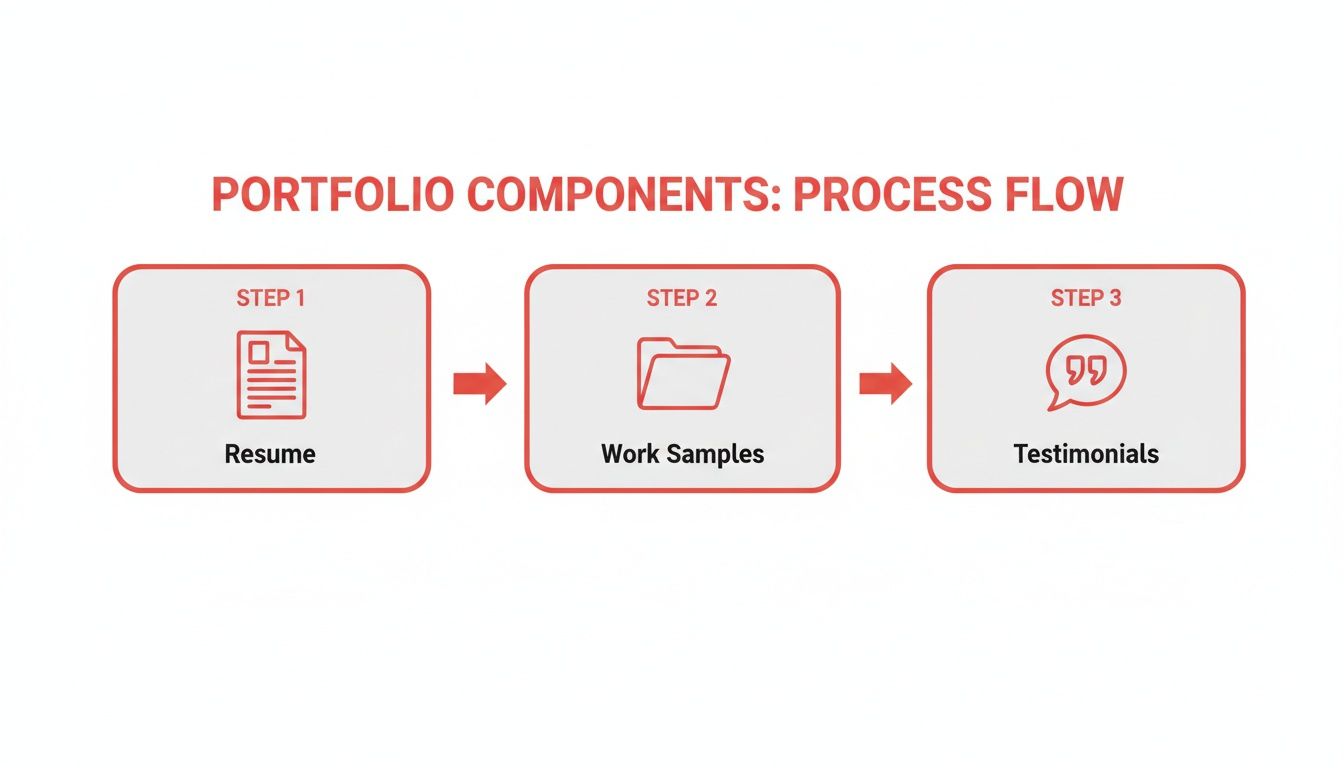
Starting with a polished resume, adding work samples, and including testimonials creates a powerful narrative.
Organize Your Content for Impact
How you organize your portfolio is as important as what you put in it. You need to guide people through your work in a logical way. This structure should highlight your strengths. The key is to arrange everything into clear categories.
A well-organized portfolio tells a story. It guides the viewer from your professional summary to concrete proof of your skills, making it easy for them to see your value.
Here are a few ways to arrange your projects:
- By Skill: Group your work into categories like "Project Management," "Content Creation," or "Data Analysis."
- By Project Type: Organize samples by the type of work, such as "Website Designs," "Marketing Campaigns," or "Technical Reports."
- Chronologically: Present your work from oldest to newest. This can show your growth and development over time.
If you create an online portfolio, WordPress is a popular and flexible option. For help setting one up, look at these tips on using WordPress for your portfolio. It is a great platform for showcasing what you can do.
How to Use Your Portfolio to Win Interviews

Creating a great career portfolio is a significant achievement. It will not help you if no one sees it. You need a smart strategy to get it in front of the right people. Think of it as a tool designed to open doors and prove your value.
The main goal is to get your portfolio to hiring managers as early as possible. This means including it in all parts of your professional presence. It becomes a constant advertisement for your skills.
Make Your Portfolio Easy to Find
Do not make recruiters search for your work. Your digital portfolio link should be easy to see and access. Placing it in key locations ensures it gets noticed. This also makes you look organized and professional.
Here are the most important places to put your portfolio link:
- On Your Resume: Add a clickable link in your contact section. Place it near your email and LinkedIn profile.
- In Your Email Signature: A simple line like "View My Portfolio" turns every email into a potential opportunity.
- On Your LinkedIn Profile: Use the "Featured" section to highlight your portfolio. Visitors will see it right away.
These simple steps make your portfolio a natural part of your job search.
Proactively Share Your Work
You also need to share your portfolio actively to make a strong impression. When you apply for a job, mentioning your portfolio can set you apart. Many other candidates will only send a resume.
Your portfolio is your secret weapon during the job search. While your resume tells them what you’ve done, your portfolio shows them how well you do it.
For example, in a cover letter, you could write, "To provide a clearer view of my work, I have included a link to my online portfolio." This shows you are a confident professional who is proud of your work.
Once your resume and portfolio are ready, you need to get them to employers. A service like Gainrep's AI Auto-Apply can automate your job applications. This ensures your application and portfolio link reach a larger audience. Your portfolio can then do the work for you, increasing your chances of getting interviews.
Use Your Portfolio During the Interview
The interview is where your portfolio has the most impact. It becomes a powerful visual tool. Instead of just talking about a project, you can show it. This makes your achievements more real and memorable.
Bring a tablet or laptop to walk the interviewer through key projects. This allows you to guide the conversation. You can focus on the work that is most relevant to the job. For example, you can say, "You mentioned you need someone with experience in X. Let me show you a project where I did that." This approach provides clear proof of your skills and creates a more engaging discussion.
Frequently Asked Questions About Career Portfolios
You might still have a few questions after reading this guide. That is normal. This section provides simple, direct answers to common questions about career portfolios.
Think of it as a quick reference to clear up any final doubts. It can give you the confidence to get started.
Do I Need a Portfolio for a Non-Creative Role?
Yes. It is a common myth that portfolios are only for artists and designers. Today, they are useful tools for almost any professional. A project manager can show project plans. A data analyst can feature reports that led to business insights. A salesperson can present case studies of major client wins. In a non-creative field, your portfolio provides real proof. It supports the claims on your resume with evidence of your results.
How Is a Career Portfolio Different from a Resume?
The easiest way to think about it is this: a resume summarizes, and a portfolio demonstrates. Your resume is the movie trailer. Your portfolio is the full movie.
- Your resume is a one or two-page summary of your experience, skills, and education. It is designed for a quick scan by a recruiter.
- Your portfolio is where you prove your skills. It is a collection of your best work, like reports, code, or project plans. It supports the claims you made on your resume.
They work together. The resume gets you noticed, and the portfolio helps you get the job by showing what you can do.
How Often Should I Update My Portfolio?
You should update your portfolio at least twice a year. You should also update it after you finish a major project. Keeping it current is important. An old portfolio might suggest you have not been active or your skills are not up-to-date. The best practice is to add new work as soon as a project is finished. This keeps your portfolio current and reflects your latest skills. It shows you are committed to your growth.
What’s More Important a Digital or Physical Portfolio?
For most people, a digital portfolio is far more important. An online portfolio, like a personal website, is very convenient. You can share it with a single link on your resume, in your email, or on LinkedIn. A physical portfolio can still be useful. Bringing a high-quality printout of your best work to an in-person interview can make a strong impression. The best strategy is to have a complete digital portfolio and a small selection of physical samples ready for face-to-face meetings.
Ready to build the foundation of your career portfolio? A powerful, polished resume is the first step. With Gainrep, you can use professional templates to create a resume that stands out and perfectly complements your new portfolio. Start building your professional resume.
