

A professional letter of recommendation is a powerful endorsement. It backs up your skills and character for a potential employer. The letter gives a personal look into your work ethic. It adds detail that a resume cannot.
Why Your Recommendation Letter Still Matters
Your resume lists what you have done. A great letter of recommendation tells the story behind your work. It gives hiring managers a trusted, outside view of your abilities. This personal validation can push your application to the top.
A resume is your self-reported history. A recommendation letter adds a layer of credibility. It is one thing to say you are a great team player. It is another thing when a former boss gives a specific example of how you saved a project.
Going Beyond the Resume
Hiring managers review hundreds of resumes. Many of them look the same. A compelling letter of recommendation makes your application stand out.
- It Shows Your Character: The letter can highlight soft skills. These include resilience, integrity, and how you work with others. These are hard to list on a resume but crucial for any job.
- It Gives Context: A good recommender can explain the how and why behind your achievements. They might describe a tight deadline you met or a difficult team dynamic you managed.
- It Builds Trust: An endorsement from a respected professional is a strong vote of confidence. It tells the hiring manager that someone is willing to put their reputation on the line for you.
This is not just a formality. Many hiring committees use these letters to narrow down the applicant pool. Some studies show that 70-80% of applicants get cut before the interview. The quality of their recommendations plays a big part. You can read the research about these findings to see their impact.
Making the Cut Before the Interview
A hiring manager forms an opinion of you based on your application. A strong recommendation letter ensures that the first impression is a great one. Think of it as a pre-interview reference. It answers questions they might have about your performance before they even ask.
A resume shows what you've done. A letter of recommendation shows how you did it. It builds a story around your professional strengths, turning bullet points into real proof of your value.
The right endorsement can make all the difference. It can address any potential concerns on your resume. It can also highlight skills that perfectly match the job description. This gives you a huge advantage. Your letter acts as your advocate in the room before you get a chance to speak for yourself.
Building a Strong Professional Reputation
Getting positive feedback and endorsements is key to long-term career growth. A formal letter is usually for one specific application. Building a portfolio of endorsements creates a lasting record of your professional credibility.
That is where platforms like GainRep can help. They let you collect and show off valuable testimonials from colleagues and supervisors over time.
This collection of endorsements complements traditional letters. It creates a living professional reputation. It proves you have a consistent track record of doing great work. This makes you a much stronger candidate for any opportunity. It is about building a career backed by the proven trust of your network.
Choosing the Right Person for Your Recommendation
Who you ask for a professional letter of recommendation is very important. A letter from a big-shot who barely remembers you is not powerful. A detailed, enthusiastic letter from a direct manager who saw you shine is much better.
The goal is to find a genuine advocate. You need someone who can share specific, compelling stories about your work. Choosing the wrong person often leads to a generic letter. A weak letter can sink your application.
Focus on people who have worked closely with you. They are the ones who can bring your resume to life for a hiring manager.
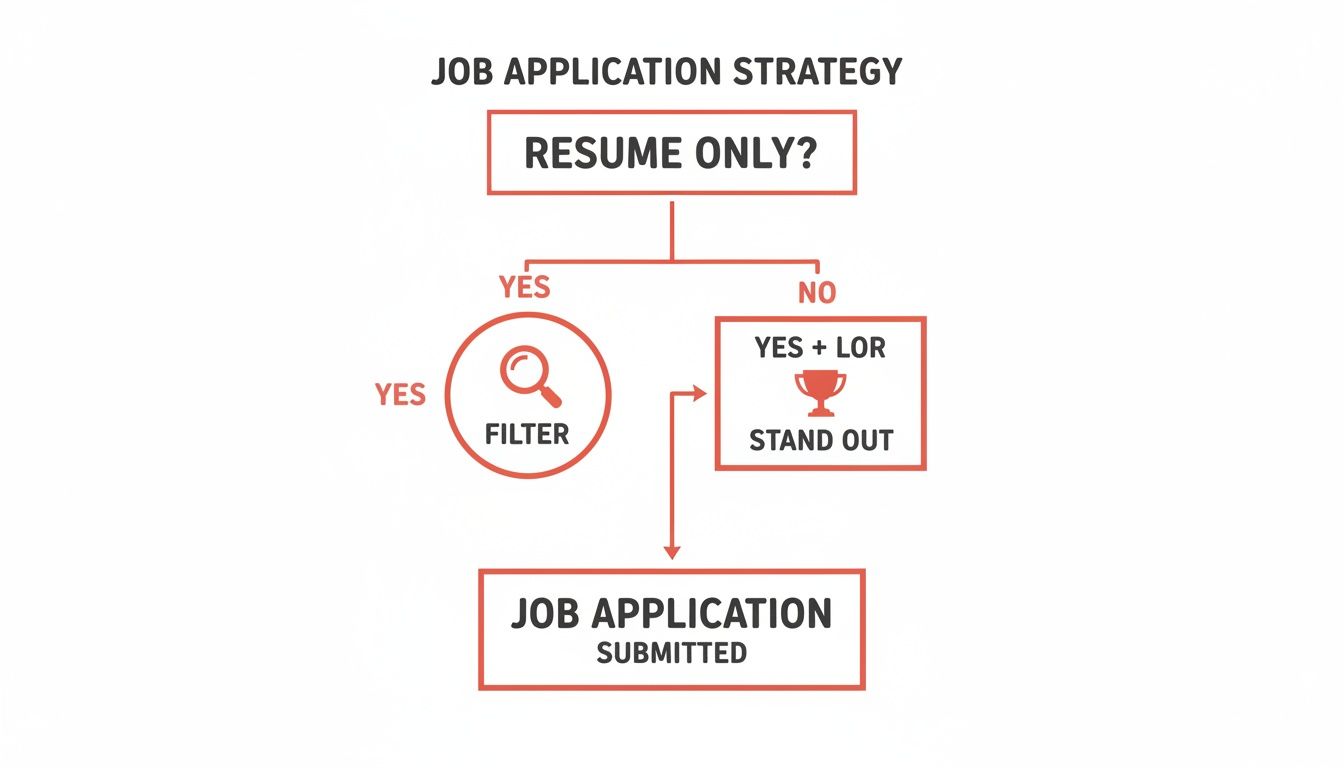
As you can see, a resume alone often gets you put into a large pile. A strong recommendation is what pulls you out of that pile and gets you noticed.
Identify Your Best Advocates
Your strongest recommenders are people who have managed you or collaborated with you. Do not worry about their job title. What matters is their direct experience with your work.
Start by listing potential people:
- Direct Supervisors (Current or Former): This is the best choice. They can speak with authority about your performance, work ethic, and contributions.
- Senior Colleagues or Team Leads: A senior team member who oversaw your project can give a great perspective on your teamwork and skills.
- Professors or Academic Advisors: If you are a recent graduate, a professor who knows your work can be a powerful voice. They can speak to your dedication and potential.
- Clients or Key Stakeholders: For client-facing roles, a glowing letter from a happy client is very persuasive. It is real-world proof of your value.
Think back to who saw you at your best. Who was there when you launched a feature ahead of schedule? Those are the people you want in your corner.
Evaluate Recommenders Based on Specificity
You have your list. Now, filter it by one critical factor: specificity. A great recommender can do more than call you a "hard worker." They can tell a story that proves it.
Ask yourself these questions about each person on your list:
- Did they watch you tackle a major challenge?
- Can they describe a specific time you showed leadership?
- Can they back up your achievements with numbers or other data?
- Do they communicate clearly and write in a positive way?
The best letters are packed with concrete examples. A hiring manager will forget a phrase like "great problem-solver." They will remember the story about how you increased efficiency by 15%.
You want a champion who will share these kinds of details. The quality and depth of their insight matter, not just their name.
Handling Different Scenarios
Asking for a recommendation requires tact. This is especially true in tricky situations. If you are job hunting while employed, asking your current boss is not an option.
In that case, reach out to a trusted former manager. Another good option is a senior colleague at your current job who can be discreet. Be upfront about the situation. Most people understand the need for privacy.
By choosing your recommenders carefully, you build a powerful case for yourself. This is a crucial step in building a strong professional reputation. You can continue to grow it by collecting ongoing endorsements on platforms like GainRep.
How to Professionally Ask for a Recommendation
The quality of your recommendation letter often depends on how you ask. A thoughtful, professional request shows respect for your recommender's time. It also sets them up to write a powerful letter. If you make the process easy for them, you will get a fantastic result.
A rushed or vague request almost guarantees a generic response. You want to give them everything they need to become your biggest advocate on paper.

Timing Your Request Perfectly
The single biggest mistake is asking at the last minute. Your recommender is a busy professional. A high-quality letter takes time and thought to write.
Give them at least three to four weeks' notice before your deadline. This is polite and smart. A generous timeframe lets them fit the task into their schedule. It shows you are organized and respectful. If the deadline is tighter, be upfront about it.
Create a Helpful Recommendation Packet
To get a specific, detailed letter, you must provide detailed information. Do not leave your recommender guessing what to write. Assemble a simple "recommendation packet" with all the key details.
This packet is your secret weapon. It makes their job easy. It also guides them to focus on the skills and stories that will impress a hiring manager.
Here is what your packet should include:
- Your updated resume: This gives them a full view of your professional history.
- The job description: Include the description for every role you apply for. This helps them tailor the letter to the employer's needs.
- A list of key accomplishments: Remind them of specific projects you worked on together. Use bullet points to highlight 3-4 achievements. Briefly explain your role and the positive outcome.
- Clear submission instructions: Tell them exactly how and where to send the letter. Include the final deadline.
With this packet, they will not have to search for old details. You are handing them all the materials for an outstanding letter.
Your Recommendation Request Checklist
Use this checklist to gather all the essential information your recommender needs.
| Item | Why It's Important | Included? |
|---|---|---|
| Updated Resume/CV | Provides a complete overview of your background and experience. | ☐ |
| Job Description(s) | Helps them align their letter with the employer's specific needs. | ☐ |
| Personalized Note | Reminds them of your connection and the specific projects you'd like highlighted. | ☐ |
| Clear Deadline | Ensures the letter is submitted on time without any last-minute stress. | ☐ |
| Submission Details | Tells them exactly how to submit (email, portal link, etc.). No guesswork. | ☐ |
| A "Graceful Out" | Gives them a comfortable way to decline if they're too busy. | ☐ |
Once you have checked all these boxes, you are ready to make your request.
Writing a Clear and Professional Email Request
Your request should be well-crafted. Your approach should always follow professional business communication best practices. This helps make the best possible impression.
Here is a simple template you can adapt.
Subject: Recommendation Request – [Your Name]
Hi [Recommender's Name],
I hope you're doing well. I am applying for a [Job Title] position at [Company Name]. I was hoping you might be willing to write a strong letter of recommendation for me.
Your mentorship as my [Your Former Role] was very valuable. I believe your perspective on my work on the [Specific Project] would be a huge asset. The role emphasizes [Skill 1] and [Skill 2]. I learned so much from you in those areas.
I have attached my resume, the job description, and a quick summary of key accomplishments. The deadline for the letter is [Date].
Please let me know if you would be comfortable writing a supportive letter for me. I understand if your schedule does not allow for it right now. Thank you for considering it.
Best,
[Your Name]
This message is direct, gives context, and offers an easy way out.
Following Up and Showing Gratitude
If you have not heard back within a week, send a polite follow-up. A simple, friendly check-in is all you need.
Once the letter is submitted, always send a thank-you note. An email works well. A handwritten card can leave a lasting impression. Let them know you appreciate their time and support.
Finally, keep them updated. Tell them when you get an interview or land the job. They invested time in your success. Sharing the good news is a great way to strengthen a professional relationship.
Key Elements of a Powerful Recommendation Letter
What makes a recommendation letter powerful? A great letter is more than just a few nice words. It is a structured story that brings your resume to life with real proof.
An effective letter does not just say you are great—it shows it. It is packed with specific examples, clear context, and an enthusiastic tone. Understanding these key ingredients helps you guide your recommender.

The Opening Hook
The first paragraph must establish credibility quickly. It should answer two questions: who is writing this, and how do they know you? This context is very important to a hiring manager.
A strong opening sets the stage.
- A Clear Relationship: It needs to state the recommender's role. For example, "As Sarah's direct supervisor at Acme Corp for three years…"
- Length of Acquaintance: Mentioning how long you worked together adds weight to their words.
- A Direct Endorsement: A clear statement of support makes an immediate impact. Something like, "I am delighted to recommend John for the Senior Analyst position," gets straight to the point.
Body Paragraphs Packed with Proof
This is where the real magic happens. The body of the letter needs to be filled with specific examples of your skills. Vague compliments like "she is a hard worker" are forgettable.
The letter should tell stories. Instead of just saying you have good leadership skills, the recommender could describe a time you led a project. For instance, you delivered it 10% ahead of schedule.
The most persuasive letters are built on the "show, don't tell" principle. Anecdotes and metrics are far more convincing than simple adjectives. They paint a picture of your abilities in action.
Encourage your recommender to include details that highlight your impact. Quantifiable results are pure gold. They provide concrete evidence of the value you bring. Think in terms of numbers, percentages, and specific outcomes.
Highlighting Both Hard and Soft Skills
A well-rounded letter talks about more than just technical abilities. It should also speak to your character and how you work with people. Hiring managers want someone who is a good fit for the team.
A powerful letter balances these two sides:
- Hard Skills: These are your technical qualifications. The letter might mention your skill with a certain software, backed by a project example.
- Soft Skills: This covers things like communication, problem-solving, and teamwork. An example could be how you resolved a conflict or presented complex data clearly.
The specific language used here can have a subtle effect. A 2024 study by the Federal Reserve Bank of New York found that letters for male candidates often contained stronger language than those for female candidates. This directly impacted hiring outcomes. You can learn more about these research findings.
A Strong and Memorable Conclusion
The ending should summarize the key points. It should finish with one last, confident endorsement. This is the final chance to leave a strong impression. The recommender should restate their support. They should also explain why they believe you are an excellent fit for the role.
A powerful closing also includes a call to action. The recommender can offer to provide more information. This shows they stand by their words. This small gesture reinforces the authenticity of their recommendation.
Using tools like document automation software can make this process easier. This can help standardize the format while allowing for personalized content. A great letter builds an undeniable case for why you are the right person for the job.
Navigating Recommendations Across Different Cultures
Applying for a job in another country can be different. The rules for a good letter of recommendation can change completely. A letter that sounds powerful in one culture might seem strange in another. Getting this right is critical.
What works in North America may not translate well elsewhere. American-style letters are usually bold and full of praise. In cultures that value modesty, like Japan or Germany, that approach can backfire. A recommender from those countries might write a more reserved, fact-based letter. A hiring manager might mistake this for a weak endorsement.
High-Context vs. Low-Context Cultures
These differences are rooted in communication styles. This is especially true when comparing high-context and low-context cultures.
- Low-Context Cultures (e.g., U.S., Germany, Australia): Communication here is direct. A great recommendation is expected to be detailed and use strong, positive language. It should list your strengths with specific examples.
- High-Context Cultures (e.g., Japan, China, Middle Eastern countries): Communication here is more indirect. Relationships and shared understanding matter. A letter from these cultures might focus on your character, loyalty, and teamwork, using reserved language.
This cultural gap has real-world consequences. In the U.S., over 90% of college applications expect "glowing" letters. In high-context countries, recommenders often stick to factual statements. This difference leads to a 40-50% lower perceived strength by Western admissions committees. You can discover more insights about these global LOR differences.
Bridging the Cultural Gap
How do you manage this when your recommender is from a different culture? The key is to provide gentle guidance.
Start by explaining the cultural expectations for the role. If you are applying for a job in the United States, you can politely mention that American hiring managers look for letters with specific anecdotes and enthusiastic language.
A great way to do this is by giving your recommender a "recommendation packet." This should include the job description, your resume, and a list of key accomplishments. This gives them material to work with. It makes it easier to provide the specific details the hiring manager wants.
The goal is to equip your recommender with the right context. You are not asking them to change their style. You are helping them understand the audience. This simple step can prevent misunderstandings and ensure your strengths are communicated clearly.
Modern platforms are also starting to solve this problem. Using a standardized system for endorsements helps build a global professional reputation. A platform like GainRep helps validate your skills and experience in a way that bypasses these cultural issues. This makes your professional credibility universally clear.
Common Questions About Recommendation Letters
Getting a professional letter of recommendation can feel confusing. It is normal to have questions about timing, etiquette, and how it all works.
Let's clear up some of the most common questions.
How Far in Advance Should I Ask for a Letter?
The golden rule is to give people plenty of notice. Asking at least three weeks before the deadline is ideal. This shows you respect their time. It gives them enough room to write a thoughtful letter instead of a rushed one.
If you have a tight deadline, you can still ask. Be upfront about the short turnaround. Give them all your materials immediately. Be extra appreciative. Acknowledging the pressure can go a long way.
Can I Ask My Recommender to Edit Their Letter?
This is a tricky situation. You should not ask to see the letter before it is sent. These letters are meant to be confidential. Asking to review or edit one puts your recommender in an awkward position. It also reduces the trust a hiring manager has in their assessment.
What you can do is guide the content from the start. Put together a helpful packet for them that includes:
- Your updated resume
- The exact job description
- A list of key wins and skills for them to mention
If you think there is a factual mistake, you can bring it up gently. For instance, "I just wanted to make sure my notes were clear—the project was 'Project Phoenix,' and we hit a 15% efficiency increase." The key is to inform, not to dictate.
Is It Okay to Use the Same Letter for Multiple Jobs?
You can, but a tailored letter is always more powerful. A generic letter does not speak to the specific job description. It can feel flat to a hiring manager. It might look like you are sending applications without much thought.
A better approach is to ask your recommender if they would be open to making small tweaks for different roles. If you are applying for similar positions, this is usually a quick edit for them. You could say, "I'm applying for a couple of similar project manager roles. Would you be open to tweaking the letter to highlight different skills for each one?" This shows you are being strategic.
What Should I Do If Someone Declines My Request?
First, do not take it personally. If someone says no, it is often a favor. They might decline for good reasons. They could be busy, feel they do not know you well enough, or have a company policy against it.
An unenthusiastic or weak letter can do more harm than no letter at all. When someone turns you down, thank them for their time. Then move on to the next person on your list. Your goal is to find a passionate advocate, not just someone willing to fill a page.
Managing your professional reputation is a key part of building a successful career. At Gainrep, we make it simple to collect and showcase endorsements that create a powerful, credible profile. Start building your professional reputation today by exploring how to get valuable recommendations on GainRep.
