

A strong letter of recommendation tells a story about your value. It shows your work ethic and character. When many people apply for the same spot, a good letter can make you stand out.
Think of it as proof that backs up your resume. A respected person is saying you are great for the role.
Why Great Letter of Recommendations Matter
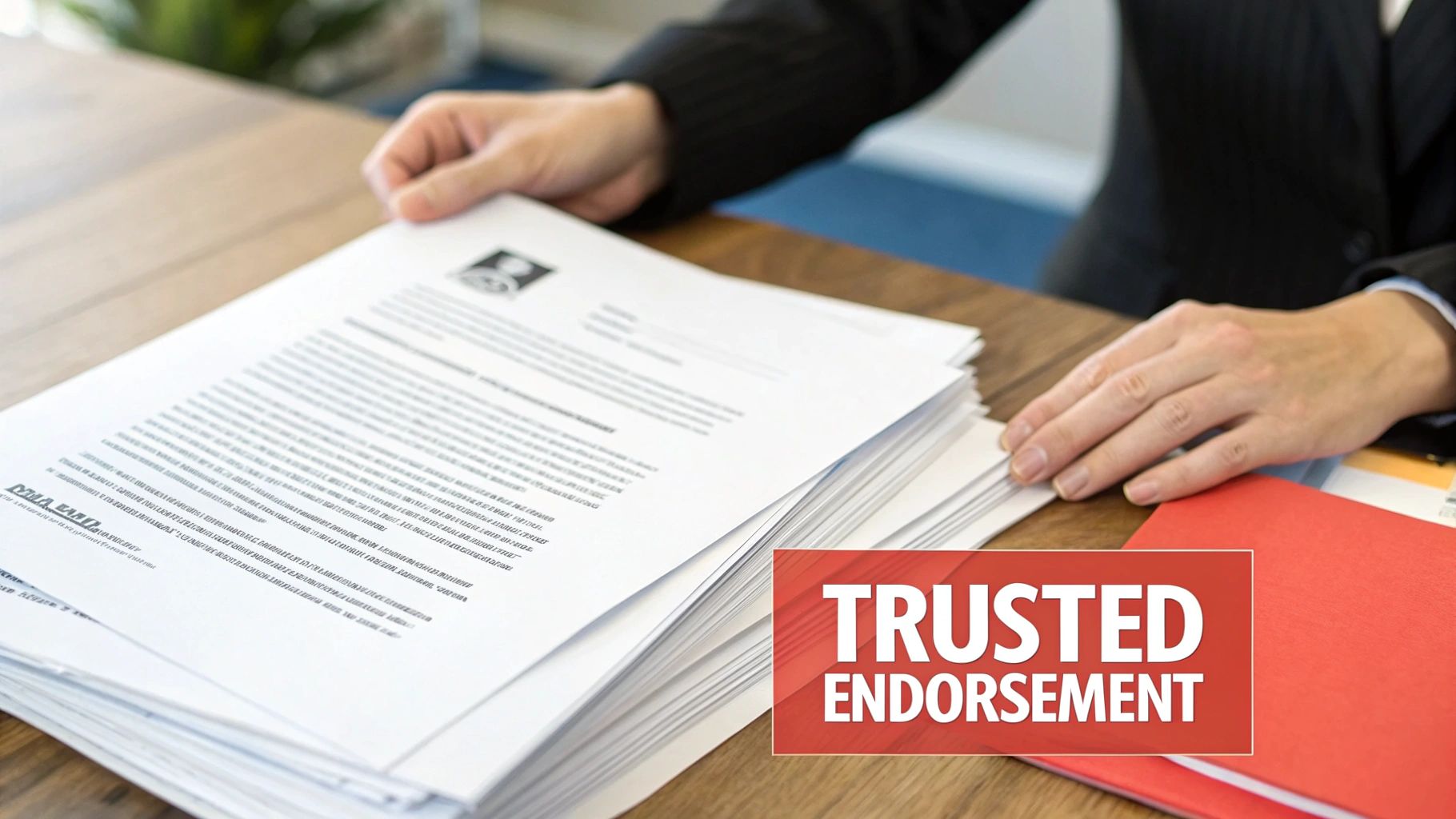
Your resume lists facts about you. A letter of recommendation adds a human touch. It gives another person's view of your skills. Hiring managers use these letters to understand who you are.
A generic letter is a missed chance. It just repeats your resume. A persuasive letter uses real stories. It shows your skills in action. This helps decision-makers choose you over other candidates.
The Power of Third-Party Validation
When someone else praises you, it means more. This is called social proof. A strong recommendation is a credible endorsement of your skills. It shows what you can bring to a company or school.
Here is why this is so important:
- Adds Credibility: It confirms your skills are real. Others have seen and valued them.
- Provides Deeper Insight: A letter can highlight soft skills. These include teamwork, problem-solving, and resilience. A resume cannot easily show these things.
- Differentiates You from a Stack of Resumes: A good story from a recommender makes you memorable. It sets you apart from others with similar qualifications.
A Deciding Factor in Competitive Fields
A strong endorsement has a real impact. Letters of recommendation can shape careers in competitive fields. A full study on economics Ph.D. job markets found this. Candidates with "top" recommendations were more likely to get jobs at top schools.
The study looked at over 6,400 letters. It showed that good endorsements can overcome bias and open doors. A letter is not just a formality. It is a tool that can unlock big opportunities.
A great recommendation doesn't just say you're good; it shows how you are good. It provides the story behind the skills, giving decision-makers a reason to choose you over someone else with a similar background.
Building a collection of endorsements is part of managing your professional reputation. Platforms like GainRep help you gather and show these testimonials. Once you know how important these letters are, you can plan how to get them.
Choosing the Right Person to Ask

Picking the right person is a strategic move. It is not just about their job title. It is tempting to ask someone with an impressive title. This is often a mistake. You should focus on who can give the most detailed and genuine endorsement.
The best choice is someone who has worked closely with you. They have seen your skills in action. They can share specific stories about your successes. This firsthand knowledge makes a letter of recommendations powerful and believable.
Imagine you must choose between two people. One is a famous professor who barely knows you. The other is a teaching assistant who guided your final project. The TA's letter will be better. It will have real examples of your work ethic. A generic note from the professor will be less impactful.
Matching Recommenders to Your Goals
Who you ask depends on your goals. The right person for a first job is different from the right person for grad school.
Here is a guide to help you choose the right person.
Who Should You Ask for a Recommendation?
A breakdown of ideal recommenders for different career and academic situations, helping you choose the most impactful person.
| Your Situation | Primary Choice | Secondary Choice | Who to Avoid |
|---|---|---|---|
| First Job | Internship supervisor or manager from a part-time job. | A professor from a relevant, upper-level class. | A family friend or a professor from a huge intro lecture. |
| Career Change | A former manager who can speak to your transferable skills. | A colleague from a cross-functional project who saw your adaptability. | Your current boss (unless they know and support your job search). |
| Academic Program | A professor in your intended field of study who knows you well. | A research advisor or professional mentor in that field. | Anyone who can't speak directly to your academic potential or passion. |
| Promotion/Internal Move | Your direct manager. | A senior colleague or team lead from a recent, successful project. | A peer you competed with or a manager from a different department. |
The goal is to build a collection of testimonials. These should tell a complete story about you. You can use a platform like GainRep to gather your endorsements in one place. This creates a powerful portfolio that gives you an advantage.
Depth Over Prestige
Admissions committees and hiring managers value depth over prestige. A detailed letter from your direct supervisor is better than a vague one from a CEO.
The writer should be able to explain the "why" behind your success. Why did your project succeed? Because you were a great leader. Why did you ace a tough class? Because you showed real curiosity. These stories make a real difference.
This is very important for academic applications. A study of over 40,000 applicants found that strong letters helped borderline candidates get admitted. This shows a letter's power goes beyond grades and test scores. You can read more about how recommendations impact admissions decisions in the full study.
The best recommender is not the one with the highest rank, but the one who can tell the best story about you. Focus on people who have seen your growth, your struggles, and your successes up close.
Who to Avoid Asking
Knowing who not to ask is also important. Do not ask family or friends. Their recommendations will seem biased.
Also, avoid asking someone you have not spoken to in years. Do not ask a manager from a project that did not go well. The quality of your letter of recommendations depends on the writer's ability to give a positive and detailed account. Choose wisely.
Making the Request Politely and Effectively

How you ask for a letter of recommendations matters. A good approach can lead to a powerful endorsement. A bad one might get you a generic letter.
Be professional, respectful, and organized. You want to make it easy for your recommender to say "yes." Start by giving them plenty of notice. A last-minute request causes stress and often results in a weak letter.
Timing Your Request Perfectly
The rule is to ask at least three to four weeks before your deadline. This shows you respect their busy schedule. It gives them time to think about your achievements and write a good letter.
If you have many deadlines, give them a clear list. Asking early shows you are a professional who plans ahead. The recommender might even mention this quality in the letter.
Crafting the Perfect Email Request
A polite, personalized email is the best way to ask. Do not send a generic message. Your email should be specific to the person. Remind them of your connection and why you valued working with them.
Your first email should do three things:
- Make the request clearly and politely.
- Briefly explain what you are applying for.
- Offer to provide all the information they need.
Knowing how to ask for a recommendation on LinkedIn can also help. The rules are a bit different, but respect and clarity are still key.
A great request doesn't just ask for a favor; it shows you've done the prep work. It signals that you're organized, respectful of their time, and serious about your application.
The Power of the "Brag Packet"
After your recommender agrees, send them a "brag packet." This is a set of documents that saves them time. It helps them write a specific and effective letter. It takes the guesswork out of the process.
Your packet should always include these items:
- Your updated resume or CV: This gives them a quick overview of your history.
- The job or program description: This lets them tailor the letter to the specific role.
- A short summary of your goals: Briefly explain why you are applying for this opportunity.
- A list of key points: Make a bulleted list of projects or skills you want them to highlight. Remind them of times you excelled under their guidance.
This packet helps them write a detailed letter with concrete examples. This is what hiring managers want to see.
Navigating Global Differences in Recommendations
Expectations for a letter of recommendations can be different in other cultures. In the United States, letters are usually glowing and full of praise.
In many other countries, recommendations are more reserved and factual. This cultural difference can matter. Understanding these nuances is key if you are getting endorsements in an international context.
What to Do If They Decline
Sometimes, a person might say no. They could be too busy. They might feel they do not know you well enough. Do not take it personally.
It is better for someone to decline than to write a weak letter. Thank them for their time and move on to the next person on your list. Handling a "no" with grace keeps your professional relationship intact.
The Anatomy of a Powerful Recommendation Letter

When you ask for a letter of recommendations, you want a compelling story about you. You cannot write the letter for them. But you can give them the right information to help.
The best letters have a clear structure. They have a strong beginning, a detailed middle, and a confident end. Each part works to persuade the reader that you are the right person.
The Opening Hook
A great letter grabs the reader from the first sentence. The opening should state the recommender's relationship to you. It should also say how long they have known you. This context gives the letter credibility.
The opening also needs to show real enthusiasm. An opener like, "She is one of the most promising students I have taught," is very effective. It sets a positive tone. It shows the recommender is fully behind you.
The Body Proving Your Value
This is the most important part of the letter. The middle section is all about proof. It is not enough to list your good qualities. A great recommender shows them in action with specific examples. This is the core of any letter of recommendations.
Instead of saying you are a "great leader," a strong letter will describe a time you led a team. It will highlight what you did and how it turned out. These stories make a letter memorable. They provide real proof of your skills.
The most impactful letters go beyond listing accomplishments and paint a vivid picture of who the applicant is. They offer unique insight into academic abilities, work ethic, and character through storytelling.
A skilled recommender will also connect your past performance to your future potential. For example, they might write, "Her ability to manage deadlines on the XYZ project proves she can thrive in your fast-paced environment." This links your past wins to the employer's needs.
Adding Context with Comparison
A very effective technique is to compare you to your peers. This gives the reader a benchmark. It helps them understand how good you are.
You might see phrases like:
- "He is in the top 5% of students I have ever taught."
- "Her analytical skills are sharper than any other intern I have managed."
- "She consistently delivered work of a higher quality than her peers."
This type of comparison is more powerful than just saying someone is "smart." It offers a clear assessment that decision-makers value.
The Concluding Endorsement
The letter should end with a strong, confident summary. The conclusion repeats the recommender's support. It makes a final pitch for why you are a great fit. There should be no doubt about their endorsement.
A powerful closing might be, "I have no doubt that she will be a tremendous asset to your team, and I recommend her without reservation." That final sentence should be decisive and enthusiastic.
Understanding these parts helps you create a better "brag packet." Suggest specific projects for them to highlight. This makes it easier for them to write a detailed letter. A well-structured resume also tells a clear story, a process simplified by tools like the GainRep resume builder.
How to Use Your Letter of Recommendations
You have secured some powerful letters of recommendation. Now what?
Do not think of these as one-time documents for a single application. They are more valuable than that. Treat them as a portfolio of your professional reputation. Be ready to use them strategically in your job search.
This proactive mindset is a game-changer. Instead of scrambling for a letter each time, you will have a collection of testimonials ready. This lets you move fast when the perfect opportunity appears.
Build Your Endorsement Portfolio
First, get all your testimonials in one place. When you collect endorsements on a platform like GainRep, you are building a shareable hub. This hub proves your professional credibility. An organized approach means you always have proof of your skills ready.
Think of this portfolio as a living document. You can add new endorsements as you finish projects or change roles. This keeps your professional story fresh and relevant.
Weave Recommendations into Your Applications
Your letters of recommendation can do more than just sit in a file. You can use key points from them in your application materials. This adds an extra layer of credibility.
Here is how you can do it:
- In Your Cover Letter: Refer to a specific point a recommender made. You could write, "My former manager, Jane Doe, often noted my ability to streamline complex workflows, a skill I know would benefit your team."
- On Your Resume: This is less common. But for some roles, a powerful quote in a "Testimonials" section can make an impact.
This technique reinforces your claims with third-party validation. The hiring manager sees it before they even read the full letter. It is a subtle but powerful move.
Highlight Endorsements During Interviews
The interview is your chance to bring your resume to life. Your recommendations are the perfect tool for this. Use them to answer behavioral questions with confidence.
When an interviewer asks about a skill, frame your answer with a reference to your letter.
Interviewer: "Can you tell me about a time you demonstrated strong problem-solving skills?"
You: "Certainly. In my last role, I had to resolve a recurring software bug. I developed a new process that solved the issue. My manager even noted in their recommendation my knack for 'finding creative solutions to complex technical challenges.'"
This approach answers the question and backs up your story with a credible source. It makes your claims much more believable.
Showcase Recommendations on Your Professional Profiles
Your online presence is a big part of your job search. Your letters of recommendation can boost your digital footprint.
Consider adding excerpts or full endorsements to places like:
- Your LinkedIn Profile: Use the "Recommendations" section to feature testimonials from managers and clients. Recruiters actively review these.
- Your Personal Website or Portfolio: A "Testimonials" page is a great way to show positive feedback, especially for freelancers.
- Your Freelance Profiles (e.g., Upwork): Positive reviews act like letters of recommendation here. They build trust with potential clients.
After getting these letters, put them to good use. You can explore job opportunities on various platforms. A strong profile with solid endorsements can help you stand out. Showing these testimonials on multiple channels makes your profile more attractive to recruiters.
Common Questions About Recommendation Letters
Getting a letter of recommendation can seem complicated. When should you ask? What if they ask you to write it? Getting these details right makes the process smoother. It also helps you get a stronger endorsement.
Let's clear up some common questions. This is your guide to the etiquette of asking for a recommendation.
How Far in Advance Should I Ask for a Letter?
This is very important. The rule is to ask at least three to four weeks before your first deadline. Do not wait until the last minute.
Giving your recommender plenty of notice shows respect for their time. It gives them space to write something thoughtful and detailed. If you have multiple deadlines, give them a simple, organized list. Asking early improves the quality of your letter and shows you are organized.
Is It Okay to Write the Draft Myself If Asked?
Yes, and do not worry if this happens. It is a common request from busy professionals. If your recommender asks you for a draft, see it as an opportunity. You get to highlight the achievements most relevant to the role.
Your job is to write an honest, professional letter from their point of view. Focus on concrete examples and specific accomplishments. They will take your draft, edit it, and add their personal touch. You are just giving them a time-saving head start.
How Should I Follow Up After Someone Agrees?
Once they say yes, your job is not quite done. A little follow-up shows your appreciation. It also keeps things moving smoothly.
Here is a simple plan:
- Say Thanks Immediately: As soon as they agree, send a thank-you email. This is also the time to attach your "brag packet."
- Send a Gentle Nudge: About a week or two before the deadline, send a polite reminder. A simple, "Just checking in to see if you need anything else from me" works well.
- Show Final Gratitude: After the letter is submitted, send one last thank-you note. Expressing your sincere appreciation goes a long way.
Here's a pro tip: Keep them in the loop on the outcome. Whether you land the opportunity or not, letting them know how things turned out shows you value their role in your journey.
Can I Reuse a Letter for Different Applications?
It is tempting, but it is usually not a good idea. The most powerful letter of recommendations are tailored to a specific opportunity. A letter about your creative marketing skills will not work for a data analyst job.
Instead, ask your recommender if they can make small changes for each application. This ensures the letter lines up with what each opportunity requires. If you are collecting general endorsements, make sure they are broad enough to cover similar roles. For example, a letter about your software engineering skills could work for several developer jobs. But it would not work for a project manager role. The more specific the letter, the bigger the impact.
Managing your professional reputation is a key part of building a successful career. At GainRep, we make it easy to request, collect, and showcase powerful endorsements in one place, so you're always ready for your next opportunity. Build your professional reputation with GainRep today.
