Walking into an interview can feel like a test. You have the skills. The challenge is proving it under pressure. Good candidates are often separated from hired ones by preparation. This is not about memorizing answers. It is about having a plan to show your value. Think of it as a playbook for the hiring process. This job interview cheat sheet is designed to give you that playbook.
This guide gives you practical advice. It provides 10 actionable strategies. Each one gives you an advantage. We will break down how to research a company. You will learn to ask smart questions. We will cover the STAR method to structure your stories. You will also learn how to answer tricky questions about weaknesses or salary. You will learn to build a strong personal brand story and use body language to show confidence.
Each section includes examples and clear steps. You can use them right away. This is your guide to connect with the interviewer. It helps you show why you are the best person for the role. With good preparation, you can turn interview stress into a great performance. Let’s look at the strategies that will help you get your next job offer.
1. Research the Company Thoroughly
Good company research is the foundation of a successful interview. It makes your preparation specific, not generic. It shows you want this job, not just any job. This step on your job interview cheat sheet means you must study the company. Look at its mission, products, news, and culture. This helps you tailor answers and ask smart questions.
When you understand the company's challenges, you can frame your skills as solutions. This proactive approach shows the interviewer you think like a team member.
Why It's a Game-Changer
Good research lets you connect your experience to the company's goals. Instead of just listing skills, you show how they can help the company. This changes you from a qualified candidate to a valuable asset.
For example, the company may have launched a new product. You can discuss your experience in helping users adopt similar products. Their latest news may focus on sustainability. You can mention a project where you reduced waste. You cannot make these connections without research.
Actionable Research Checklist
Use this checklist to guide your research before an interview:
- Company Website: Study the "About Us," "Mission," and "Values" pages. Understand their products or services.
- Recent News: Search for the company's name online. Look for recent news or interviews with leaders.
- Social & Professional Media: Follow the company on LinkedIn. Review posts to understand their brand. Research your interviewer’s LinkedIn profile to find common ground.
- Employee Reviews: Visit sites like Glassdoor to see company culture and common interview questions.
- Financial Health: For public companies, look at their latest reports. Note their revenue, challenges, and goals. This shows you understand business.
2. Practice the STAR Method for Behavioral Questions
The STAR method is a way to answer behavioral interview questions. These questions check your past performance. STAR helps you give clear evidence of your skills. It frames your successes with context and results. You prove a skill with a story instead of just claiming you have it.
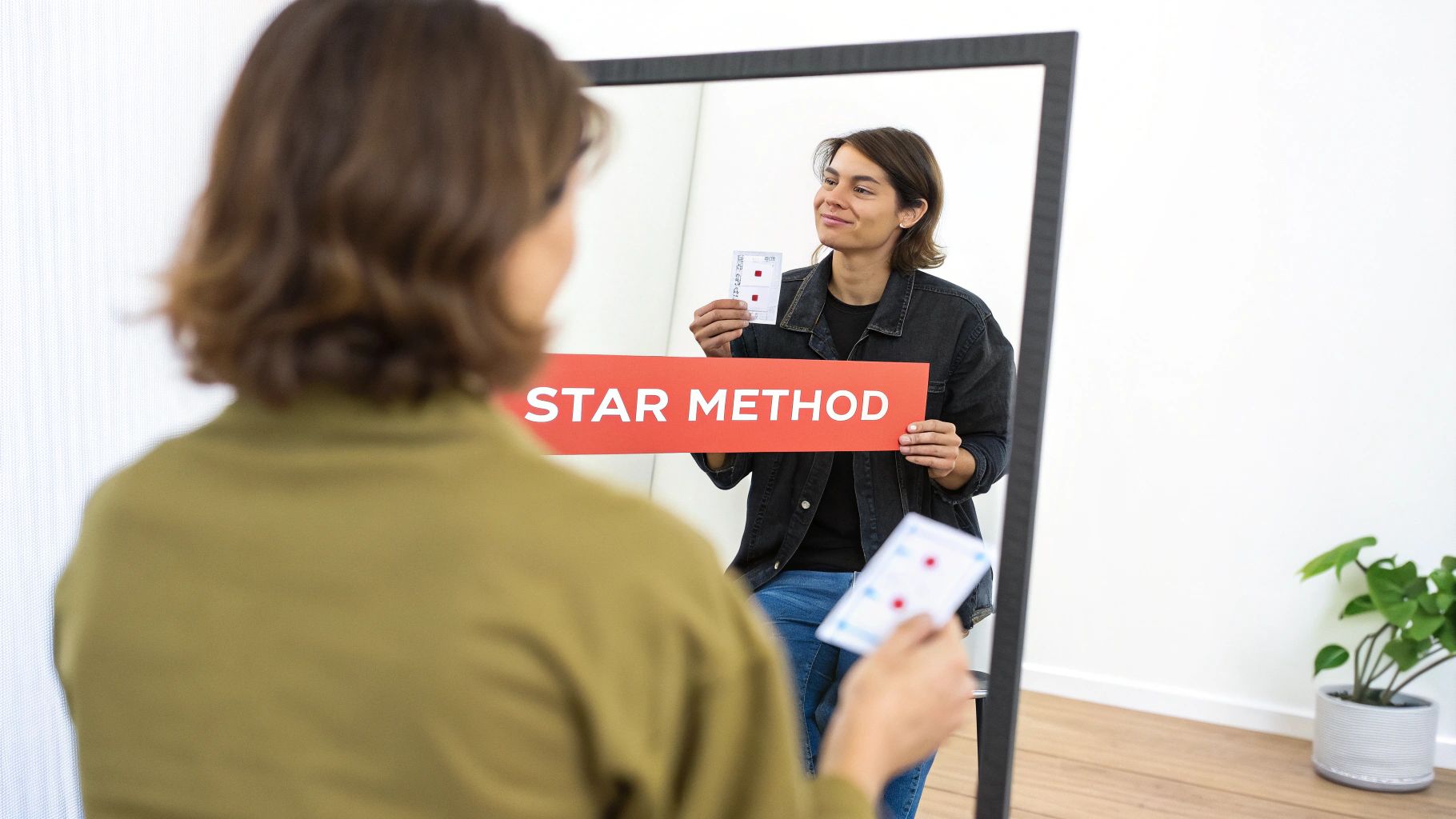
This technique is used by top companies. It helps keep your answers short and powerful. It stops you from rambling. It focuses the interviewer on the good result you delivered. This makes it a key part of any job interview cheat sheet.
Why It's a Game-Changer
Behavioral questions like "Tell me about a time you faced a challenge" need proof. The STAR method gives your experience a story structure. This makes your story easy to remember and believe. It turns a simple answer into a strong example of your skills.
For instance, you might be asked about handling a tough customer. You can use STAR to detail the Situation (a mad client with a late order). Then the Task (to fix the issue and keep them as a customer). Next, the Action (you tracked the shipment and offered a discount). Finally, the Result (the customer was happy and made a bigger order, increasing their value by 15%). This specific result is much better than saying, "I'm good with customers."
Actionable STAR Story Checklist
Prepare and practice several STAR stories before your interview. Have examples for different skills like leadership, teamwork, and problem-solving.
- S – Situation: Briefly explain the context. What was the challenge?
- T – Task: Describe your specific goal in that situation. What did you need to do?
- A – Action: Detail the steps you took. Use "I" statements to show your contribution.
- R – Result: Measure the outcome of your actions. Use numbers or examples to show your positive impact.
- Practice Aloud: Practice your stories until they sound natural. Aim for about two minutes. Prepare 5-7 different stories so you are ready for any question.
3. Prepare Thoughtful Questions to Ask Your Interviewer
Asking smart questions is a key part of an interview. It changes the interview from a test to a conversation. It shows you are engaged and think critically. This part of your job interview cheat sheet proves you are an active participant. You are interested in the role, team, and company.

When the interviewer asks, “Do you have any questions for me?” never say “No.” This is your chance to learn more about the job. It also shows you are a serious candidate.
Why It's a Game-Changer
Good questions show how you think. They also show what you care about in a job. Do not ask basic questions you can find online. Ask about team dynamics, company goals, and how success is measured. This shows the interviewer you are already thinking about how you can contribute.
For example, asking about the team's biggest challenge shows you are a problem-solver. Asking about the interviewer's career path at the company shows you are interested in growth. These questions give you important information and leave a good impression.
Actionable Question Checklist
Prepare 3-5 good questions. Tailor them to your research and the conversation.
- About the Role: "What does success look like for someone in this position after the first six months?"
- About the Team: "How does the team collaborate on projects?"
- About the Interviewer: "What do you enjoy most about working here?"
- About Strategy: "How does this role contribute to the company's goals for this year?"
- About Culture: "What are the most important values of your team?"
4. Master Body Language and Non-Verbal Communication
What you say in an interview is important. How you say it can be even more powerful. Non-verbal communication includes your posture, gestures, and eye contact. It shows interviewers how confident and honest you are. Mastering your body language is a key part of any job interview cheat sheet. It backs up your words with professionalism.
When your body language matches your words, you build trust. Controlling these signals helps you avoid looking nervous or uninterested. This ensures your message is heard correctly.
Why It's a Game-Changer
Positive body language changes how an interviewer sees you. You become an active participant in a professional talk. It shows you are present, respectful, and interested in the job.
For example, leaning forward when the interviewer speaks shows you are listening. Using open-hand gestures when you talk can show honesty. These small actions project confidence. They can make a big difference between two equally qualified candidates.
Actionable Body Language Checklist
Use this checklist to practice good non-verbal communication during your interview:
- Practice a Firm Handshake: Your handshake should be firm but not too strong. It is the first impression of confidence.
- Maintain Appropriate Eye Contact: Look the interviewer in the eye about 60-70% of the time. This shows you are engaged without staring.
- Sit Upright and Open: Keep your back straight and shoulders relaxed. Do not cross your arms. This can make you look defensive.
- Keep Hands Visible: Rest your hands on the table or your lap. Hiding them can seem nervous.
- Smile Genuinely: A natural smile makes you seem warm and friendly.
- Record a Practice Session: Record yourself answering common interview questions. This helps you find and fix nervous habits like fidgeting or touching your face.
5. Tell a Compelling Personal Brand Story
Your personal brand story is a short, memorable story. It answers the "Tell me about yourself" question. It does more than list your resume points. It connects your experiences, skills, and goals into a real story. This "elevator pitch" should explain who you are, what you care about, and why you fit this role. It should only take two or three minutes.
A good story makes you memorable. It helps the interviewer connect with you. It shows your career path has a purpose. To learn more about shaping your professional image, you can explore comprehensive personal branding strategies.
Why It's a Game-Changer
A good story turns your interview into an engaging conversation. It gives context to your achievements. It shows you know yourself and have clear career goals. This story is a key part of any job interview cheat sheet. It sets a positive and confident tone for the meeting.
Instead of a dry list of jobs, you present a story of growth. For example, you can explain a switch from customer service to tech. You could say you love improving user experience. Then back it up with a key achievement, like improving customer retention by 40%. This storytelling makes your skills much more powerful.
Actionable Storytelling Checklist
Use this checklist to create and improve your personal brand story:
- Start with a Hook: Begin with a sentence that grabs attention. For example, "I started my career in marketing, where I found a passion for turning data into brand stories."
- Highlight Key Achievements: Include 2-3 of your most relevant successes. Use numbers to show your impact.
- Show Your Unique Value: Mention the specific skills that make you different. Are you a creative problem-solver? Say so.
- Connect to the Company: Clearly state why your story leads you to this company and this role. Mention their values or a project that excites you.
- Practice, Don't Memorize: Rehearse your story until it sounds natural. The goal is confident, real delivery.
6. Prepare for Salary and Compensation Discussions
Good salary negotiation is a key skill. It needs research, strategy, and confident talk. Talking about money can feel awkward. Being prepared helps you get paid what you are worth. This step on your job interview cheat sheet involves knowing your market value. You should also understand the company’s budget and have a minimum number in mind.
When you discuss salary with data, it is not a demand. It is a discussion to find a good agreement for both sides. This professional approach shows you understand business. It shows you value your work.
Why It's a Game-Changer
Not negotiating can cost you a lot of money over your career. Future raises are often based on your starting salary. Good preparation turns this tough talk into a simple business deal. It shows you can stand up for yourself, a skill valued in any employee.
Instead of taking the first offer, you can guide the talk toward a better package. For instance, if an offer is low, you can say, "Thank you for the offer. Based on my experience and results, I was expecting a number closer to $78,000." This data-based approach works much better than an emotional one.
Actionable Negotiation Checklist
Use this checklist to prepare for the salary conversation:
- Research Market Rates: Use sites like Glassdoor and Payscale to find salary ranges for your role and location.
- Define Your Range: Figure out your target salary and a range around it. Know your "walk-away" number, the lowest amount you will accept.
- Delay the Discussion: If you can, wait until you have an offer to talk about salary. If asked early, give your researched range: "Based on my research, I'm targeting a range of $75,000-$85,000."
- Let Them Go First: Ask the employer to share their budget for the role first. This gives you a good starting point.
- Consider the Full Package: An offer includes more than just salary. Ask about bonuses, health benefits, and paid time off.
- Never Accept Immediately: Always thank the employer for the offer. Ask for a day or two to review it. This gives you time to think without pressure.
7. Answer the 'Tell Me About Yourself' Question Strategically
This common first question is more than an icebreaker. It is a key chance to frame your story. A good response is a 90-second summary of your best skills and achievements. It connects your professional story directly to the role. This is a vital part of any job interview cheat sheet. It is your first chance to make a strong impression.
Do not just repeat your resume or tell your life story. A smart answer shows your communication skills. It shows you understand what the employer needs. It tells the interviewer you are prepared and focused.
Why It's a Game-Changer
Mastering this question lets you control your career story. It allows you to focus the conversation on your strengths and value. A weak answer can make you seem unprepared. A strong, targeted response shows you are a top candidate from the start.
For example, instead of starting with "Well, I grew up in…" you can open with, "I'm a marketing manager with seven years of experience in digital strategy. In my last role, I led a campaign that increased web traffic by 150%." This immediately gets attention with real results.
Actionable Pitch Checklist
Use this checklist to build a strong and short response:
- The Present: Start with your current role. Briefly describe your main duties, focusing on what is relevant to the new job.
- The Past: Connect your current role to past experience. Mention one or two specific, measurable achievements.
- The Future: Explain why you want this role at this company. Connect your skills to their mission or projects. End with excitement.
- Practice and Time: Rehearse your answer until it sounds natural. Aim for 60 to 90 seconds.
- Avoid Pitfalls: Do not use a long personal history. Keep it professional and relevant to the job.
8. Develop Strategies for Addressing Weaknesses and Gaps
Interviewers will ask about weaknesses, career gaps, or job changes. Handling these topics with honesty and a positive attitude is a key part of any job interview cheat sheet. A good strategy turns these red flags into chances to show you are self-aware and resilient.
Do not avoid these questions. Face them with a prepared, positive story. This approach builds trust. It shows the interviewer you are a thoughtful and problem-solving professional.
Why It's a Game-Changer
How you handle questions about your flaws says a lot about you. A good response shows maturity and responsibility. It proves you can learn from experience and are always improving.
For example, frame an 18-month employment gap as time spent caring for family. You can add that you also clarified your career goals during that time. This shows you are caring and focused. Talking about a past weakness like public speaking and explaining how you improved it turns a negative into a positive story.
Actionable Strategies Checklist
Use this checklist to prepare honest, positive stories for tough topics:
- For Weaknesses: Pick a real but not critical weakness. Avoid cliché answers like "I'm a perfectionist." Instead, try, "I sometimes take on too much work, but I now use a priority system to manage my tasks." Show how you are working on it.
- For Employment Gaps: Prepare a short, positive explanation. Focus on what you learned or how the time prepared you for your next job. Example: "I took six months for professional development and earned a project management certification."
- For Job-Hopping: Create a story of strategic career moves. Explain how each job was a deliberate step toward a bigger goal.
- Maintain Positivity: Never blame former employers or coworkers. Own your career path. Focus on the lessons learned and the future you want to build with this company.
9. Create a Pre-Interview Checklist and Preparation Timeline
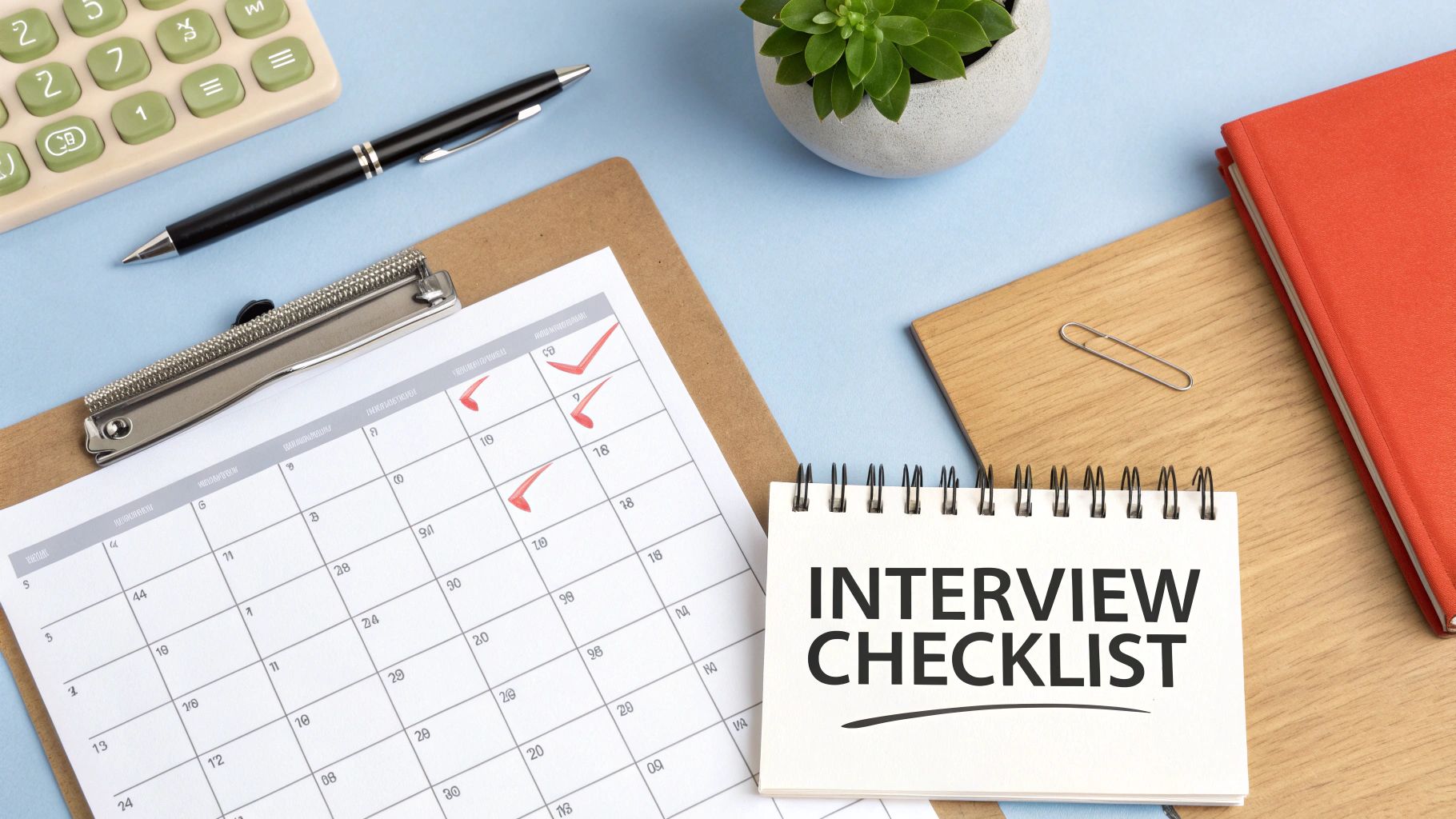
Preparing over weeks works much better than cramming the night before. A pre-interview timeline spreads out tasks. It helps you handle everything from research to logistics without stress. This part of your job interview cheat sheet turns a big task into small, manageable steps.
Breaking down your prep into weekly goals lets you focus on each part. This structured approach builds confidence. It ensures you arrive on interview day feeling calm and ready.
Why It's a Game-Changer
A timeline prevents last-minute panic. It leads to deep, thoughtful preparation. You do more than memorize answers. You understand the information and practice until your delivery is natural. This changes your interview from a test to a confident conversation.
Spreading out tasks also allows for feedback. For example, after a mock interview in week four, you have time to improve your answers. This kind of improvement is not possible if you rush.
Actionable Preparation Timeline
Use this sample timeline to structure your preparation:
- Week 1: Deep Dive Research. Focus on the company, role, industry, and interviewers. Read news, reports, and competitor info.
- Week 2: Story Development. Prepare 7-10 detailed stories using the STAR method. Match these stories to skills in the job description.
- Week 3: Technical and Skill Review. Brush up on any specific technical knowledge or software needed for the role.
- Week 4: Mock Interviews. Practice interviews with mentors or friends. Record yourself to check your body language and speech.
- Week 5: Refinement. Use feedback from your mock interviews to improve your stories and answers.
- The Day Before: Review your notes, prepare your outfit, and confirm all details. Get a full night's sleep. For advice on managing your time, explore resources on effective time management skills.
10. Follow Up Strategically After the Interview
The interview is not over when you leave. A strategic follow-up message is a key final step in your job interview cheat sheet. It shows your interest and professionalism. Send this message within 24 hours. It should thank the interviewer, restate your value, and keep you in their thoughts.
Not sending a follow-up can seem like a lack of interest. A good note shows you pay attention to detail. It often separates the top candidates from the others.
Why It's a Game-Changer
A good follow-up is more than a simple "thank you." It is your last chance to make an impression or add a point you missed. It shows you were listening by mentioning specific topics from your talk. This proves your engagement and excitement for the role.
For instance, you can connect a project they mentioned to your past work. If they talked about a challenge, your follow-up could briefly mention a successful strategy you used before. This turns your thank-you note into a final sales pitch.
Actionable Follow-Up Checklist
Use this checklist to write a powerful follow-up email:
- Timing is Key: Send your email within 24 hours of the interview.
- Personalize Each Note: If you met with multiple people, send a unique email to each one. Mention something specific you discussed with them.
- Reference Specifics: Mention 2-3 key points from your conversation. Example: "I enjoyed our discussion about your new customer initiative…"
- Reiterate Your Value: Briefly connect your skills to the company's needs one last time. Example: "…and I'm confident my experience in A/B testing can help with that goal."
- Keep It Concise: Aim for 3-5 short paragraphs. The message should be clear and easy to read.
- Proofread Meticulously: Typos or grammar errors can hurt your professional image. Read your email aloud before sending it.
10-Point Interview Prep Comparison
| Preparation Item | 🔄 Implementation Complexity | ⚡ Resource Requirements | 📊 Expected Outcomes | 💡 Ideal Use Cases | ⭐ Key Advantages |
|---|---|---|---|---|---|
| Research the Company Thoroughly | Moderate — structured, time-consuming for large orgs | Medium — websites, reports, social reviews | High — tailored answers; higher confidence | Mid/late-stage interviews; company-specific roles | Demonstrates interest; enables specific examples ⭐⭐⭐ |
| Practice the STAR Method for Behavioral Questions | Low–Moderate — needs structured practice | Low — prepare 5–7 stories, practice aloud | High — clear, evidence-based responses | Behavioral interviews; competency-based hiring | Organizes answers; reduces rambling ⭐⭐⭐ |
| Prepare Thoughtful Questions to Ask Your Interviewer | Low — craft 3–5 tailored questions | Low — company knowledge + role focus | Medium–High — shows engagement; helps evaluate fit | Hiring manager interviews; final rounds | Demonstrates curiosity and critical thinking ⭐⭐ |
| Master Body Language and Non‑Verbal Communication | Moderate — practice and self-monitoring | Low — video practice, feedback, coaching | High — improves perceived confidence and likability | In-person and virtual interviews | Strongly influences first/last impressions ⭐⭐⭐ |
| Tell a Compelling Personal Brand Story | Moderate — craft concise 2–3 min narrative | Low — reflection and rehearsal | High — memorable introduction; controls narrative | Opening questions; networking; interviews requiring fit | Differentiates candidate; shows clarity of purpose ⭐⭐⭐ |
| Prepare for Salary and Compensation Discussions | Moderate — research + negotiation strategy | Medium — salary tools, market data, practice | High — better offers; fair market compensation | Offer stage; negotiation conversations | Maximizes compensation; signals market knowledge ⭐⭐ |
| Answer "Tell Me About Yourself" Strategically | Low — structure and concise practice | Low — prepare 1–2 versions (1–2 min) | High — sets positive tone; highlights fit | Screening calls; interview openers | Controls narrative; showcases relevance quickly ⭐⭐⭐ |
| Develop Strategies for Addressing Weaknesses and Gaps | Moderate — honest framing and examples | Low — examples, improvement plan, coaching | Medium–High — builds trust; mitigates concerns | Interviews probing gaps, career changes | Shows self-awareness and growth mindset ⭐⭐ |
| Create a Pre‑Interview Checklist and Preparation Timeline | Moderate — multi-week planning and review | Medium — weeks of prep, mock interviews | High — reduces stress; comprehensive readiness | Competitive or senior roles; technical interviews | Ensures thorough, organized preparation ⭐⭐⭐ |
| Follow Up Strategically After the Interview | Low — timely, personalized messaging | Low — email templates tailored per interviewer | Medium–High — reinforces interest; addresses gaps | All interviews, especially close decisions | Keeps you top-of-mind; clarifies value ⭐⭐ |
Turn Your Interview Preparation into Job Offers
This job interview cheat sheet provides a plan to help you become a top candidate. The goal is not just to answer questions. It is to build a strong story about your professional value. Every part we have covered is a step toward making a great impression. This includes deep company research and a well-timed follow-up email.
Think of your interview prep as building a case for why you are the best fit. Your research is the foundation. Your use of the STAR method provides the evidence. It turns your skills into real achievements. The smart questions you ask show your engagement and curiosity. This changes the interview from a test to a professional discussion.
From Answering Questions to Telling Your Story
The power of this guide is in how it combines different tactics into one plan. It is about more than just having a good answer for "What's your greatest weakness?" It is about how that answer fits into your larger story.
- Your Brand Story: The "Tell me about yourself" pitch is your opening statement. It sets the tone for your whole candidacy.
- Non-Verbal Cues: Your body language backs up your confidence and makes your message believable.
- Strategic Follow-Up: Your post-interview message is your closing statement. It reinforces your interest and leaves a lasting good impression.
When you use these strategies, you are no longer just reacting to the interview. You are actively shaping it. You are not just a list of skills on a resume. You are a problem-solver who is already thinking about how to help the company succeed. This is the change that hiring managers see.
The System for Consistent Success
The best job seekers use a repeatable system. This job interview cheat sheet is that system. It removes the stress from the process. It replaces it with a clear plan. The pre-interview checklist makes sure you do not miss any details. The salary negotiation tips prepare you to ask for what you are worth with confidence.
This preparation helps you perform well on the day. It also builds real confidence. You walk into the room knowing you did the work. You understand the company’s needs. You can explain exactly how your skills meet those needs. That confidence is clear and very attractive to employers.
Before you can show your skills in an interview, you need to get the interview. The first step is a resume that shows your value and gets past screening software. You can use GainRep's professional resume builder to create a resume that highlights your strengths: https://www.gainrep.com/resumes.
You can also make your application process easier. This allows you to focus your energy on preparing for interviews. Let our AI find jobs that match your skills and apply for you. Explore the GainRep AI Auto-Apply feature to speed up your job search. Learn more at https://www.gainrep.com/ai-auto-apply. By using these tools with the strategies in this cheat sheet, you can handle every stage of your job search and take the next big step in your career.
Ready to build the foundation for your interview success? Start by creating a resume that opens doors with Gainrep's intuitive builder and then automate your job search with our AI tools. Visit Gainrep to see how our platform can help you focus less on applying and more on preparing to win your next job offer.
