



Knowing how to list your GED on a resume is important. It shows employers your qualifications and drive. Your GED has the same weight as a high school diploma. It belongs in the education section of your resume.
When you add your GED, include a few key details. You need the full name of the credential. List the state that issued it. Also, add the year you earned it.

Why Listing Your GED Matters
Putting your GED on a resume does more than fill space. It tells employers you are committed to your education. It proves you have met the same academic standards as a high school graduate. This can open up more job opportunities for you. It shows your persistence and readiness for professional challenges.
The GED is a respected credential. The GED Testing Service reports that over 20 million people have earned it since it began. It is a key part of the American education system. Hiring managers know and trust this qualification.
Key Details to Include
Your resume entry should look sharp and professional. Include three key pieces of information. It is simple to do.
- Credential Name: Always use the full name, like "General Educational Development Diploma" or "GED Diploma."
- Issuing State: Note the state that awarded your credential. For example, use "State of Florida."
- Completion Year: Add the year you passed your exams and earned the diploma.
If you are new to the workforce, building your first resume can be tricky. This guide on how to write a CV for a student offers helpful advice. It can help you structure your entire resume.
Presenting your GED correctly gives you confidence. You will know your application is professional and complete. For more help creating a polished document, a tool like the resume builder at GainRep can make the process easier.
Where to Place the Education Section on Your Resume
Figuring out where to put your GED on a resume is strategic. The placement of your "Education" section signals what is most important. It tells recruiters where to focus.
The right spot depends on your professional experience.
For New Job Seekers and Recent Graduates
Your education is a strong selling point if you are just starting out. It is a primary qualification. It proves you are ready to learn and contribute.
In this case, place your education section near the top. Put it right after your contact info and professional summary. This ensures a hiring manager sees it first. It checks the "minimum education requirement" box immediately.
For Experienced Professionals
The game changes once you have a few years of relevant work experience. Your skills, accomplishments, and job successes become the main focus. That is what recruiters want to see.
For seasoned pros, the education section is less critical. Move it to the bottom of your resume. Place it after your work experience and skills sections. This directs the reader's attention to your professional achievements first.
Key Takeaway: The more professional experience you have, the lower the education section should appear on your resume. This strategy helps both hiring managers and Applicant Tracking Systems (ATS) find the most relevant information quickly.
To get the placement right, you need to see how everything fits together. Understanding the core elements of a resume provides a clear overview. It ensures every part of your resume helps you get noticed.
How to Word Your GED on a Resume for the Best Results
Small details matter on your resume. You want your GED entry to look polished and professional. Clear, accurate wording is key. Always use the official name for your credential. This helps hiring managers and automated systems recognize it.
When building this section, you must include three basics:
- The Official Name: Use "General Educational Development Diploma" or the acronym "GED Diploma."
- Who Issued It: Note the state that awarded it, like the "Texas Education Agency."
- The Year You Got It: Add the year you officially earned the credential.
Did You Ace Your Exams? Show It Off
You should mention high scores if you earned them. The GED test sets a clear passing bar. You need at least a 145 out of 200 on each of the four subjects.
If you scored very well, such as over 175, you might earn college credits. You can find more details about how GED scoring works on indeed.com.
A Quick Tip: Add a short, powerful line like "Achieved college-ready scores in all subjects." This can make a real impression. It is a small detail that shows you are a high achiever.
Real-World Examples You Can Copy and Paste
Here are a few ways to format your GED on a resume. These examples look sharp and confident.
The Standard Way:
- General Educational Development Diploma, 2023
- State of Florida Department of Education
If You Want to Highlight Top Scores:
- GED Diploma, 2022
- State of California Department of Education
- Achieved Honors scores in Mathematical Reasoning and Science
A great resume helps you get noticed. This is especially true when you apply to many jobs. Using a tool like GainRep's AI auto-apply can help. It gets your polished resume in front of more hiring managers. This gives you a better chance at landing an interview.
Adjusting Your Resume for Different Career Stages
How you list your GED on a resume should change as your career grows. The right strategy depends on your experience level. It matters if you are new to the job market or have a solid professional history.
For an entry-level candidate, the GED is a key asset. For an experienced professional, it is more of a footnote.
For Entry-Level Job Seekers
Your education is a big selling point when you are new to the workforce. It proves you have the knowledge and dedication to succeed.
This is your chance to make your GED entry work for you. Mention if you did well in subjects relevant to the job. It is a great way to show specific strengths.
- For a tech-focused role: You could add, "Achieved college-ready honors scores in Mathematical Reasoning."
- For an administrative job: Try something like, "Scored in the 90th percentile in Reasoning Through Language Arts."
Adding these details helps your resume stand out. This is especially useful when you do not have many previous jobs to list.
This guide can help you decide when to add extra details.
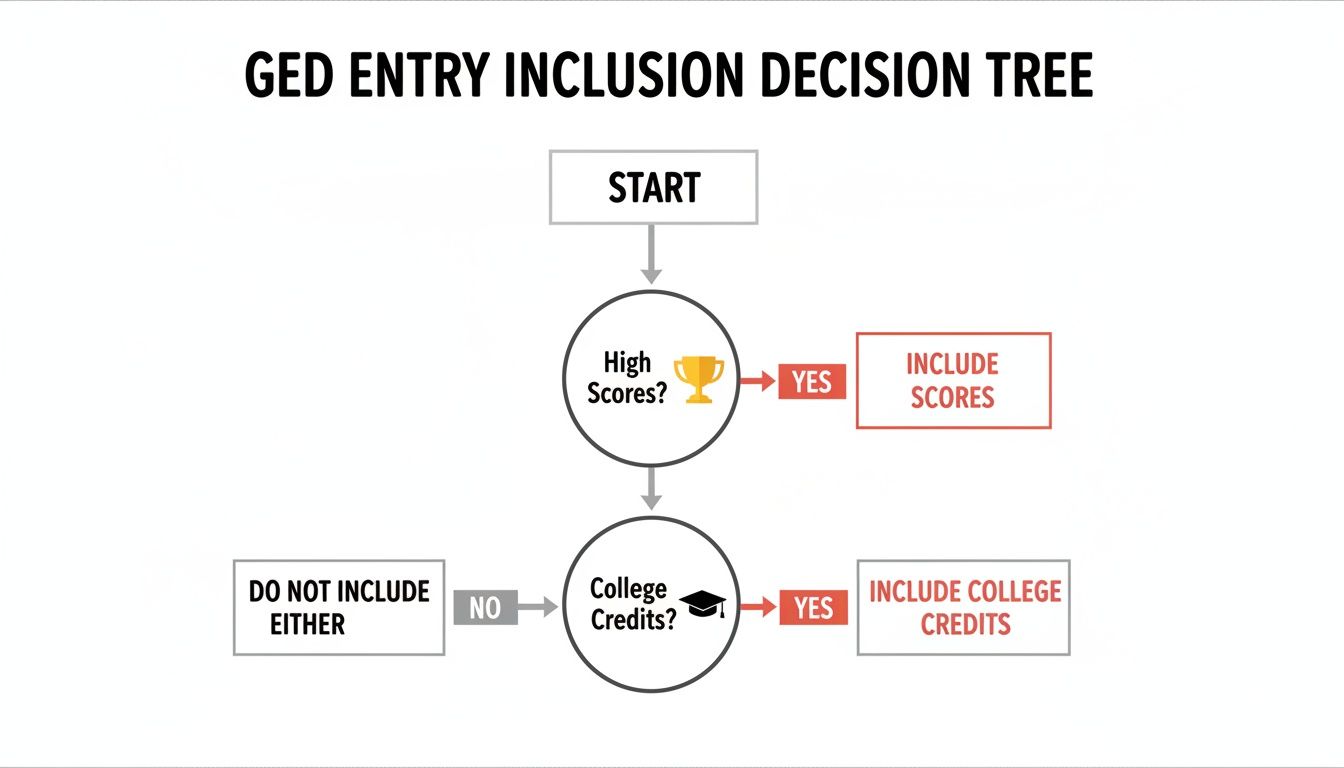
The main point is simple. If you performed very well, highlight it. This includes high scores or college credits.
For Experienced Professionals
The situation changes once you have a few years of experience. Your work history becomes the main focus. Your approach to listing education becomes simpler.
Expert Tip: When you have a strong career history, your experience speaks for itself. Keep your education section brief and place it at the very bottom of your resume.
At this stage, a simple listing is all you need. Recruiters will be more interested in your accomplishments and skills. Just list the credential, the state, and the year you earned it. That is all. This keeps the focus on what you have achieved professionally.
Crafting a resume that fits your career stage is key. For custom templates and guidance, check out the professional resume builder at GainRep.
Common Resume Mistakes to Avoid With Your GED
Small mistakes on a resume can cost you an interview. When listing your GED, polishing the details makes a big difference. It affects how a hiring manager sees your qualifications. Let's review the most common mistakes.
First, use the right words. Calling it a “GED degree” is a very common error. Your GED is a diploma or a credential, not a university degree. Using the correct term makes you look more professional.
Also, keep the entry clean. There is no need to add extra details. Do not include the testing center or personal reasons for getting a GED. Stick to the essential facts.
Keeping Your Information Accurate
Honesty is crucial on a resume. Always be truthful about your credentials and the year you earned them. Lying about dates or qualifications can get you disqualified. It could even lead to termination later if discovered.
Another key point is knowing when to remove the GED from your resume. If you have earned a college degree, you can usually leave the GED off. Your college degree is now your highest level of education. That is what employers want to see.
The Value of Your Credential
Listing your GED correctly has a real impact on your job search. Data shows that this credential improves job prospects. For example, unemployment rates drop from 6.2% for people without a high school diploma to 4.2% for those with a GED-level credential. You can learn more about the economic impact of a GED over at Resumonk.com.
By avoiding these simple mistakes, you present your educational background with clarity and confidence. It ensures your resume reflects your hard work without any distracting errors.
Think about your professional credibility. Once your resume is polished, you can build a profile with verified endorsements. A platform like GainRep adds another layer of trust. It helps back up the claims you make on your resume.
Answering Your Top Questions About Listing a GED
You might still have some questions. That is normal. Every job seeker's situation is different. You want to present your education in the best possible way.
Let's review some common scenarios. This will help you move forward with confidence.
What if I Have Some College Credits but no Degree?
This is a common question. You have done some college coursework but did not finish the degree. Should you still list the GED?
The answer is yes. Your GED is your highest educational credential without a completed college degree. It proves you have met the basic academic standard. Hiring managers need to see this.
List your college experience first because it is more advanced. Follow it with your GED. This approach highlights your higher-level studies. It also confirms you have a high school equivalent diploma.
- Here’s how that looks:
- University of Texas, Coursework in Marketing, 2021-2023
- General Educational Development Diploma, 2020
This format gives a clear picture of your educational journey.
How Should I Word It? And What if It’s Still In-Progress?
The exact phrasing can be confusing. Is it better to write out the full name or use the acronym "GED"?
Either one is fine. "General Educational Development Diploma" sounds more formal. However, almost every employer and Applicant Tracking System (ATS) recognizes "GED." The acronym is useful if you need to save space.
But what if I’m still studying for my GED?
You should still put it on your resume. It shows you are actively working on your education. That is a positive trait. Just make it clear that it is in progress. For example:General Educational Development (GED) – In Progress. Then add your target completion date, likeAnticipated Completion: December 2024.
This simple line shows employers you are goal-oriented and proactive. It is a powerful message to send.
Do I Have to Include the Year I Got It?
People often wonder if they must include the year they earned their GED. Including the year is standard practice. It helps create a clear educational timeline for employers. It is the most transparent way to present your information.
If you earned your GED many years ago, you might worry about age bias. Some career experts say it is acceptable to leave the year off in this case. For most job seekers, including the year is the best policy.
Ready to build a resume that gets results? The GainRep resume builder offers professional templates and guidance to help you craft the perfect document for your job search.
