You need to master three things to get better at work communication. These are active listening, clear writing, and confident speaking. These are not just soft skills. They are tools you use daily. You build trust with them. You prevent problems with them. You move your career forward with them. When you sharpen these skills, you will see a big change in your team's success and your own career.
Why Great Communication at Work Is Non-Negotiable
Think of strong communication as the engine for a successful career. It separates a team that works well from one that is always confused.
Workplaces are better when instructions are clear. Feedback should be helpful. People should share ideas without fear. Communication is not just about talking. It is about making sure your message is understood correctly.
A small mix-up about a deadline can cause big problems. It can lead to missed goals and unhappy people. A well-communicated plan avoids these issues. Everyone knows their part. This helps you build a reputation as a reliable person.
The Real Impact on Productivity and Hiring
The link between clear communication and business success is strong. Employers do not just like good communicators. They actively look for them. They know it helps the company succeed.
Research shows leaders and employees agree. 64% of leaders and 55% of workers say good communication makes teams more productive. Communication skills are often at the top of an employer's wish list. They can be more important than technical skills.
Global employers look for these skills in candidates:
- Verbal communication skills (55%)
- Presentation skills (47%)
- Active listening skills (36%)
Bad communication is not just annoying. It wastes a lot of time. It costs companies a lot of money each year from mistakes. You can find more details on this workplace communication research to see the full picture.
The single biggest problem in communication is the illusion that it has taken place.
– George Bernard Shaw
That quote points out a common mistake. People assume that saying something means it was understood. Good communicators take full responsibility. They send the message and make sure it was received correctly.
We have created a quick overview of the skills in this guide. These are the basic skills that matter. They affect how people see you and how effective you are at work.
Core Communication Skills You Need to Master
| Skill Area | Why It Matters | Key Action |
|---|---|---|
| Speaking & Listening | Builds trust and ensures everyone is aligned. Prevents misunderstandings before they start. | Structure your thoughts before speaking and listen to understand, not just to wait for your turn to talk. |
| Clear Writing | Creates a professional record and makes remote work possible. Your emails and messages reflect your competence. | Write emails and messages that are direct, concise, and easy to understand. Get to the point quickly. |
| Nonverbal Cues | Your body language often says more than your words. Reading others helps you adapt your approach. | Become aware of your own body language and learn to interpret the unspoken signals from colleagues. |
Each of these areas is connected. Improving one will help you get better at the others. This creates a strong base for you to become a better communicator. Let's get into the details.
Becoming a More Confident Speaker and Active Listener
Let's go beyond advice like "speak clearly." Real improvement comes from practical tools. You need tools for any situation. This could be a big presentation or a simple chat.
Effective communication is a two-way street. It is about speaking with purpose. It is also about listening to truly understand. Getting this balance right builds trust. It stops small problems from becoming big ones.
A Simple Framework for Clear Speaking
One powerful way to organize your thoughts is the "What, So What, Now What" framework. It is a simple method to make your message clear, relevant, and actionable. It works well for project updates, team meetings, or quick check-ins.
Here is how it works:
- What: Start with the facts. State the situation without extra words. For example, "The Q3 marketing report is complete."
- So What: Explain why it matters. Connect the fact to the team's goals. For instance, "This is important because we beat our lead generation target by 15%."
- Now What: Propose the next steps. Tell your audience what should happen next. For example, "Now, I need the sales team to review the top lead sources by Friday so we can lock in our Q4 budget."
This structure makes a simple update a strategic one. It shows you have thought about the results. It proves you are focused on moving forward.
The Art of Active Listening
Great speakers are usually even better listeners. Active listening is not just being quiet. It is about being fully engaged. You hear the words. You also understand the meaning and feeling behind them. You show you are present by asking smart questions and confirming you understand.
When you practice active listening, you give the other person your full attention. This simple act can reduce tension, build relationships, and reveal important information.
A great way to practice this is to rephrase what you heard. Do this before you share your own thoughts.
Try using these phrases:
- "So, if I'm understanding you correctly, the main priority is…"
- "It sounds like your biggest concern here is…"
- "Let me just make sure I've got this right. You're saying that…"
This trick does two things. It confirms you understand. It also gives the other person a chance to clarify. It is a game-changer.
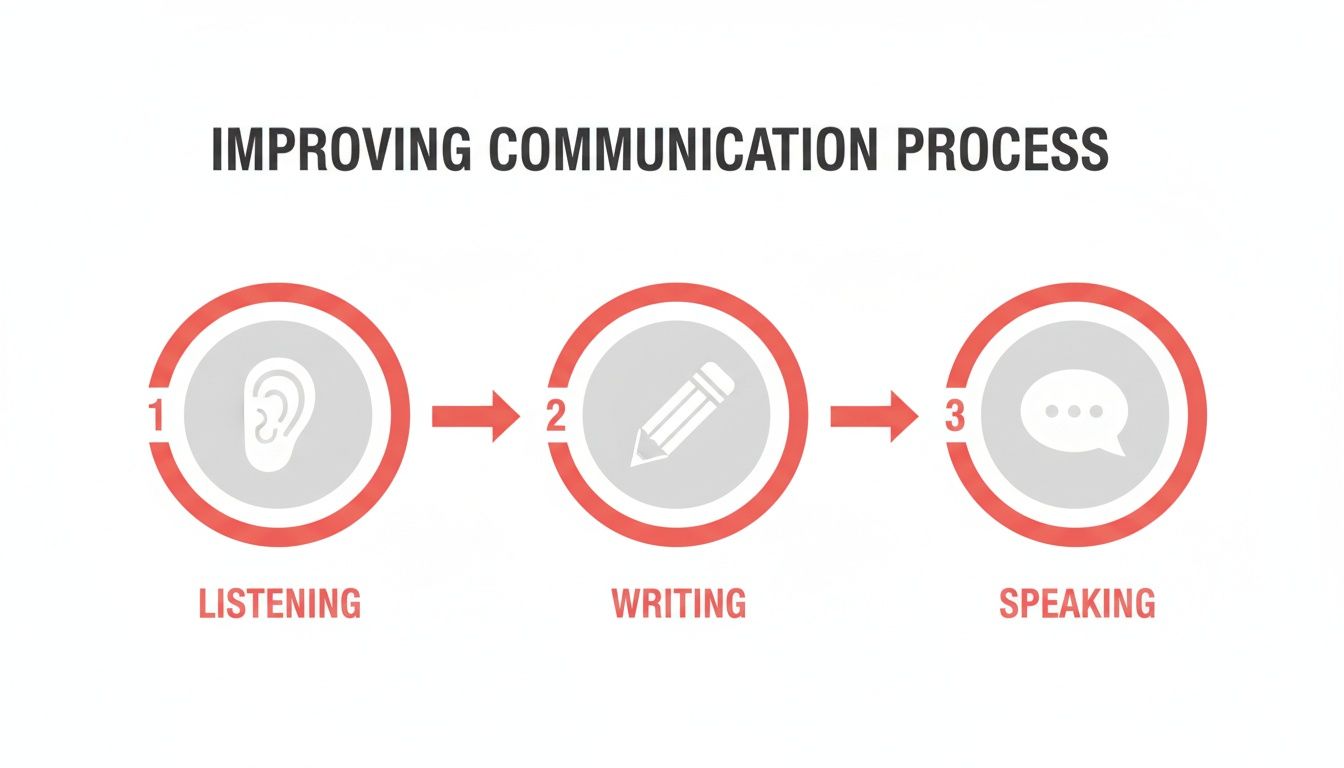
This process shows how these skills are linked. Good speaking is built on careful listening and clear thinking. Writing often sharpens your thinking.
By focusing on both how you send and receive messages, you become a better colleague. If you want more ways to handle daily conversations, it is also helpful to learn how to improve your conversation skills.
Writing with Clarity and Impact
Your writing is always visible. It can be a quick message or a detailed report. Every email and document you create shapes how others see you. Learning to write with clarity is a huge part of improving your communication skills at work.
Good, clear writing saves time for everyone. It stops the back-and-forth that happens with unclear requests. When your message is direct and easy to understand, you build confidence. You show respect for your reader's time.
Master the Basics of Effective Writing
You do not need to be a famous author to write well at work. The goal is clarity, not big words. A simple trick is to put the most important information first. Journalists call this the "inverted pyramid."
Imagine you are sending a project update. Do not hide the main point in the middle of the email. Lead with it.
For instance, get straight to the point instead of a long introduction:
- Weak Opening: "As we continue to work on the Q4 marketing campaign, our team has been analyzing the initial data from the social media ads we launched last week, and we have some new findings."
- Strong Opening: "The Q4 social media ads are performing 15% above our target. We should increase the budget to capitalize on this momentum."
The difference is clear. This direct approach ensures your main point is understood. It works even if the reader only skims the first line.
It is not a surprise that 57% of employers say communication is the top skill they look for. They often rank it higher than technical skills. But research shows that over half of employees find most work communication boring. You can read the full research about these workplace communication statistics to learn more.
Simple Templates for Common Situations
Using a few templates can make writing easier. They help you stay professional and clear, especially when you are busy.
Template for Requesting Information
- Clear Subject Line: "Question About [Specific Project/Topic]"
- Polite Opening: "Hope you're having a good week."
- Direct Request: State exactly what you need. "Could you please send me the final sales numbers for Q3 by end of day Friday?"
- Brief Context: Explain why you need it. "I need them to complete the quarterly performance report."
- Closing: "Thanks for your help."
This structure is polite and direct. It tells the reader what you need, why you need it, and when you need it by. It is all in a few short sentences. There is no room for misunderstanding.
Tools That Sharpen Your Skills
The best way to get better at writing is to write. Regular practice, even in small amounts, builds skill and confidence. You can use your daily tasks to train yourself.
One great way to practice is by improving how you describe your achievements. Try using a professional tool like GainRep’s Resume Builder. It helps you write and polish the bullet points about your work. This exercise makes you write in a short and powerful way. These skills are useful for your daily emails and reports.
Understanding Nonverbal Cues and Body Language

We say a lot without speaking. Your posture, eye contact, and hand movements send signals. These signals can make your message stronger or weaker.
Think about your last meeting. Remember the person sitting slouched in their chair, looking away? You might have thought they were not interested. Now, think about the colleague who sat up straight. They nodded and had a friendly look. They seemed engaged and trustworthy.
These silent messages are always there. They shape how your team and managers see you. The good news is you can learn to control these signals. You can project confidence and build better professional relationships.
Projecting Confidence and Approachability
Your body language can make you look confident even when you are nervous. A few small changes can make a big difference. This applies to a team presentation or a chat with your manager.
Try to focus on these simple actions:
- Maintain an open posture. Crossing your arms can look defensive. Keep your arms uncrossed and your posture relaxed. This shows you are open to ideas.
- Use purposeful gestures. Use your hands to emphasize key points. Avoid nervous fidgeting. Calm hand movements show you are in control.
- Make consistent eye contact. Looking people in the eye shows honesty and engagement. Aim for a natural, steady gaze, not a stare.
Mastering nonverbal communication is not just for daily chats. It is very important in big moments. If you are preparing for a job interview, check out these essential interview body language tips to make a great first impression.
Navigating Nonverbal Cues in Virtual Meetings
Body language is just as important in remote work. The rules are a little different. A video call can make some cues bigger and hide others.
You have to pay attention to details to communicate well on camera. Place your camera at eye level. This simple trick feels like direct eye contact. It creates a connection and shows you are paying attention.
Also, be aware of your background. A clean, well-lit space looks professional. Use hand gestures inside the camera frame to keep people engaged. Lean in a little when someone else is talking to show you are listening. These virtual cues help your message land clearly, no matter where you are.
Turning Your Communication Skills into Career Wins
Developing sharp communication skills is a great start. The real challenge is proving you have them. Your ability to speak, write, and listen only helps when managers see it.
You have to show your skills in real-world situations. Showcase them in every email and in your performance review. This is how a "soft skill" becomes a valuable asset that helps you get promoted.
Let Your Resume Do the Talking
Your resume is your first impression. It needs to do more than list "strong communication skills." It should prove you are an excellent communicator.
The trick is to show, not just tell. Think of each bullet point as a short story about your communication skills. Your goal is to connect a communication action to a real, measurable result.
Look at the difference:
- The "Meh" Bullet Point: "Responsible for team communication."
- The "Wow" Bullet Point: "Facilitated weekly cross-functional meetings with engineering and marketing teams, improving project alignment and reducing rework by 15%."
The second one shows you led meetings, created clarity, and achieved a business result. That is proof.
Writing these powerful statements can be hard. A professional tool like GainRep’s Resume Builder can help. It guides you to structure your experience to highlight your communication wins.
Make a Strong First Impression, Before Day One
Your communication skills are judged long before an interview. Your cover letter, your first email, and your application are all tests. This is your chance to set a professional tone.
A generic cover letter can look lazy. A tailored, well-written one shows you can express your value clearly. It proves you researched the company. It shows you can connect your skills to their needs. That is powerful communication.
You can apply to many jobs without losing quality. Modern tools can help you communicate well every time. For instance, a service like GainRep’s AI Auto-Apply finds good job matches. It can also generate customized cover letters for each application. This ensures every first contact shows your professional writing skills.
Use Communication to Climb the Ladder
Your communication skills help you grow in your career once you have a job. The people who get promotions are not always the most technical. They are the ones who can explain complex ideas simply. They can build agreement with their peers. They can support their own work and their team's work.
Look for chances to show your skills. Volunteer to lead a meeting. Offer to present a project update. Mentor a junior team member. Each action demonstrates your communication skills to decision-makers. By consistently communicating with impact, you build a reputation as a future leader.
Common Questions About Workplace Communication
Even with a good plan, questions will come up. Here are some common problems people face and how to solve them.
What’s the Fastest Way to Improve My Communication Skills?
Focus on one thing for the quickest improvement: active listening.
For one week, make it your goal in every conversation. Rephrase what the other person said before you respond. Use a simple phrase like, "Okay, so what I'm hearing is…" or "Just to be sure we're on the same page, you're saying…"
This one small habit reduces misunderstandings right away. It shows you respect their view. It makes your conversations instantly better.
How Can I Handle Difficult Conversations Better?
Tough conversations are hard. The key is to prepare instead of just reacting. Write down your thoughts before the meeting. This helps you stay focused and calm.
A good framework for this is:
- Find common ground first. Start the conversation with a shared goal.
- Stick to the facts. Describe the issue without blaming anyone. Talk about what happened, not who is at fault.
- Explain the impact. Calmly state the results of the problem.
- Ask for their take. Then, be quiet and listen carefully. There is always another side to the story.
- Figure out a solution together. Brainstorm a path forward as a team.
This approach keeps the conversation focused on solutions, not drama.
How Do I Ask for Feedback on My Communication Style?
You have to be specific. A vague question will get a vague answer. People do not want to hurt your feelings, so they might just say "You're doing great!"
Do not ask a colleague, "Hey, how's my communication?" Instead, try something more direct. For example: "I'm working on being more concise in my emails. Was that last project update I sent easy to follow, or was it too long?"
This does two things. It shows you are trying to improve. It also gives them an easy way to provide real, helpful advice.
Are Communication Skills More Important for Remote Teams?
Yes, absolutely. They are much more critical when you work remotely.
When you are not in the same office, you miss small in-person moments. You miss the quick chat that clears up confusion. Nonverbal cues are gone.
This means your written communication must be very sharp. Proactive updates and clear expectations in every email are necessary. Good video call etiquette is also essential. These are not just nice extras. They are required to build trust and keep everyone on the same page.
Ready to show employers what you can do? It all starts with a resume that highlights your communication wins. With Gainrep, you can use our professional resume builder to create a document that proves your value before you even walk in the door.
