You landed your first job interview. Congratulations! This is a big step. It is normal to feel excited and nervous. Preparation can turn your anxiety into confidence. This guide gives you a clear roadmap to follow. Use it as a checklist for every part of the interview. We will give you practical first job interview tips.
You will learn how to research a company. You will master your body language. You will learn to share your value using the STAR method. We will also cover common questions and how to prepare for them. You will learn to ask good questions of your own. You will also learn to manage stress on interview day. The goal is to give you tools to show you are a prepared and capable candidate. You will know how to connect your skills to the job and make a good impression.
Proactive communication can make you stand out. For example, knowing How Job Seekers Can Find Hiring Manager Emails Fast can help you follow up directly. This shows you take initiative. This guide has everything you need to feel ready. Let's look at the steps to help you ace your interview.
1. Research the Company Thoroughly
Do not walk into an interview without knowing the company. That is like joining a conversation without knowing the topic. Research is a very important tip. It shows you have a real interest in the job. It helps you tailor your answers. It helps you ask smart questions. It also helps you connect with the interviewer.
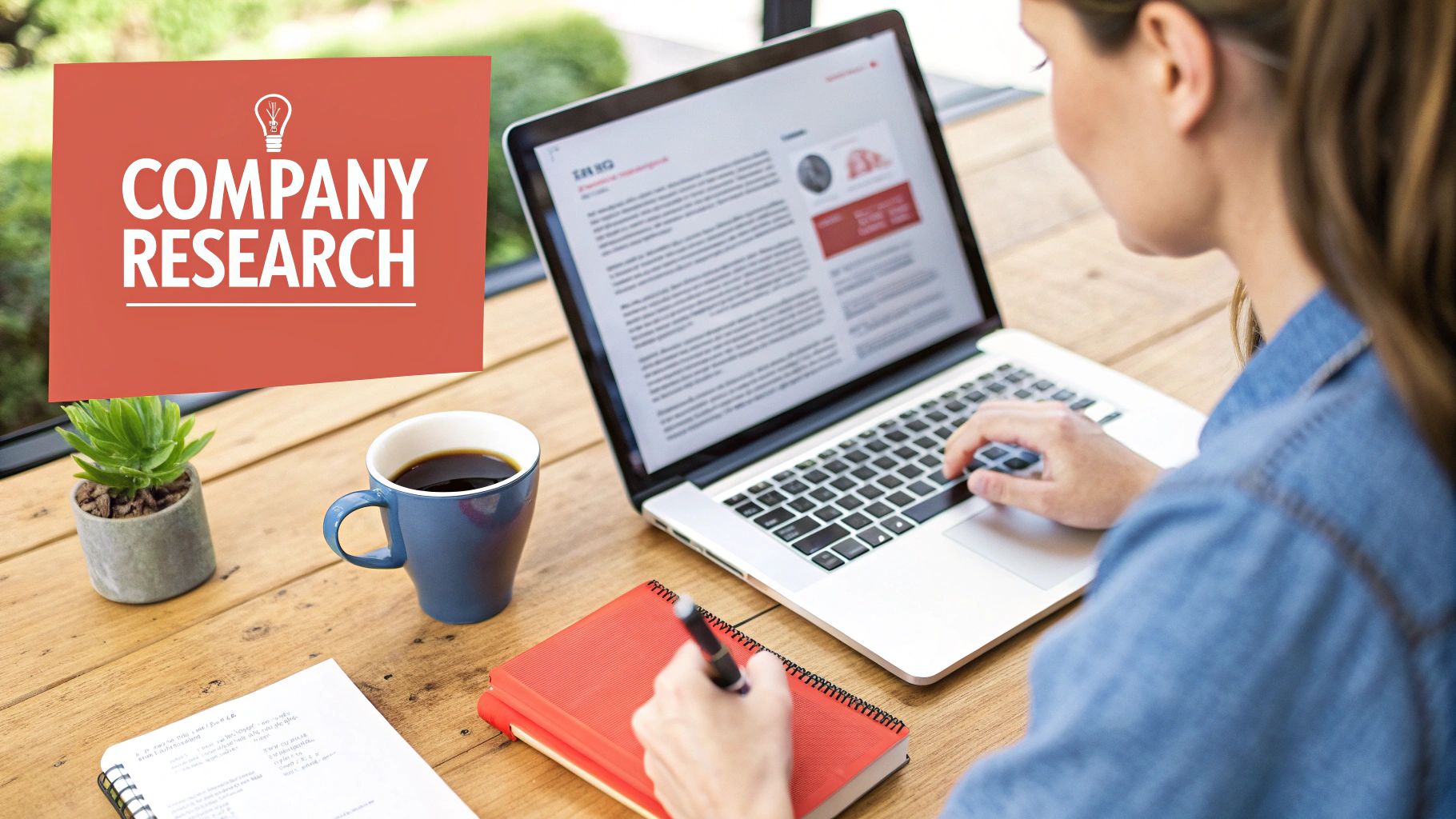
An interviewer might ask, "Why do you want to work here?" A well-researched answer is your chance to shine. Do not give a vague response like, "It seems like a great place to work." Instead, give a specific reason. For example, an applicant at Google could mention a new product. They could explain how it aligns with their passion for technology. Hiring managers at startups like it when applicants know about recent news. It shows you are following the company's journey.
How to Conduct Effective Company Research
Your goal is to understand the company. Learn its mission, challenges, and recent successes. This knowledge helps you connect your skills to their needs.
Here is a practical checklist for your research:
- Start with the Source: Go to the company’s website. Read the "About Us," "Mission," and "Values" pages. Read their blog posts and press releases. This helps you understand their voice.
- Check Professional Networks: Visit the company's LinkedIn page. Look for updates and employee spotlights. Look at the profiles of your interviewers to learn their background.
- Follow Social Media: See how the company presents itself on X (formerly Twitter) or Instagram. This gives you insight into their company culture.
- Read the News: Search for recent news articles about the company. Understanding their place in the market and their competitors is a big plus.
- Gather Insider Insights: Websites like Glassdoor and Indeed have reviews from employees. These can give you a glimpse into the work environment.
Investing time in research shows the employer you are a serious candidate. It shows you are ready to contribute from day one.
2. Master Your Body Language and Non-Verbal Communication
You communicate long before you answer a question. Your posture, eye contact, and gestures send strong signals. They show your confidence and professionalism. Mastering non-verbal communication is a very impactful tip. It shapes how the interviewer sees you. Strong body language supports your words. It helps build a connection with the interviewer. This makes you a more memorable candidate.
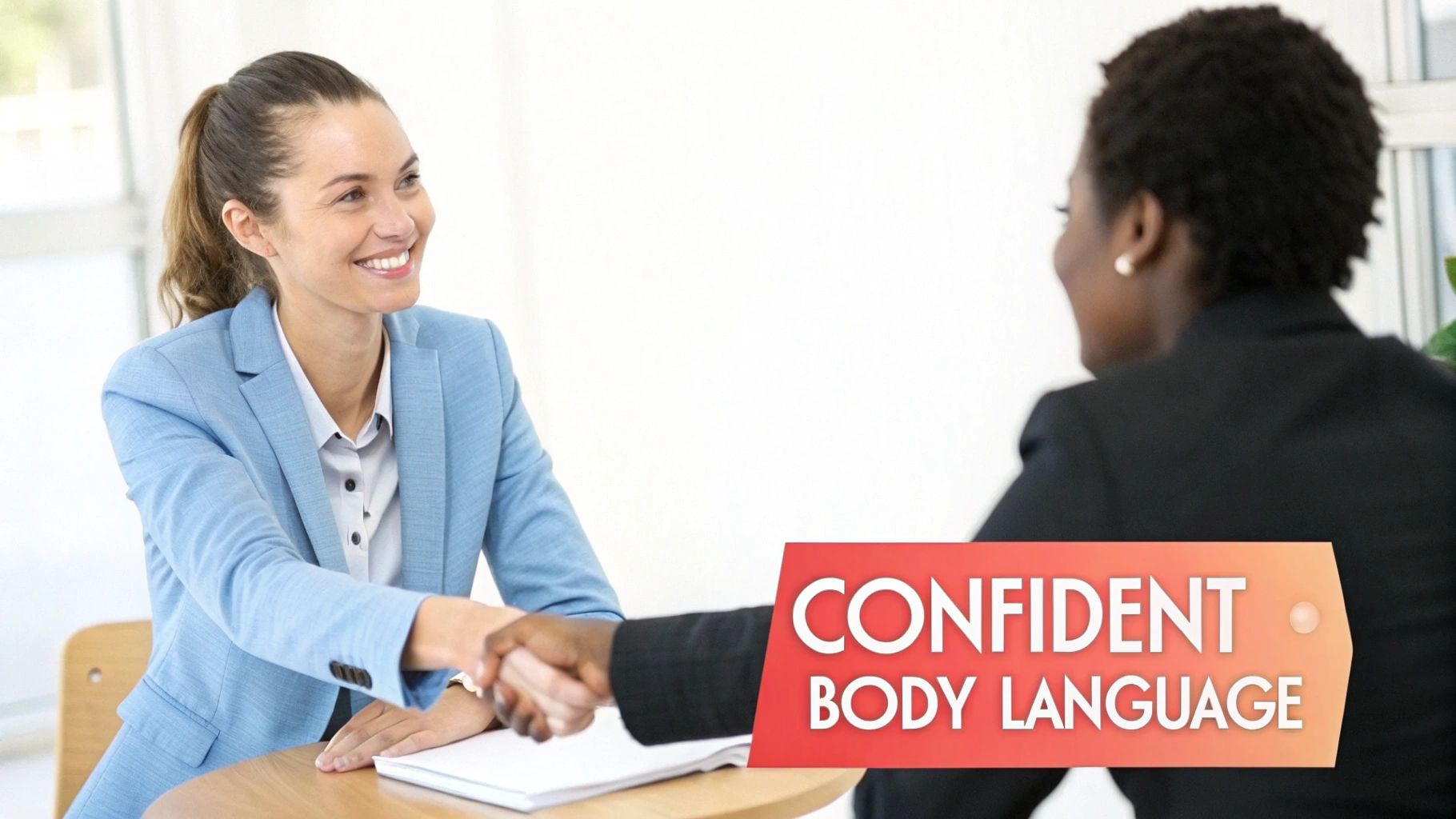
Research supports this idea. Studies from places like Harvard show that candidates with positive body language get higher ratings. Executive coaches often say a handshake is a critical first impression. Your non-verbal cues do not just support your words. They can make them stronger. They can turn a good answer into a great one.
How to Project Confidence Through Body Language
Your goal is to show you are comfortable, attentive, and self-assured. This helps the interviewer see you as a capable professional.
Here is a practical checklist for your non-verbal communication:
- Perfect Your Handshake: Practice a firm, confident handshake. It should last about 2-3 seconds. Your hand should be dry. Make direct eye contact and smile.
- Maintain Engaging Eye Contact: Try to maintain eye contact for about 60-70% of the conversation. This shows you are listening. It avoids staring.
- Sit with an Open Posture: Sit upright with your shoulders back. Do not slouch. Lean slightly forward to show interest. Keep your arms uncrossed to appear open.
- Use Gestures Purposefully: Use your hands to emphasize points naturally as you speak. Keep them visible on the table or your lap when not gesturing.
- Smile Genuinely: A natural smile helps build an immediate connection. Smile when greeting the interviewer and when talking about positive topics.
- Practice for Polish: Rehearse in front of a mirror. Record yourself answering questions. For virtual interviews, position your camera at eye level.
Managing your body language presents a complete package. It shows you are a candidate whose words and actions align to show competence.
3. Prepare Compelling Stories Using the STAR Method
Behavioral questions can be hard. They often start with "Tell me about a time when…" The STAR method is a simple framework for your answers. It helps you be clear, concise, and impactful. This technique turns vague claims into strong stories. It shows your skills in action. This makes it a very effective interview tip.

Many top companies use this method to assess candidates. Amazon uses it in its interviews. They require candidates to use the STAR method to prove their skills. Firms like Goldman Sachs also guide applicants to use this format. Mastering this technique shows you can communicate clearly. It shows you focus on results.
How to Use the STAR Method Effectively
The acronym STAR stands for Situation, Task, Action, and Result. The goal is to walk the interviewer through a challenge. You highlight your specific contributions and the positive outcome.
Here is a practical checklist for crafting your STAR stories:
- Situation: Briefly describe the context. Set the scene and give necessary background. (e.g., "In my internship, our team had to launch a social media campaign with a tight deadline.")
- Task: Explain your specific goal in that situation. What did you need to do? (e.g., "My task was to increase Instagram engagement by 20% in one month.")
- Action: Detail the specific steps you took. This is the most important part. Focus on what you did. Use "I" statements. (e.g., "I analyzed our successful posts, identified three new content ideas, and created a posting schedule.")
- Result: End by sharing the outcome. Use numbers to show your success when possible. (e.g., "As a result, the campaign exceeded the goal. Engagement increased by 35%, and we gained 500 followers in the first month.")
Prepare 5-7 different stories. Cover skills like teamwork, problem-solving, and leadership. Practicing these stories will help you show your value with confidence.
4. Practice Interview Questions and Mock Interviews
Athletes practice before a big game. You should rehearse before your interview. Practicing common questions is a great way to build confidence. Mock interviews help you refine your answers. This preparation reduces anxiety. It helps you give clear answers that sound natural. It turns nervous energy into confidence.

An interviewer might ask, "Tell me about a time you failed." A practiced response is your safety net. You can confidently share a story. It will highlight your ability to learn from mistakes. For example, Stanford GSB career services found that 92% of successful candidates did five or more mock interviews. This shows a direct link between practice and success. Rehearsal is a critical step.
How to Conduct Effective Interview Practice
The goal is not to memorize scripts. You want to internalize your key points. This helps you adapt them to any question. Your answers will be polished and authentic.
Here is a practical checklist for your interview practice:
- List Common Questions: Research and list 20-30 common interview questions. Include behavioral questions ("Tell me about a time when…"), situational questions ("What would you do if…"), and basic questions like "Tell me about yourself."
- Practice with Others: Ask friends, family, or a mentor to do a mock interview with you. This gives you valuable feedback on your answers and delivery.
- Use Online Platforms: Websites like Pramp and InterviewBit offer free mock interviews with peers. This is especially useful for technical roles.
- Record and Review: Use your phone to record yourself answering questions. Watch it back to find weaknesses. You might use filler words like "um" or speak too quickly.
- Get Specific Feedback: Ask your practice partners for feedback on your pacing, clarity, and body language. Ask about the strength of your answers. Focus on improving one or two areas at a time.
Dedicating time to practice helps you handle any question with composure. You will make a powerful impression as a prepared candidate.
5. Develop Smart Questions to Ask Your Interviewer
An interview is a two-way street. Asking thoughtful questions at the end is important. It shows you are looking for the right job, not just any job. This part of the interview shows your critical thinking. It shows your genuine interest. It positions you as an engaged potential colleague.
The interviewer will ask, “Do you have any questions for me?” Saying “No, I think you’ve covered everything” can signal a lack of interest. A good question can leave a lasting positive impression. Tech interviewers say they are more impressed by candidates who ask about team workflows. A question like, “What is it about the culture here that has kept you at this company?” can be a powerful differentiator.
How to Prepare Insightful Questions
Your goal is to ask questions that give you valuable information. Your questions should also reinforce your qualifications and enthusiasm. They should prove you were listening and thinking strategically.
Here is a practical checklist for developing your questions:
- Reference Your Research: Ask questions based on your research. For example, "I read about your expansion into a new market. How might this role contribute to that?"
- Focus on the Team and Role: Ask about the team structure and daily tasks. Ask about the key metrics for success in the first 30, 60, and 90 days.
- Inquire About the Future: Show you are thinking long-term. Ask about the company's direction or opportunities for growth in the role.
- Engage the Interviewer Personally: Ask about their experience. A question like, "What has been the most challenging yet rewarding project you've worked on here?" can build rapport.
- Avoid Readily Available Information: Do not ask questions with answers easily found on the website. Save questions about salary for later talks with HR.
Prepare three to five smart questions. This shows the employer you are a serious, thoughtful candidate. It shows you are already picturing how to succeed there.
6. Manage Interview Anxiety and Stay Composed
Feeling nervous before your first interview is normal. It shows you care. A key tip is to learn to manage that anxiety. It should not overshadow your skills. Staying calm helps you think clearly. It helps you listen and present your most authentic, confident self.
When an interviewer sees a calm candidate, it signals maturity. It shows resilience. These are valuable qualities in any role. Managing anxiety helps you pause and structure your thoughts. Harvard research shows that reframing anxiety as excitement can improve performance. By channeling nervous energy positively, you turn a weakness into a strength.
How to Effectively Manage Interview Nerves
The key is to prepare your mind and body for the pressure. This turns potential panic into focused energy. This preparation starts before you enter the interview room.
Here is a practical checklist for staying composed:
- Practice Mindful Breathing: Before the interview, practice box breathing. Inhale for four counts, hold for four, exhale for four, and hold for four. This simple technique can lower your heart rate.
- Use Positive Visualization: Each day, visualize a successful interview. Picture yourself answering questions confidently. Imagine building a great rapport with the interviewer.
- Reframe Your Mindset: Remind yourself an interview is a two-way conversation. You are also there to see if the company is a good fit for you. This can reduce pressure.
- Prioritize Physical Well-being: Get a full night of sleep. Do light exercise the morning of the interview. Physical activity reduces stress hormones and boosts your mood.
- Arrive Early, Not on Time: Plan to arrive 10-15 minutes early. This gives you time to get comfortable. You can take deep breaths and review your notes without feeling rushed.
By managing your anxiety, you let your qualifications shine. To project more self-assurance, you can explore powerful body language and confidence techniques that can improve your presence.
7. Tailor Your Resume, Answers, and Skills to the Job Description
A generic resume will not work for every job. Tailoring your application materials is a very effective tip. It shows the employer you did more than just click "apply." A custom approach shows you understand their needs. It shows you have thought about how your skills can help them.
When a recruiter sees an application that matches the job post, it stands out. LinkedIn data shows that tailored resumes have a 40% higher callback rate. Many companies use Applicant Tracking Systems (ATS). These systems scan for specific keywords from the job description. Matching these keywords can make your resume much more visible. This effort shows you are interested in this role, not just any job.
How to Effectively Tailor Your Application
Your goal is to connect the job requirements to your qualifications. This proves you are a good fit. It makes the hiring manager's job easier.
Here is a practical checklist for tailoring your approach:
- Dissect the Job Description: Read the job posting carefully. Highlight key skills, responsibilities, and qualifications, like "project management" or "data analysis."
- Mirror Key Language: Use the same keywords and phrases from the job description in your resume. If they want a "collaborative team player," use that phrase in your experience.
- Prioritize Relevant Experience: Reorder bullet points under your past roles. Highlight accomplishments that are most relevant to this new job.
- Prepare Targeted Stories: Use the STAR method to prepare examples. Make sure your stories demonstrate the top skills listed in the job description.
- Align Your Goals: Connect your career goals with the company's mission. Explain how this job fits into your long-term professional journey.
Customizing each application turns your resume into a targeted solution. Tools like the GainRep AI Resume Builder help you create multiple resume versions. This makes it easier to tailor your qualifications for each job.
8. Send a Strategic Thank-You Note Within 24 Hours
The interview is not over when you leave. Sending a thoughtful thank-you note is a simple but effective tip. This act of follow-up reinforces your interest. It shows your professionalism. It gives you one last chance to make a memorable impression. It makes you stand out as an engaged, detail-oriented person.
A well-crafted thank-you note can be the deciding factor. It shows good manners and a proactive attitude. For example, you can use your thank-you note to add a relevant idea. This reminds the interviewer of your value. It shows you were actively listening. A thoughtful follow-up can be a key differentiator between two equal final candidates.
How to Write an Effective Thank-You Note
Your goal is to be prompt, personal, and professional. This is a strategic tool that can solidify a positive impression.
Here is a practical checklist for your follow-up:
- Act Quickly: Send your thank-you note within 24 hours of the interview. The conversation will still be fresh in everyone's mind.
- Personalize Your Message: Address the interviewer by name. If you met with multiple people, send a separate, slightly different email to each one.
- Reference Specifics: Mention a specific topic you enjoyed discussing. It could be about company culture or a particular project. This proves you were paying attention.
- Reiterate Your Value: Briefly connect a point from the conversation back to your skills. For example, "I enjoyed learning about the marketing campaign, and I'm confident my social media analytics experience could help."
- Keep It Concise: Aim for three to four short paragraphs. Your message should be clear and respectful of the interviewer’s time.
- Express Enthusiasm: End by restating your strong interest in the role. Let them know you are excited about the possibility of joining their team.
- Proofread Meticulously: Typos or errors can undermine your message. Read your note aloud to catch mistakes before you send it.
8 Essential First-Job Interview Tips Compared
| Strategy | Implementation Complexity (🔄) | Resource Requirements (⚡) | Expected Outcomes (📊) | Ideal Use Cases (💡) | Key Advantages (⭐) |
|---|---|---|---|---|---|
| Research the Company Thoroughly | 🔄 Medium — systematic information gathering | ⚡ Moderate time; web, news, LinkedIn, Glassdoor | 📊 High relevance to interviewer; ⭐⭐⭐⭐ | 💡 Early-stage prep, tailoring answers, deciding fit | ⭐ Demonstrates interest; enables tailored responses |
| Master Your Body Language and Non‑Verbal Communication | 🔄 Low–Medium — practice and awareness | ⚡ Low equipment; practice time, mirror/video | 📊 Immediate impression boost; ⭐⭐⭐ | 💡 In‑person or video interviews, first impressions | ⭐ Conveys confidence; improves engagement |
| Prepare Compelling Stories Using the STAR Method | 🔄 Medium — structured story development | ⚡ Moderate time to craft & rehearse 5–7 stories | 📊 Clear evidence of competency; ⭐⭐⭐⭐ | 💡 Behavioral interviews, competency assessments | ⭐ Provides concise, memorable examples |
| Practice Interview Questions and Mock Interviews | 🔄 High — iterative rehearsals with feedback | ⚡ Significant time; partners/platforms, recordings | 📊 Strong reduction in anxiety and smoother delivery; ⭐⭐⭐⭐ | 💡 Technical rounds, high‑stakes interviews | ⭐ Builds confidence; identifies weak areas |
| Develop Smart Questions to Ask Your Interviewer | 🔄 Low — targeted question design | ⚡ Low time; relies on prior research | 📊 Enhances mutual evaluation; ⭐⭐⭐ | 💡 Final rounds, cultural/strategic fit assessment | ⭐ Demonstrates curiosity and strategic thinking |
| Manage Interview Anxiety and Stay Composed | 🔄 Medium — habit formation and techniques | ⚡ Time to practice breathing, visualization, rest | 📊 Better cognitive performance under pressure; ⭐⭐⭐ | 💡 Any interview, especially high‑pressure roles | ⭐ Improves clarity, authenticity, and focus |
| Tailor Your Resume, Answers, and Skills to the Job Description | 🔄 Medium–High — customization per role | ⚡ Time per application; ATS keyword matching | 📊 Higher callback and screening success; ⭐⭐⭐⭐ | 💡 Competitive roles, ATS‑screened applications | ⭐ Increases relevance; improves selection odds |
| Send a Strategic Thank‑You Note Within 24 Hours | 🔄 Low — timely, concise follow‑up | ⚡ Minimal time; email or handwritten option | 📊 Small but notable uplift in recall; ⭐⭐⭐ | 💡 Post‑interview follow‑up, final candidate differentiation | ⭐ Reinforces interest; addresses missed points |
Putting It All Together for Your Big Day
Navigating your first job interview is a big task. Remember, it is a structured conversation. It is a chance to see if you and the company are a good fit for each other. The preparation you do is the most powerful tool you have. It turns anxiety into confidence. Breaking the process into manageable steps helps you control your own story.
Think of this process as building a bridge. Each tip is a plank in that bridge. It leads you from where you are to a job offer. Company research is the foundation. STAR method stories are the support beams. Preparing questions fills in any gaps. Every part, from your body language to your follow-up email, makes the structure stronger. Mastering these first job interview tips is about building a framework for authentic communication.
From Preparation to Performance: Your Action Plan
The real value of these tips is in their application. Reading about them is the first step. Practicing them makes the difference. Your goal is to walk into that room feeling equipped.
Here is your final checklist to ensure you’re ready:
- Finalize Your Narrative: Review your tailored resume and the job description one last time. Connect their needs to your experiences. A tool like GainRep’s resume builder at
https://www.gainrep.com/resumescan make sure it's polished and professional. - Conduct a Full Dress Rehearsal: Say your answers out loud. Record yourself or practice with a friend. This helps you catch awkward phrasing and check your timing.
- Prepare Your Environment: For a virtual interview, test your tech. Check your background, lighting, and audio. For an in-person interview, plan your route and lay out your clothes the night before. Removing small stressors frees up mental energy.
The confidence you show comes from the work you put in. When you have done the research, you can have a real conversation. When you have practiced your stories, you can deliver them with conviction.
Key Takeaway: The interview is not a test you pass or fail. It is a performance you prepare for. The more you rehearse, the more natural and confident your performance will be.
Your first interview is a big learning experience. You will walk away with valuable insights, no matter the outcome. Every interview you do makes you better at the next one. Embrace the process. Trust your preparation. Focus on presenting the best version of yourself. You have the tools to make a lasting, positive impression.
Ready to put these tips into action and land more interviews? Gainrep helps you build a standout resume and then uses AI to find and apply to the best jobs for you. Take the stress out of the job search and focus on what matters most: acing the interview. Get started with Gainrep today!
