Getting the right career advice when you start is critical. Success is not just about having a degree. It is about being sharp, adaptable, and having a good strategy. This guide will show you how to build a strong foundation for your career.
Navigating Today's Competitive Job Market
Starting your career can feel difficult. The job market often seems crowded. The first step is to understand the situation. This helps you build a smart strategy to stand out. Recent graduates face more competition than ever before.
This is not just a feeling. The numbers show it. The job market is a tough place for new professionals. There are fewer entry-level jobs. At the same time, more people are applying for each one.
Understanding the Numbers
Let's look at the data. The unemployment rate for recent graduates aged 22 to 27 is 4.8%. This is higher than the 4% rate for the general workforce. Job postings for new graduates dropped by 15% in one year. Applications for each role jumped by 30%. This creates a tough environment where getting noticed is key. You can find more details on these job market challenges on samalinwealth.com.
This pressure is strong in some large white-collar sectors. For example:
- Technology: This industry has slowed hiring for junior roles.
- Financial Services: This field has also seen fewer entry-level jobs.
Since 2019, these fields have seen a combined 17% drop in entry-level hiring. This makes it harder for new talent to get started in these popular industries.
Why This Context Matters
These statistics should not scare you. They should empower you. Knowing the job market helps you be more strategic.
When you understand the competition, you can stop sending out random applications. You can start building a targeted approach. This means focusing on your skills, polishing your resume, and using your network. Make every application count.
The rest of this guide has actionable career advice. We will give you the tools to succeed. You will learn to create a resume that gets noticed. You will also learn to build a network that opens doors. Each step gives you an edge. It helps you get a great start to your career.
Building a Career on Stability and Skill
Choosing a career path is a big decision. Many people say to "follow your passion." But a more practical approach can lead to greater success.
Focusing on stability first does not mean giving up on what you love. It is about building a strong foundation. This means looking for fields with steady growth and demand. Once you have a secure job, you can include your passions in your work. You can also pursue them as hobbies with financial security.
Why Stability Is the New Priority
New professionals think differently about their careers now. They want security in a competitive job market. Many choose a stable job first. Then, they connect their passions to that secure foundation.
You can see this change in the data. The number of computer science degrees among Gen Z graduates jumped by 23% in one year. We also see more people studying finance and accounting. Government jobs have attracted twice as many Gen Z applicants as before. This shows a strong focus on financial security.
The chart below shows the key factors in today's job market.
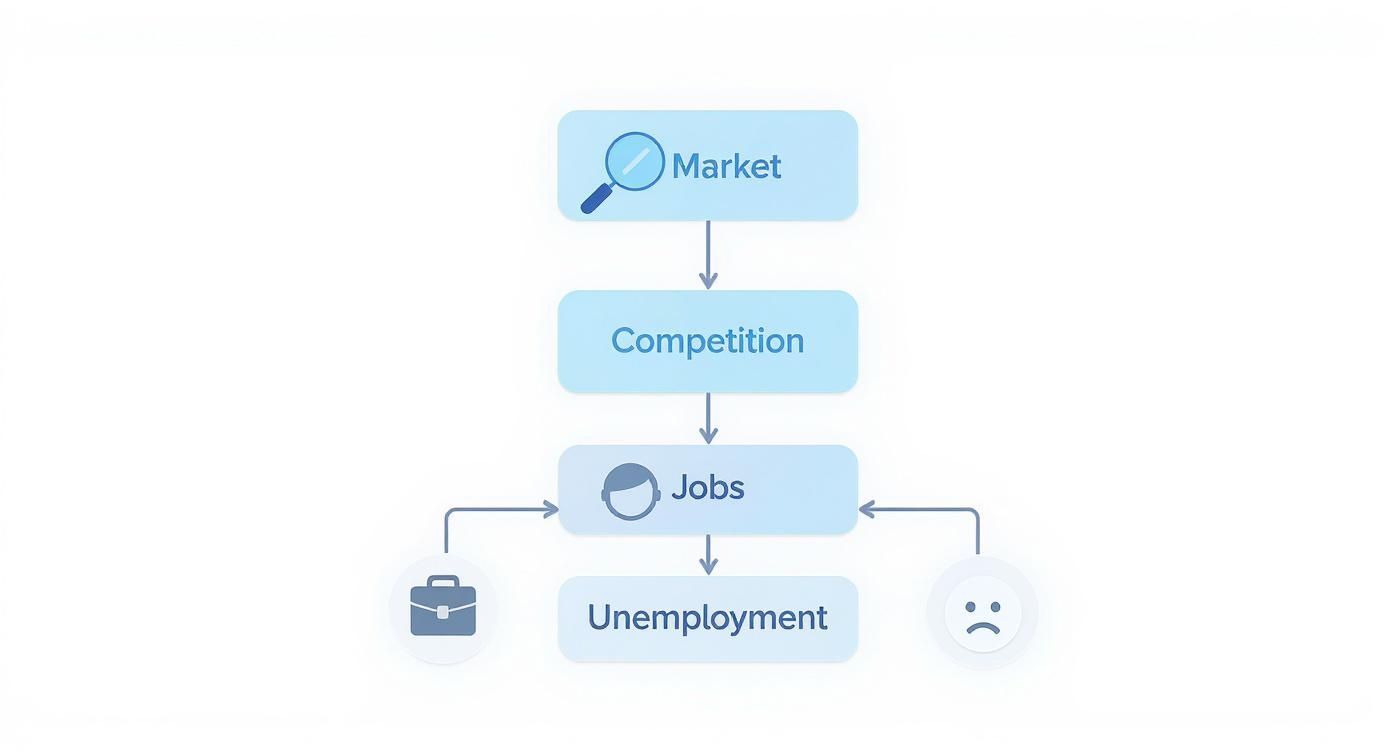
It shows how important it is to understand the bigger picture. This includes competition and job availability. Understanding these helps you make smart career moves.
Developing In-Demand Digital Skills
Some skills will always make you more valuable. Being good with digital tools is now a core requirement for most jobs. A diverse skill set helps you adapt to change. It can even help you switch industries later.
Think about learning skills that are needed everywhere. These skills are not just for tech companies. They are important in healthcare, manufacturing, retail, and government.
- Data Analysis: The ability to look at data and help a business make smart decisions is very valuable. Learning tools like Excel, SQL, or basic Python can make you stand out.
- Digital Marketing: Understanding how companies find customers online is a powerful skill. This includes social media, content creation, and search engine optimization (SEO).
- Project Management: People who can organize tasks, manage timelines, and lead a team are always needed. Certifications in methods like Agile or Scrum are a big plus.
Building a stable career is not just about picking the right industry. It is also about managing your own growth and productivity. Mastering your time and tasks is a skill that pays off daily.
Learning effective time management is a key skill. It helps you navigate a competitive job market. By focusing on these core skills, you build a career that is secure and full of potential.
Creating a Resume That Gets You Noticed
Your resume is your 30-second commercial. It is your ticket to getting an interview. For most young professionals, it is the first impression a hiring manager has of you. Getting it right is essential.
A generic resume does not work. Recruiters spend only about seven seconds scanning each one. Your resume must also pass the Applicant Tracking System (ATS). These systems filter out candidates before a human sees their application. Your resume must be smart for the software and compelling for people.

Your goal is to create a document that is clean, professional, and focused on the job you want. It needs to show that you are the right person for the role.
Breaking Down the Key Sections
A good resume tells a story. Each section has a role. Let's walk through how to build each part.
First, your contact information must be perfect. Include your full name, phone number, a professional email address, and a link to your LinkedIn profile. Put this at the top.
Next is your professional summary. This is a short, 2-3 sentence paragraph at the top. It should summarize your top skills, experience, and career goals. Tailor it to the specific job.
Showcasing Your Experience with Impact
The experience section is the most important part of your resume. This is where you show what you have accomplished. Do not just list your responsibilities. Focus on your achievements.
Use the PAR method: Problem, Action, Result. For each job, think about a challenge, what you did, and the outcome.
- Problem: The company’s social media engagement was low.
- Action: I created and launched a new content strategy for three platforms.
- Result: I increased follower engagement by 40% in six months.
Start your bullet points with strong action verbs. Use words like "managed," "created," "launched," and "analyzed." These are more powerful than passive phrases.
The best resumes use numbers to prove their point. Quantify your achievements with percentages, dollar amounts, or other figures. This gives hiring managers clear evidence of your impact. "Increased sales by 15%" is much better than "helped increase sales."
This change makes your experience section a compelling list of your career wins.
Highlighting Skills and Tailoring Your Application
Your skills section lets recruiters quickly see if you have the right qualifications. Create separate lists for hard skills (like software or languages) and soft skills (like communication or problem-solving).
Here is an important piece of career advice: tailor your resume for every job application. Read the job description carefully. Identify the key skills and qualifications they want.
Then, add those keywords and experiences to your resume. This shows the employer you have done your research. It also helps your resume get past the ATS screeners. This one step can be the difference between getting an interview and being ignored.
Creating a resume that stands out takes time. But it is a valuable skill for your entire career. To make it easier, you can find professional help and guidance. Explore the tools available to create a professional and effective resume.
Mastering Your Job Application and Interview
A great resume gets your foot in the door. Acing the application and interview gets you the job. This part can be stressful. With the right preparation, you can be confident. It is about proving you are the right person for the role.
Your work begins before you apply. Find the right opportunities. Write a cover letter that speaks to the hiring manager. Your cover letter should connect your resume to the job description. Show how your skills solve their needs.

From there, it is about making a great impression. This can be in person, on the phone, or over video. A great interview feels like a conversation. It just takes research, practice, and a clear plan for tough questions.
Preparing for the Interview
Good preparation makes you confident. Do not skip this step. Doing your homework shows the interviewer you are serious about the job.
Start by researching the company. Look beyond their homepage. Find recent news, understand their mission, and learn about their competitors. Know their products or services. This knowledge helps you ask smart questions and give relevant answers.
Next, prepare for common questions. You will likely hear some of these:
- "Tell me about yourself."
- "Why are you interested in this role?"
- "What are your greatest strengths and weaknesses?"
- "Where do you see yourself in five years?"
Practice saying your answers out loud. This helps you sound more natural and self-assured.
Answering Questions with the STAR Method
For behavioral questions, use the STAR method. These questions often start with "Tell me about a time when…" The STAR method gives you a simple structure to tell a story about your experience. It makes your answers detailed and easy to follow.
The STAR method turns a vague answer into a powerful example of your skills. It provides concrete evidence of your abilities. This is more persuasive than just listing your qualifications.
Here’s how to structure your answers using this technique.
Using the STAR Method to Answer Interview Questions
The table below explains each part of the STAR method. It shows you how to build a clear, impactful story that shows your skills.
| Component | What It Means | Example Answer Element |
|---|---|---|
| Situation | Set the scene and provide context. | "In my last internship, our team had to launch a social media campaign on a tight deadline." |
| Task | Describe your specific responsibility. | "My role was to create the visual content and write the copy for three different platforms." |
| Action | Explain the steps you took to do the task. | "I organized a content calendar, used analytics to find the best times to post, and worked with a designer." |
| Result | Share the outcome, using numbers to show success. | "As a result, we launched the campaign on time and increased engagement by 25% in the first month." |
Using this formula helps you give focused answers that show real results.
Navigating Different Interview Formats
Interviews can have different formats. Each requires a slightly different approach. A phone screen is usually the first step. It is a quick check of your basic qualifications. Find a quiet place, have your resume ready, and speak clearly.
Video interviews are very common now. Treat them like an in-person meeting. Dress professionally. Test your camera and microphone beforehand. Make sure your background is clean and simple. Look at the camera when you speak to make better eye contact.
For in-person interviews, be professional from the start. Dress appropriately for the company culture. Bring extra copies of your resume. Prepare a few good questions for the interviewers. Asking questions shows you are engaged and interested in the role.
Applying to many jobs can be a lot of work. To make your search more efficient, consider using AI tools. They can find matching jobs and automate applications for you. To learn more, see how you can streamline your job search.
Building Your Professional Network and Finding Mentors
Your professional network is a valuable career asset. It is not about collecting connections on social media. It is about building real relationships with people who can offer guidance and support. They are your personal board of advisors.
Strong connections can open doors that a perfect resume cannot. They provide support when you face challenges. The goal is to build real relationships, not just a list of contacts.
The Power of Early Connections
Internships offer more than just resume experience. They are your first chance to network in a professional setting. You work with experienced people who can see your potential.
Student internships have recently reached a six-year high. This shows how important real-world experience is. In a competitive market, a reputation for being reliable and proactive is a huge advantage. Experts advise being adaptable, finding mentors, and maintaining these early professional connections. You can find more insights on these leadership trends on businessrecord.com.
Strategies for Effective Networking
Networking can happen anywhere. The key is to have a plan. On platforms like LinkedIn, quality matters more than quantity.
- Polish Your Profile: Make sure your LinkedIn profile is complete and professional. It should clearly state your skills and career goals.
- Engage with Purpose: Do not just send random connection requests. Follow people in your field, share valuable articles, and leave thoughtful comments.
- Personalize Your Outreach: When you reach out, send a personal note. Explain why you want to connect. A generic request is easy to ignore.
Do not forget about in-person events. Industry conferences and local meetups can be very useful. Have a short "elevator pitch" ready about who you are. The most important skill is listening. Ask people about their work and be curious. You can explore more effective strategies for professional networking to improve your approach.
How to Find and Approach a Mentor
A mentor is someone with experience who can offer you advice. Finding the right mentor can speed up your growth. They have been where you are and can help you avoid common mistakes.
Look for potential mentors at your job, in your university alumni network, or through professional groups. You want someone whose career you admire and who is willing to help others.
A great mentor is more than just an answer-machine. They are a sounding board who will challenge you, push you to grow, and celebrate your wins.
When you find someone, be respectful of their time. Start by asking for a short, 15-20 minute informational interview. Prepare specific questions about their career. If the conversation goes well, you can then ask if they would consider a mentoring relationship. This is a smoother approach than directly asking, "Will you be my mentor?"
Developing a Strong Personal Brand and Online Presence
Your personal brand is what people think of when they hear your name professionally. It is the story you tell about your skills, values, and goals. A strong brand makes you memorable to recruiters and hiring managers.
Think of yourself as a product. The best products have clear, trustworthy branding. In your career, you are the product. Your personal brand is your packaging. It needs to be professional, consistent, and authentic.

When your brand is clear, you stand out. It helps you get noticed in a crowded job market. It also establishes you as a credible person in your industry.
Crafting Your Professional Story on LinkedIn
For most young professionals, LinkedIn is the foundation of their online presence. It is often the first place a recruiter looks. A great profile is a living portfolio of who you are professionally.
Start with the basics. A high-quality, professional headshot is essential. Your headline should be more than just your job title. Use it to show your expertise or ambition. For example, "Aspiring Data Analyst with a Passion for Storytelling."
Your summary section is where you tell your story. Write a compelling narrative in the first person. Connect your skills, achievements, and future goals. This is your chance to show some personality while staying professional.
Building a Complete and Compelling Profile
Your experience section should add to your resume. Use bullet points to highlight your achievements. Use numbers to back them up whenever possible. Include relevant projects, volunteer work, or coursework that shows your skills.
Recommendations and endorsements are social proof. Ask former managers, professors, or colleagues to endorse your skills or write a recommendation. Offer to do the same for them.
A complete and active LinkedIn profile shows recruiters you are a serious professional. Profiles with a photo get 21 times more views. Those with at least five skills are messaged up to 33 times more often.
Using Your Brand to Connect and Grow
Building a brand is an ongoing process. Keep your presence fresh and show your expertise by sharing relevant content.
- Share Industry Articles: Post articles about trends in your field. Add a short comment about what you found interesting. This shows you are engaged.
- Create Your Own Content: You do not need to be a professional writer. Share your thoughts on a recent project or a new technology in a short post. This can position you as a voice in your field.
- Engage with Others: Leave thoughtful comments on posts from people in your network. This increases your visibility and helps you build connections.
This kind of activity brings your personal brand to life. It turns your profile from a static page into a dynamic showcase of your professional journey.
Common Career Questions Answered
Starting your career can be confusing. It is normal to have questions. Getting clear answers helps you make smart moves and build confidence. Here is straightforward advice for common challenges young professionals face.
How Can I Get Experience if Every Entry-Level Job Requires It?
This is a common problem. The solution is to think of "experience" as more than just a full-time job.
You need to build a portfolio of work. There are many ways to do this. Internships are a great start. So are volunteer opportunities, freelance gigs, or personal projects. For example, if you want to work in marketing, you could manage social media for a local charity.
Feature these experiences on your resume. Highlight the skills you learned and the results you achieved. Do not forget about transferable skills like communication, teamwork, and problem-solving. You have been building those for years, and they are very valuable.
What’s the Most Important Skill to Develop Early in My Career?
Technical skills are important. But the most valuable skill is adaptability and a desire to learn. Industries change. Technology evolves. The ability to learn new skills and stay curious will make you essential.
Strong communication is also very important. Being able to explain your ideas clearly, listen to others, and work well in a team is necessary for success.
"Listen more. When I was early in my career… I felt like I was always waiting to talk. I was always preparing what I was going to say and not doing a good enough job listening, and that's something that I've really tried to hone."
This insight is key. Mastering these "soft" skills will often take you further than knowing a specific software.
How Long Should I Stay in My First Job?
There is no magic number. A good goal is to stay for at least one to two years. This gives you enough time to learn your job well and make a real impact.
Focus on growing where you are. Talk to your manager about your career goals. Ask what you can do to advance within the company. If you feel stuck after a reasonable amount of time and see no path forward, it might be time to look for other opportunities.
Ready to build a career that truly stands out? Gainrep is your all-in-one companion. From crafting the perfect resume to getting endorsements that showcase your reputation, we provide the tools you need to succeed. Explore how Gainrep can help you.
