


Receiving a job offer is a big moment. It's exciting, but your next steps are very important. The best move is to show excitement and thank the company. Then, ask for the full offer in writing. This gives you time to think. It also provides all the details you need to make a smart choice without saying "yes" right away.
What to Do When You Get a Job Offer
The first day or two are about getting information. Your first reaction sets the tone, whether the offer comes by phone or email. You might want to accept immediately, but it is better to wait. Resisting this urge is a good idea, even if the job seems perfect.
An instant "yes" can suggest you have not thought through the details. This could weaken your position if you decide to negotiate later.
Your first step is simple. Thank the hiring manager sincerely. Tell them you are pleased and still interested. This keeps the relationship positive while you review everything.
Requesting the Offer in Writing
After you express thanks, ask for the details in a formal, written offer. A verbal agreement is not enough. A written document clears up confusion. It makes sure everyone agrees on the terms. Think of it as the foundation for your decision.
Initial Offer Evaluation Checklist
Before you dive deep into the pros and cons, use this quick checklist. It helps you confirm you have all the key information from the written offer. If anything is missing, now is the time to ask for it.
| Component | What to Look For | Status (Received/Pending) |
|---|---|---|
| Official Job Title | Confirms the exact position and its level in the company. | |
| Salary or Base Pay | The specific compensation figure, stated annually or hourly. | |
| Start Date | Your official first day of employment. | |
| Reporting Structure | Who you will directly report to. | |
| Summary of Benefits | An overview of health insurance, retirement plans, PTO, etc. | |
| Any Contingencies | Conditions you must meet, like a background check or drug screen. |
Having these details on paper allows you to review everything carefully without pressure. It is also your official record of what was discussed. Once you have checked these boxes, you are ready to evaluate the offer.
This careful approach is more common than you might think. In fact, one in five American candidates ultimately decline job offers after receiving them.
It is a simple, three-part process that keeps you in control.
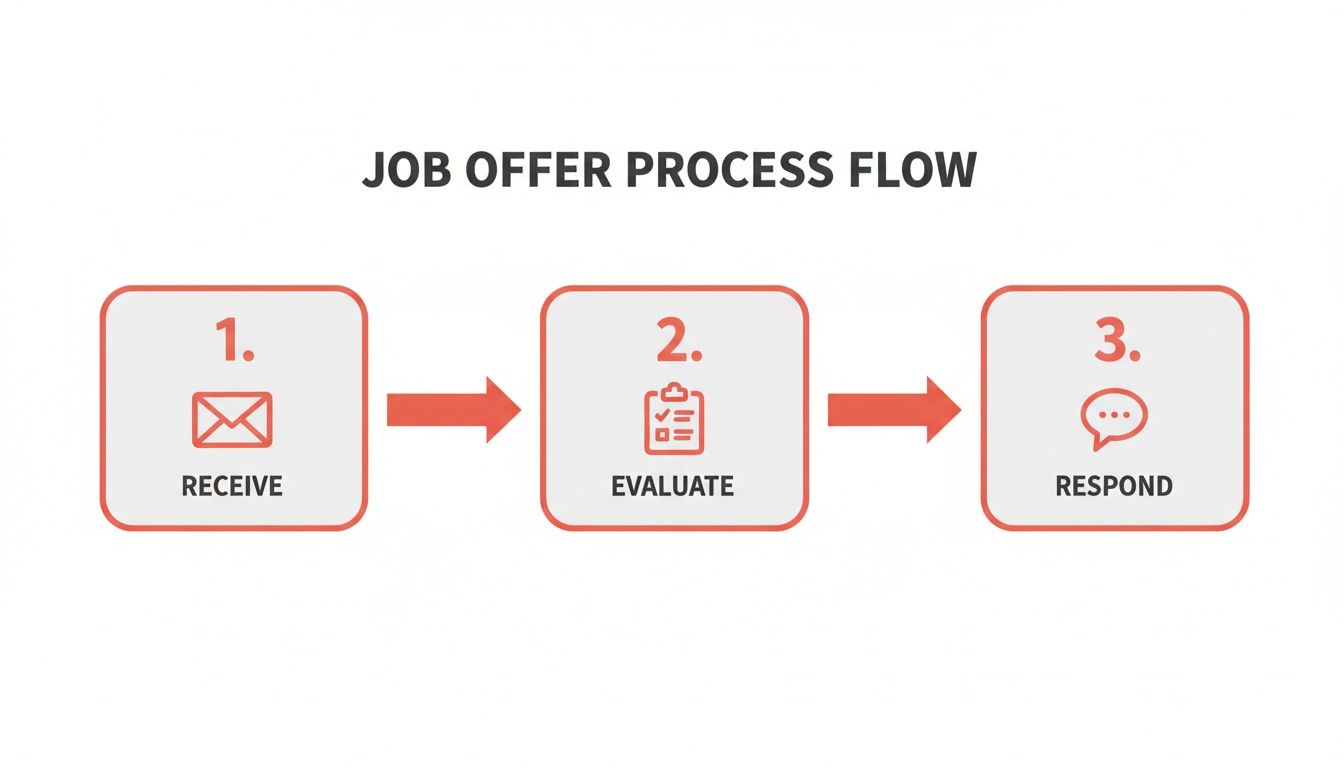
This step-by-step flow—receive, evaluate, respond—is your best strategy for making a confident choice. It is especially critical right now. The United States has the lowest offer acceptance rate among major countries at just 79%. This shows a real gap between what companies offer and what candidates want. You can discover more insights from the 2025 Global Recruitment Report.
Taking a day or two to review the full package ensures you do not become part of that statistic because of a rushed decision.
Evaluating Your Full Compensation Package
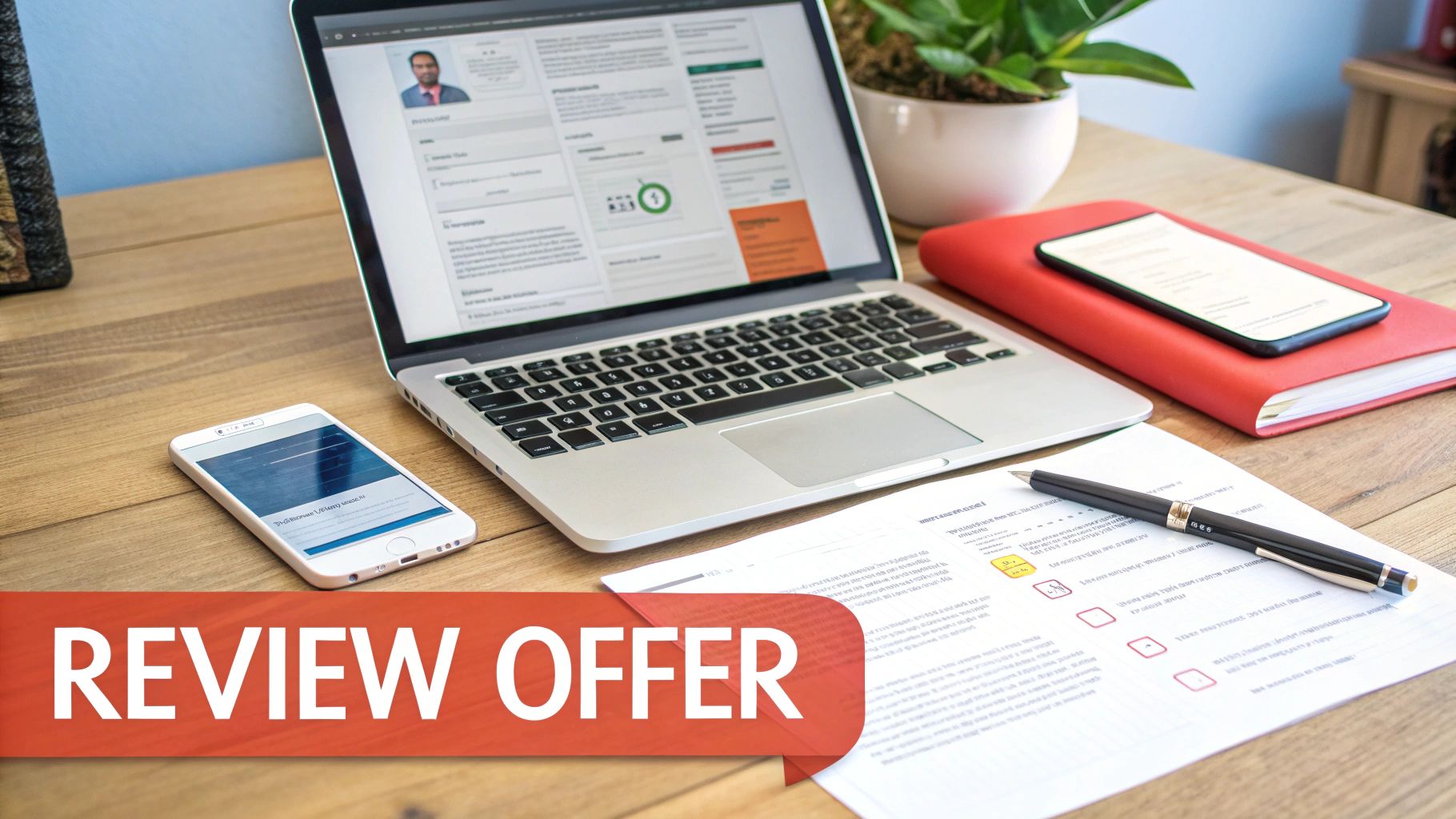
The salary figure always gets the most attention. It is rarely the whole story. To really know what you are being offered, you must look at the entire compensation package. Often, the real value is in the benefits and perks that support your life.
Your base salary is just the starting line. Before you decide if it is fair, do your research. Look up the market rate for your role, experience level, and location. A salary that sounds great in one city might be average in another because of living costs.
Think about it this way. A $70,000 salary in a town with low rent could give you a better lifestyle than an $85,000 salary in a pricey city.
Beyond the Base Salary
Most offers are more than just a paycheck. They often include other financial incentives that can boost your total earnings. These extras almost always come with conditions. You must understand those conditions before saying yes.
Keep an eye out for these common extras:
- Performance Bonuses: These are usually linked to your performance or the company's. You need to ask how they are calculated. Also, ask how consistently they have been paid out over the last few years.
- Signing Bonuses: This is a one-time cash payment to get you to join. Be aware you might have to pay it back if you leave the company within a set period, like the first year.
- Stock Options or RSUs: Getting equity means you own a small piece of the company. The key thing to understand here is the vesting schedule. This is the time you have to work there before the shares are truly yours.
The Hidden Value of Benefits
Benefits are a huge, often overlooked, part of your compensation. A good benefits package can act as a financial safety net. It can save you thousands of dollars a year. When you look at the full package, get into the details of things like employer-sponsored health insurance to see their real worth.
A solid benefits package will typically include:
- Health, Dental, and Vision Insurance: Do not just glance at this. Find out the exact monthly premium you will pay. Also check the out-of-pocket costs like deductibles and co-pays. A low premium often means a high deductible.
- Retirement Plans: Most companies offer a 401(k) or a similar plan. The real prize here is the employer match. It is literally free money. If your company matches 50% of your contributions up to 6% of your salary, you should contribute at least that 6% to get the full match.
- Paid Time Off (PTO): This covers your vacation, sick, and personal days. More PTO means a better work-life balance. That has a real value that you will feel throughout the year.
A job with a slightly lower salary but great, low-cost health insurance and a generous 401(k) match can be a smarter financial move than a higher-paying role with poor benefits.
Do the math to compare offers accurately. Add up what the employer contributes to your health insurance and retirement. Then factor in the value of your PTO. This gives you a much clearer picture of the offer, helping you accept a job that supports your long-term goals.
How to Navigate Salary Negotiations

Negotiating your job offer is a completely normal part of the hiring process. Companies often expect it and build room into their initial offer. A respectful, well-researched negotiation shows you know your worth. It also shows you are serious about the role.
The goal is not to start a battle. It is to find a good outcome for both sides. You want to feel valued for your skills. The company wants to hire a happy, motivated employee. Remember, your salary is just one piece of the puzzle.
Building Your Case for a Higher Offer
Before you ask for more, you need to prove you deserve it. Your request must be based on solid facts, not just a feeling. You have to be ready to explain why your requested salary is fair and justified.
A strong case is built on a few key pillars:
- Market Data: Do your homework. Research average salaries for your specific role, industry, and location. Showing your request lines up with market rates is your strongest opening move.
- Your Unique Value: This is where you shine. Highlight the specific skills or achievements that make you a great candidate. Did you lead a project that boosted revenue by 15%? Mention it.
- Company Needs: Connect your value directly to the job description. Explain exactly how your abilities will solve their problems from day one.
This is also where a strong professional reputation becomes a powerful asset. You can seriously strengthen your position by showing your value through recommendations from peers and past managers. For help building a strong professional reputation, visit GainRep.
Key Areas You Can Negotiate
While salary is usually the main event, other parts of the offer are often negotiable. Looking at the whole package can lead to a much better final deal. This is true even if the base salary does not move much.
Other common points of discussion include:
- Signing Bonus: A one-time payment can bridge a gap if the company cannot raise the base salary.
- Start Date: Need an extra week or two before you begin? This is almost always an easy request for a company to grant.
- Remote or Hybrid Work: If you want to work from home a few days a week, this is the perfect time to ask.
- Professional Development: Ask if the company will cover the cost of a certification or conference that will benefit both of you.
Remember that negotiation is a conversation, not a demand. Approach it with a collaborative and positive attitude to find a solution that works for everyone. To further hone your skills in securing favorable terms, consider these actionable contract negotiation tips.
For entry-level candidates, the situation can feel different. Graduating seniors report an 86.7% acceptance rate. This is higher than the overall U.S. average. This suggests new grads might feel less comfortable negotiating. Learning to negotiate is a valuable skill to build early in your career. A confident, well-prepared negotiation can set you up for success long before you accept a job offer.
Writing Your Job Offer Acceptance Email
You have made it through negotiations and are ready to say "yes." Now it is time to make it official. You probably accepted verbally over the phone. The written acceptance email is what seals the deal.
Think of it as the formal handshake. It confirms everything for you and your new employer. It is a simple but key step that prevents misunderstandings. Your goal is to be clear, professional, and positive. This reinforces the great impression you have already made.
What to Include in Your Acceptance Email
Your acceptance email does not need to be complicated. It is just a formal confirmation of the details you agreed on. A well-written email makes it easy for the hiring manager to start your onboarding paperwork.
Here’s a quick breakdown of what to cover:
- A Clear "Yes": Start by clearly stating that you are accepting the job. Use the exact job title from the offer letter.
- Confirm the Details: Briefly mention the key terms you agreed on, like the salary and your official start date. This confirms you are both on the same page.
- Show Your Enthusiasm: Add a quick line about how excited you are to join the team. It is a nice touch that ends the process on a high note.
- Ask About What’s Next: Politely ask about the next steps. Ask when you can expect onboarding documents or who to contact with questions.
Always give your acceptance email a final proofread before you hit send. A clean, error-free message shows professionalism and attention to detail from day one.
Of course, getting to this point starts with a strong application. A well-crafted resume is what gets an employer’s attention and opens the door to an offer.
You need a resume that stands out. You do not have to build it from scratch.
This screenshot shows how a resume builder can give you a professional structure. It makes it much easier to present your experience effectively. The goal is to create a document that gets you noticed. This is the first step before you can accept a job offer. You can check out tools to build a professional resume with GainRep's resume builder.
A Simple Template for Your Acceptance Email
You do not need to write an essay here. A short, professional email is all it takes. Feel free to use this template as a guide. Remember to fill in your own details to make it personal.
Subject: Job Offer Acceptance – [Your Name]
Dear [Hiring Manager's Name],
Please accept this email as my formal acceptance of the [Job Title] position at [Company Name]. I am very excited to accept this offer and look forward to joining the team.
As we discussed, I am accepting the starting salary of [Agreed-Upon Salary] per year. My start date will be [Your Start Date].
Thank you again for this incredible opportunity. I am eager to start contributing to [Company Name] and working alongside you and the team. Please let me know if there is any paperwork or other information you need from me before I start.
Best regards,
[Your Name]
[Your Phone Number]
[Your Email Address]
That’s it. This simple format covers all the essentials. It confirms the terms, shows your appreciation, and wraps up the acceptance process on a positive note.
What to Do After You Accept The Offer

Once you have officially accepted the job offer, the journey is not over. The steps you take after saying "yes" are as critical as the negotiation.
This is your moment to wrap up your current role with professionalism. It is also time to set the stage for a great first impression at your new company.
How you leave your current job really matters. The goal is always to resign gracefully. You never know when your paths will cross again with old colleagues. It pays to maintain those positive relationships.
Resigning From Your Current Job
First things first: you need to let your current employer know you are moving on.
Schedule a private meeting with your direct manager. Telling them in person or over a video call is a sign of respect. An email or text cannot match that.
After that conversation, follow up with a formal resignation letter. This is just for the record. It should be brief, professional, and to the point. You do not need a long explanation.
Your letter just needs to include a few key things:
- A clear, simple statement that you are resigning.
- Your official last day of employment (stick to the standard two-week notice period).
- A quick, positive line thanking them for the opportunity.
During your final two weeks, your focus should be on finishing your projects. Make the handover as smooth as possible for your replacement. Offering to train them is a professional courtesy. It leaves a lasting positive impression. It shows you care about the team's success even as you are leaving.
Your Pre-Boarding Checklist
While you serve out your notice, you can start getting ready for the new role. Most companies will send onboarding paperwork before you start. Getting that done early means you can hit the ground running on day one. You can focus on learning and meeting your new team.
Taking proactive steps before you start sets a positive tone. It shows your new employer that you are organized, engaged, and ready to contribute from the moment you arrive.
Use this time to your advantage with a simple pre-boarding checklist:
- Complete All Paperwork: Get all the HR forms, tax documents, and direct deposit information filled out as soon as you receive them.
- Understand Company Culture: Look at the company’s website and social media again. Reread any materials they sent you to get a better feel for their communication style and values.
- Set First-Week Goals: Think about what you want to achieve in your first few days. It could be learning the names of your key teammates or getting comfortable with the main software you will be using.
It is also a smart move to stay in touch with your new manager. A quick, positive email a week before you start can make the transition smoother. A simple note expressing your excitement is all it takes. It reinforces their decision to hire you. This small step helps you not just accept a job offer but begin your new role with total confidence.
Answering Those Tricky "What If" Questions About Your Job Offer
Even after you have accepted a job, things can get complicated. Navigating these final stages professionally is key to starting your new role on the right foot. It can also help you back out gracefully if you have to.
What If I Get a Better Offer After I've Already Said Yes?
This is a tough spot, but it happens. You have accepted one offer, and then a dream company comes through with something better. What do you do?
First, be sure the new offer is truly better. Do not just look at the salary. Compare everything: benefits, culture, commute, and career path. If you are certain it is the right move, you must tell the first company immediately. A direct phone call is the most respectful way to handle it. Be honest, but keep it brief and professional.
Can I Actually Back Out After Accepting?
Legally, yes. Most employment is "at-will," meaning you can change your mind. But be warned: doing this can burn bridges in your professional network. It is a move you should only make with extreme caution to protect your reputation.
If you must rescind your acceptance:
- Move Fast: Let the employer know the second you have made your decision. Do not leave them hanging.
- Be Professional: Politely and concisely explain your situation. You do not need to give every single detail.
- Acknowledge the Hassle: Apologize for the inconvenience. You are disrupting their hiring process, and it is important to show you understand that.
What If the Company Takes Back the Offer?
It is rare, but it happens. A company might withdraw an offer for many reasons. These could include a failed background check, restructuring, or budget cuts. If this happens to you, the first step is to stay calm and ask for a clear explanation.
If their reason feels unfair, you could talk to an employment lawyer. In most cases, the best thing to do is jump right back into your job search. It is a painful reminder to not stop your job hunt until you have a signed contract and have started your new job.
Getting an offer is a massive win. The job market is tough. Some candidates send out 32 to over 200 applications just to land one offer. The success rate for online applications is between a tiny 0.1%–2%. Even getting to this stage is a huge accomplishment. You can read the full research about job application statistics.
A withdrawn offer feels personal, but it is not a reflection of your worth. Dust yourself off, reach out to your network, and get back out there with a renewed focus.
How Do I Juggle Multiple Job Offers at Once?
This is the best kind of problem to have. The key here is professional communication. Thank each company for their offer. Ask for a reasonable amount of time to make your decision. A few days is standard.
Lay the offers out side-by-side. Weigh the entire package, not just the salary. Compare them against what you want for your career. Once you have made up your mind, let both companies know right away. Accept your chosen offer with real enthusiasm. Politely decline the other, and thank them for their time.
Getting to the offer stage is the hardest part of the job search. At GainRep, we make the application process easier. Our AI Auto-Apply tool finds jobs that are a perfect fit for your resume. It then automatically applies for you. It can even craft tailored cover letters to help you stand out. Stop wasting hours on applications and start prepping for interviews. Check out the GainRep AI Auto-Apply tool and let us streamline your path to your next great job offer.
