

Getting great job references is simple. Pick the right people. Ask them the right way. Give them what they need to praise you. When you do this well, references become a powerful tool to land you the offer. They are more than just a box to check.
Why Strong References Are Your Secret Weapon
Think of references as the final chapter of your application. They are not just a formality. A glowing recommendation can be the tie-breaker between you and another top candidate. It can push you over the finish line.
A hiring manager calls your references for a reason. They want proof of your skills. They want insights into your work ethic. They want to know how you will fit in with their team. Your resume cannot show these things.
The Real Impact of a Reference Check
Many job seekers ignore this final step. The data tells a different story. This is a critical stage where many good candidates get cut.
Professional references are still a decisive part of hiring. Research shows that 8 in 10 HR executives check references. They use these checks to verify an applicant's background. About one-third of managers use these calls to understand a candidate's past duties and experience.
The results can be significant. Some surveys found that about 34% of candidates are dropped after reference checks. That statistic shows how one conversation can make or break your chances. This is not just about confirming dates. Your references are shaping the final hiring decision.
Shifting Your Mindset
Treating references as an afterthought is a big mistake. You need to see them as a strategic part of your job search. A proactive approach looks like this:
- Identify Your Champions Early: Know who your top 3-5 advocates are. Do not scramble when a recruiter asks for a list.
- Keep Relationships Warm: Stay in touch with potential references. A quick check-in now and then helps. Your request will not feel cold or random.
- Understand Their Perspective: Choose people who have seen you at your best. They should be able to share specific stories about your work.
By choosing and preparing your advocates, you gain a tool to influence the hiring outcome. You build a small team of supporters. They are ready and eager to champion your success.
Think about how this fits into your job search strategy. A strong reference list complements a clear career path. You might map out a path in a practical career guide on how to get a job in F1. When every piece of your application works together, you present a convincing case for why you are the one to hire.
Choosing People Who Will Champion Your Success
Your references are your career advocates. They are not just names on a list. Picking the right people is the most critical part of this process. The goal is to build a team of 3-5 people. Together, they can paint a complete and powerful picture of you as a professional.
Think of your potential references as a portfolio. Each person offers a unique view. When you combine them, you give a hiring manager a well-rounded view of your value.
Create a Diverse Reference Portfolio
A common mistake is to list only former managers. A manager's view is vital. But a list of only managers can feel one-dimensional. A mix of contacts tells a richer, more credible story about your value.
Your ideal portfolio should include a variety of voices:
- Direct Managers: They offer the most authoritative view. A manager can speak to your performance, targets, and how you handled responsibility. Their opinion carries serious weight.
- Senior Colleagues or Mentors: These people can vouch for your collaboration skills. They have seen you work on team projects and communicate with peers.
- Former Direct Reports: A glowing review from a former team member is powerful if you were in a leadership role. They can speak to your management style and your ability to guide a team.
- Clients or Vendors: An outside perspective can be very valuable. A happy client provides a strong testimonial about your reliability and the impact of your work.
This diagram shows what a hiring manager wants to learn from your references.
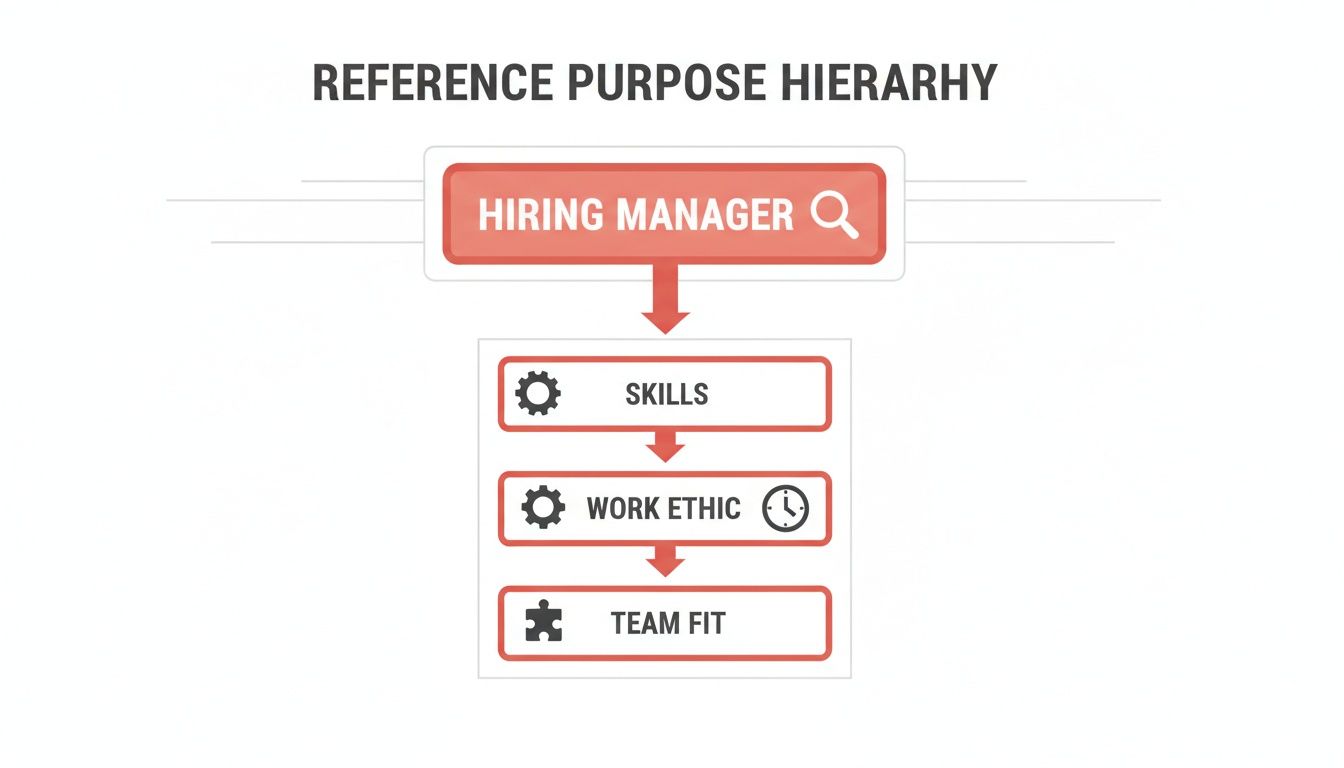
As you can see, it is about more than just your skills. They are trying to gauge your work ethic. They also want to predict how you will fit into the team culture.
A Checklist for Vetting Your Choices
Run each person through a quick mental checklist. Just because you worked with someone does not make them a good reference. You need people who are enthusiastic about helping you.
Ask yourself these questions about every person you consider:
- Do they know my work well? A great reference needs to recall specific details. Someone who vaguely remembers you will not be convincing.
- Can they tell a specific success story? The best references are storytellers. They can say, "I remember when they saved the X project…" instead of just, "They were a good employee."
- Are they positive and articulate? You want someone who communicates clearly and sounds excited for you. A lukewarm reference can do more harm than good.
- Did we part on good terms? This is very important. Only ask people with whom you have a strong, positive relationship.
Choose people who saw your professional growth. They should be able to speak with genuine admiration for your skills. Their enthusiasm can influence a hiring manager's final decision.
When you consider these factors, you build a network of champions. This thoughtful approach is the foundation for getting great references. It ensures that the hiring manager hears a consistent, compelling story about you.
How to Ask for a Reference Professionally
Asking someone to be your reference can feel awkward. It does not have to be. A professional and thoughtful approach makes it easy for them to say yes. The golden rule is simple: always ask for permission before you list someone.
This is more than a courtesy. It shows respect for their time. It also gives them a comfortable way to say no if they are not the right person. A surprised reference is rarely a good one. A well-timed, thoughtful request sets you up for success.
Crafting the Perfect Request Email
Email is usually the best way to ask. It is not pushy. It gives your contact space to think about their response. A great request is friendly, direct, and has all the needed information.
Here is a solid template for reaching out to a former manager.
Email Template Example: Former Manager
Subject: A Quick Question & Catching Up
Hi [Manager's Name],
I hope you're doing well. I enjoyed your recent update on [mention a specific project from their LinkedIn]. Congratulations on that success!
I am in the final stages of interviewing for a [Job Title] position at [Company Name]. The role seems like a fantastic fit. It focuses on [mention 1-2 key skills], and I thought of the work we did on the [Project Name].
Would you be comfortable serving as a positive reference for me?
To make it easy, I've attached my updated resume and the job description. They are very interested in my experience with [mention another key skill].
Please let me know if you are open to it. No worries at all if you are too busy. Thank you for your time and guidance at [Previous Company].
Best,
[Your Name]
This template works. It hits all the right notes. It opens with a personal touch. It gets straight to the point. It makes the "ask" direct but low-pressure.
Why This Approach Is So Effective
This email follows a simple but powerful formula. Every part has a job to do. It guides your contact toward an enthusiastic "yes."
- The Friendly Opening: It reconnects you as people. It shows you value them beyond what they can do for you.
- The Clear Context: You explain the situation immediately. You mention the role, the company, and why you thought of them.
- The Direct Question: Phrasing it as "Would you be comfortable?" is polite. It gives them an easy way to decline.
- The Essential Attachments: Attaching your resume and the job description is a must. This equips them with the details they need.
Always make it easy for your reference to help you. The more work you do for them upfront, the more powerful their recommendation will be.
Having a sharp, professional resume is a huge part of this. Tools like GainRep's resume builder can help you create a polished document. It helps you look good during this crucial step.
Adapting Your Request for Different Situations
You will not always ask a recent manager. You might need to reach out to a colleague. Or you might contact someone you have not spoken to in a while. Tweak the tone and context to fit the relationship.
For a close colleague, you can be more casual. You can mention your collaborative work. If you are contacting someone after many years, your opening needs to gently remind them of who you are.
LinkedIn Message Template Example: A Former Colleague
Hi [Colleague's Name],
Hope you're having a great week! I was thinking about the [Project Name] we worked on at [Company Name]. We made a great team.
I'm applying for a role that requires strong collaboration skills. Our work on that project came to mind. Would you be willing to be a reference for me and speak to how we worked together?
I can send my resume and the job description for more context. Let me know if that works for you. Thanks so much!
This approach is quick and perfect for a platform like LinkedIn. It establishes your shared history and makes a clear request. By tailoring your message, you boost your chances of getting enthusiastic support.
Equipping Your References to Give a Great Review
Getting a "yes" from your contact is the first step. Your job is not done. Now you must set them up for success.
A reference with the right information can give a powerful recommendation. They will be more specific than someone trying to recall details on the spot. Your goal is to make their job as easy as possible.
The best way to do this is with a simple "briefing packet." This is just a follow-up email with everything they need. It shows you are professional. It also helps align their feedback with the job you want.

Assembling the Perfect Briefing Packet
Think of this email as your highlight reel. You want to arm your reference with key details. This helps them speak confidently about your value. Sending this information proactively keeps them from using generic praise.
Keep your briefing email short. Stick to these essentials:
- The Job Description: Attach the official job description or send a direct link. This shows them the skills that matter most for this role.
- Your Latest Resume: Send the exact same resume you submitted. This keeps everything consistent and reminds them of your experience.
- Key Talking Points: This is the most crucial part. Give them a few bullet points. These points should connect your past work with the needs of the new role.
This preparation can be the difference between a good reference and an outstanding one. It turns vague praise into a specific, memorable story.
Guiding the Conversation with Talking Points
Your references are busy. They will not remember every project you worked on. Your job is to jog their memory. Point them toward the most relevant examples. Frame these talking points as helpful suggestions, not a script.
Here is how you can structure those bullet points.
Example Talking Points in Your Email:
"To give you more context, the hiring manager is focused on project efficiency. You might remember:
- The work on the Q3 Avion project, where my new tracking system reduced delivery times by 15%.
- My role leading weekly meetings that improved communication and cut redundant tasks.
- How I documented team processes, which became the new department standard."
Each point is specific and tied to a real outcome. This gives your reference concrete examples to use. It makes their recommendation sound more credible and impressive. You are connecting the dots for them.
Giving your references specific examples empowers them. It is not about telling them what to say. It helps them authentically champion your skills.
Final Steps and Follow-Up
Once you send your briefing packet, give your reference a heads-up. Let them know to expect a call or email. Also, double-check which contact info they prefer you to share.
This whole process is a crucial final touch. It shows you are organized and serious about the opportunity. While getting references ready, you can keep your job search moving. Many people use tools like GainRep’s AI auto-apply feature. It helps find and apply for more roles. This gives your prepared references more chances to help you.
Do not forget to send a thank-you note after they have been contacted. Keeping them in the loop shows gratitude. It is key to maintaining a strong professional relationship.
Managing Your Reputation Beyond a Contact List
Your professional reputation is more than a list of names. It is online, 24/7. It acts as a public reference for anyone who looks you up. A hiring manager will likely search for you online before an interview.
This online persona is your first, unspoken reference. The good news is you have a lot of control over the story it tells. Taking charge of your online presence is a critical part of any modern job search.
Your Digital Footprint Is Your First Reference
Hiring managers regularly use the internet to get a feel for a candidate. It is a simple way to check a resume. They see if the person on paper matches the professional they find online. The numbers show this is now a standard practice.
One analysis found that 95% of employers research candidates online. Research from a recruitment index showed that 84% of HR professionals in Australia search for more information on candidates online. This trend turns platforms like LinkedIn, personal portfolios, and public endorsements into "always-on" references. They are either working for you or against you. You can learn more about these recruitment trends and how they impact hiring.
Your online presence acts as a silent reference. It speaks volumes about your professionalism before you ever have a conversation. Managing it is one of the smartest career moves you can make.
A strong online reputation gives you a serious advantage. It backs up the claims on your resume with public proof from people you have worked with.
Proactively Building a Portfolio of Endorsements
You can build a public portfolio of positive recommendations. This way, you do not have to wait for a recruiter to call your references. This is why platforms like GainRep exist. They help you collect and display these powerful endorsements from colleagues, managers, and clients.
Doing this creates a central hub for your professional reputation. It adds depth and credibility to your resume. Think of it as a living reference list.
Here is how you can start building that portfolio:
-
Request Recommendations Strategically: Do not just hit the "request" button. Guide the person just like a formal reference. Mention a specific project or skill you want them to highlight.
-
Focus on Results: Encourage your contacts to be specific about outcomes. A recommendation that says, "She increased social media engagement by 40%," is more powerful than one that just says, "She's good at social media."
-
Keep It Fresh: Make it a habit to request a new endorsement after a major project. A steady stream of recent, positive feedback shows consistent performance.
Building online credibility strengthens your entire job application. It makes your search even more effective when paired with tools designed to get your profile in front of employers. GainRep’s AI Auto-Apply service uses your strong reputation to find and apply for matching roles for you.
Common Questions About Job References
Even with a good plan, asking for references can be tricky. Let's tackle some common questions. This will help you handle these moments with confidence.
What If I Can't Use My Current Boss?
This is a very common issue. It is normal that you cannot use your current manager. Your job search is your business. It should stay confidential until you have a signed offer.
Never list your current boss without asking them first. This is almost always a bad idea. Instead, think about other trusted colleagues who have seen your recent work.
Here are your best options:
- A Previous Manager: If a manager from your current company has left, they are a perfect choice.
- A Senior Colleague or Team Lead: Someone who oversaw your work on important projects can offer a great perspective.
- A Manager from a Past Job: A great manager from a previous role is still a valuable reference.
- A Key Client or Stakeholder: If you worked with clients, their perspective can be powerful.
When you ask, just explain that your job search is confidential. They will understand.
How Do I Get References with No Work Experience?
If you are a recent grad, pull from your academic and extracurricular life. That is okay. Hiring managers do not expect a long list of professional managers. They want to hear from credible people who can speak to your character and skills.
Think about people who have seen your work ethic in action.
Your top choices include:
- Professors or Academic Advisors: Pick an instructor from a tough class or a major project. An advisor who guided your studies is a great option.
- Internship or Volunteer Supervisors: Anyone who supervised your work in a professional setting is an excellent reference.
- Part-Time Job Managers: A manager from a retail job can speak to your reliability and teamwork skills.
- Club or Organization Leaders: If you had a leadership role in a student club, the faculty advisor can be a great reference.
The key is to find credible people who can speak to your character and drive. Give them your resume and details about the jobs you are targeting. This helps them give relevant feedback.
How Should I Format My Reference List?
Follow this rule: do not put your references on your resume. This is a common mistake. It takes up valuable space. It also gives away their private contact info without their consent.
Instead, create a separate document for your reference list.
This document should have the same header as your resume. This keeps things looking professional. Below the header, create a clean, easy-to-read list.
For each reference, include:
- Full Name
- Job Title
- Company
- Phone Number
- Email Address
- Your Professional Relationship (e.g., "Former Direct Manager at Acme Corp")
On your resume, a simple line that says "References available upon request" is all you need. Only provide your reference list when a hiring manager asks for it. This is almost always after a successful interview.
Is It Okay to Use a Friend or Family Member?
You should avoid using friends or family as professional references. Hiring managers want unbiased feedback from people who have supervised your work.
Using a personal contact can seem unprofessional. It might signal that you do not have strong professional advocates. This can be a red flag.
The only rare exception is if you worked in a family business. Even then, it is better to use a non-family manager or a major client. Stick with professional connections to keep your credibility high.
Navigating job references is a crucial skill. At GainRep, we provide tools to help you build and showcase a powerful professional reputation. We make every step of your job search more effective. From creating a standout resume to using AI for your applications, we are here to help you succeed. Find jobs that match your skills and apply automatically with GainRep's AI Auto-Apply feature.
