
Choosing the right resume format is your first move in a job hunt. This choice shapes the first impression a recruiter gets of your career. Both chronological and functional resumes aim to get you an interview. They just tell your story in very different ways.
Chronological vs Functional Resume: The Core Differences
The core difference is about focus. A chronological resume highlights your work history. It shows a clear, linear path of your career growth. A functional resume puts your skills first. It groups your accomplishments by ability, not by where you worked.
For almost every job search, the chronological format is the clear winner.
A chronological resume is the gold standard for a reason. It lists your work experience from your most recent job backward. This simple format lets hiring managers quickly trace your career path. It shows a clear timeline of your achievements. This format is also what Applicant Tracking Systems (ATS) understand best. Over 98% of Fortune 500 companies use ATS.
A functional resume, in contrast, puts your skills at the top. Instead of a work history section, you create skill categories. These could be "Project Management" or "Content Creation." You list your accomplishments under these skills. Your actual job history is often in a small section at the bottom. The problem is that recruiters often see this as a red flag. They might suspect you are hiding job gaps or a scattered career path.
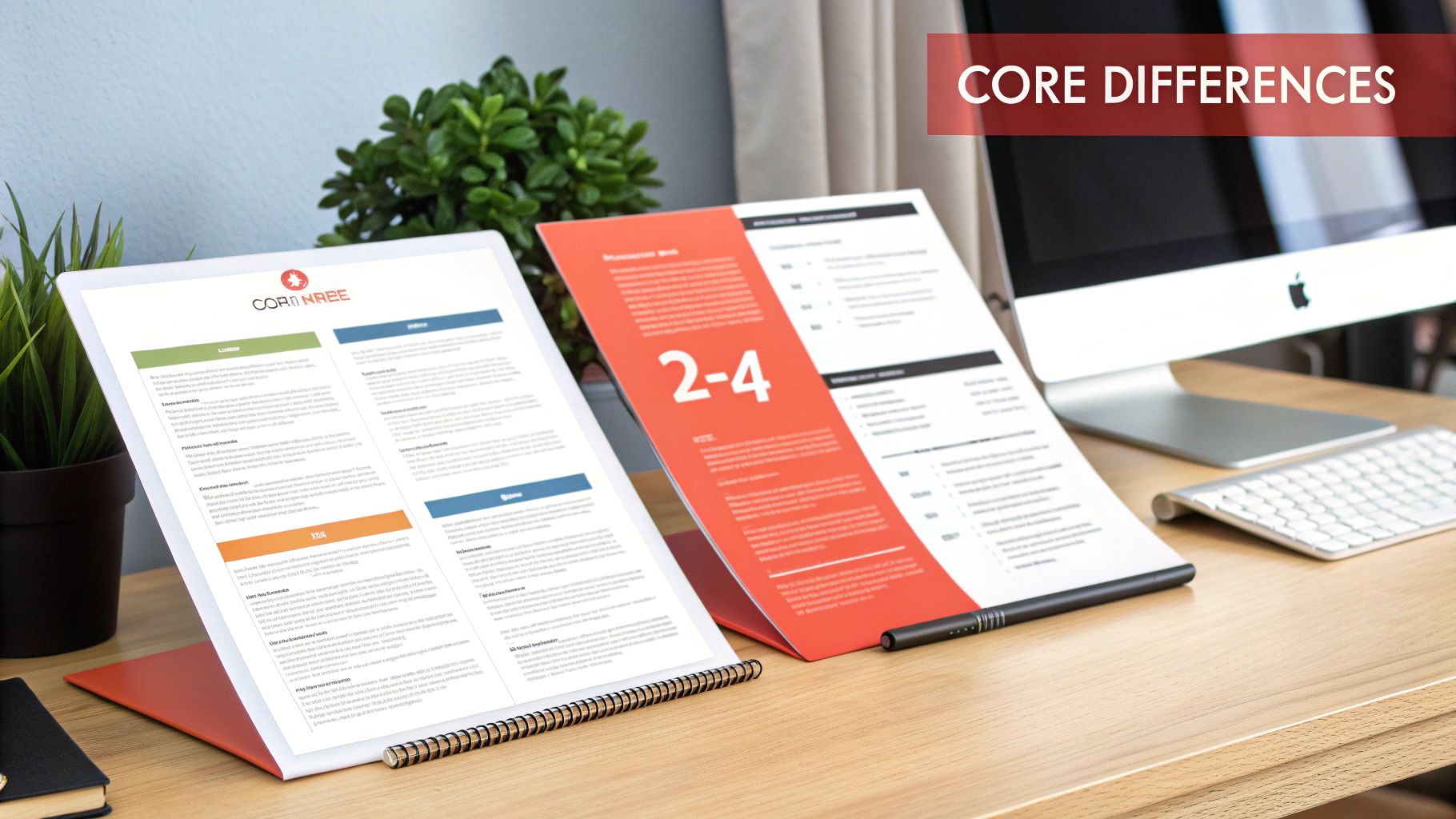
Quick Comparison: Chronological vs Functional Resumes
This table shows how these two formats stack up. It breaks down what each one prioritizes. It also shows how hiring managers and systems see them.
| Feature | Chronological Resume | Functional Resume |
|---|---|---|
| Main Focus | Work history and clear career progression. | Skills and specific abilities. |
| Best For | Professionals with a steady, traditional work history. | Career changers or those with significant gaps (but use with extreme caution). |
| ATS Compatibility | High. The structure is clean and easy for software to parse. | Low. Often causes scanning errors and can get your application rejected. |
| Recruiter Perception | Positive. It's seen as transparent, honest, and easy to follow. | Negative. Often viewed with suspicion, as if you're trying to hide something. |
For most job seekers, the choice is simple. A chronological resume provides the clarity that both recruiters and hiring systems prefer.
Creating an effective resume is a critical first step. It starts with the right format. When you are ready to build one, using a professional tool can help. A good resume builder ensures your document is ATS-friendly and ready to impress.
Why the Chronological Resume Is the Industry Standard
Recruiters and hiring managers expect to see the chronological format. It is the gold standard for good reason. It tells your career story in a clear, logical sequence. It lists your work experience from the most recent job to the oldest.
This direct structure makes it easy for someone to get a quick snapshot of your career. They can see how you have grown over time. It presents your work history as a clean timeline. It highlights promotions and growing responsibilities. This transparency builds instant trust.
Designed for Modern Hiring
This format is not just for human readers. It is perfectly built for Applicant Tracking Systems (ATS). These are the software programs that most companies use to screen applications. An ATS is programmed to read information in a predictable order. It looks for job title, company, dates, and accomplishments.
A reverse-chronological resume feeds this information to the system cleanly. This makes sure your skills and qualifications are seen and categorized correctly. This is a huge advantage. Research shows that approximately 85% of resumes that get past ATS screening are in the chronological format. Functional resumes often cause scanning errors. They have a 40% lower chance of getting through. You can read the full research about these resume format findings to get a deeper look at the data.
When you weigh a chronological vs. functional resume for ATS compatibility, the choice is clear.
A well-structured chronological resume does not just list jobs. It builds a compelling story of your professional growth. This makes it easy for recruiters to see your value.
How to Structure Your Experience for Impact
To make your chronological resume work for you, focus on how you frame each role. Do not just list duties. Show what you actually achieved.
- Use Action Verbs: Start each bullet point with a strong verb. Use words like "Managed," "Implemented," or "Increased." This immediately shows your contribution.
- Quantify Your Achievements: Numbers are powerful. Instead of saying you "improved sales," say you "Increased quarterly sales by 15%." It is specific and impactful.
- Tailor to the Job Description: Pull keywords directly from the job posting. Weave them into your bullet points. This shows the employer you have exactly what they need.
Here is what that looks like in practice:
Marketing Manager | Innovate Tech Solutions | Boston, MA | 2021 – Present
- Developed and executed a digital marketing strategy that increased qualified leads by 45% in the first year.
- Managed a $250,000 annual budget for paid advertising, reducing cost-per-acquisition by 20%.
- Led a team of three marketing specialists, providing mentorship that resulted in two internal promotions.
Putting together a resume that follows these rules does not have to be difficult. Using a professional resume builder can help you create a perfectly formatted, ATS-friendly document.
The Functional Resume: A High-Risk Alternative
A chronological resume tells a clear story of where you have been. The functional resume takes a different path. This format intentionally pushes your work history to the background. It puts your skills front and center. Instead of a job timeline, you build your resume around skill categories. These could be "Project Management" or "Digital Marketing." You list accomplishments under them.
Your actual work history often gets squished into a tiny section at the bottom. This section may only have the company name, your title, and dates. The point is to make a recruiter focus on what you can do, not where you did it. This format is sometimes used by freelancers or creatives in specialized fields. Their portfolio often speaks louder than a job timeline.
Why It's Such a Gamble
The functional resume is a huge risk in most job searches. The biggest problem is that recruiters do not trust it. When they cannot see a clear timeline of your career, many assume you are hiding something.
This format can raise a few red flags:
- Hiding Employment Gaps: It can look like you are trying to cover up long periods of unemployment.
- Obscuring Job-Hopping: It makes it hard to tell if you have jumped between jobs too often.
- Masking a Lack of Experience: The format can hide a thin or irrelevant work history for the role you want.
These are common assumptions. Many hiring professionals are suspicious of functional resumes. They believe they cover up a weak work history. You can discover more insights about recruiter perspectives on resumes to see how much they value transparency.
A functional resume forces a recruiter to become a detective. They have to piece together your career history instead of evaluating your skills. Most will not take the time.
The Problem with Applicant Tracking Systems (ATS)
The functional resume also fails with Applicant Tracking Systems (ATS). These automated gatekeepers are programmed to read information in a specific order. They look for job title, company, dates, and achievements.
The layout of a functional resume scrambles this software. The ATS might not find your work history. It might misread your skills. It might fail to connect your experience to the job’s needs. This often leads to your application being rejected by the system. A person may never even see it. In the chronological vs functional resume debate, this is a massive strike against the functional format.
To get your resume past that first digital hurdle, you need a document built for both people and software. The GainRep resume builder uses templates designed to meet these modern standards. This ensures your application gets a fair look from the start.
How to Choose the Right Resume Format for Your Career
Choosing a resume format is about telling your career story in the best way. The right format frames your experience for the specific job you want. To make the right call, you have to be honest about your work history.
Let's walk through a few common scenarios to see which format makes sense.
The Recent Graduate
If you are just starting out, your goal is to show potential and relevant experience. A chronological resume is your best choice here. It lets you list internships, part-time jobs, and key projects in a clean timeline. A recruiter can scan it in seconds.
The Professional with a Stable Career
For those with a steady career path, the chronological format is the only real option. This format powerfully shows your promotions, new responsibilities, and commitment. This is the story of professional growth that hiring managers want to see.
The Career Changer
Switching to a new industry presents a unique problem. Your past job titles might look unrelated to the roles you want. This is one of the few situations where a hybrid resume can work. A hybrid resume borrows from both functional and chronological styles. You lead with a strong skills summary to show your transferable abilities. Then, you follow it with your standard work history.
A hybrid format lets you lead with your relevant skills for the new industry. It still provides the transparent work history that builds trust with hiring managers.
The Professional with Employment Gaps
It can be tempting to use a functional resume to cover gaps in your work history. This is almost always a mistake. Recruiters are trained to spot this tactic. They often see it as a major red flag.
The better move is to stick with a chronological resume. Be upfront about the gap. You can add a brief, professional note. For example, "Planned Career Break for Family Care." You can also highlight any courses or volunteer work you did during that time. Honesty builds more trust than a resume that seems to be hiding something.
The Freelancer or Creative Professional
Freelancers and creatives often have a portfolio of project-based work. This work does not fit neatly into a traditional timeline. This is one scenario where a functional resume can be a viable, though still risky, option. It lets you group projects by skill categories like "Graphic Design" or "Content Strategy." This shows the breadth of your work.
This decision tree shows just how high-risk the functional resume is. It highlights its very limited use cases.
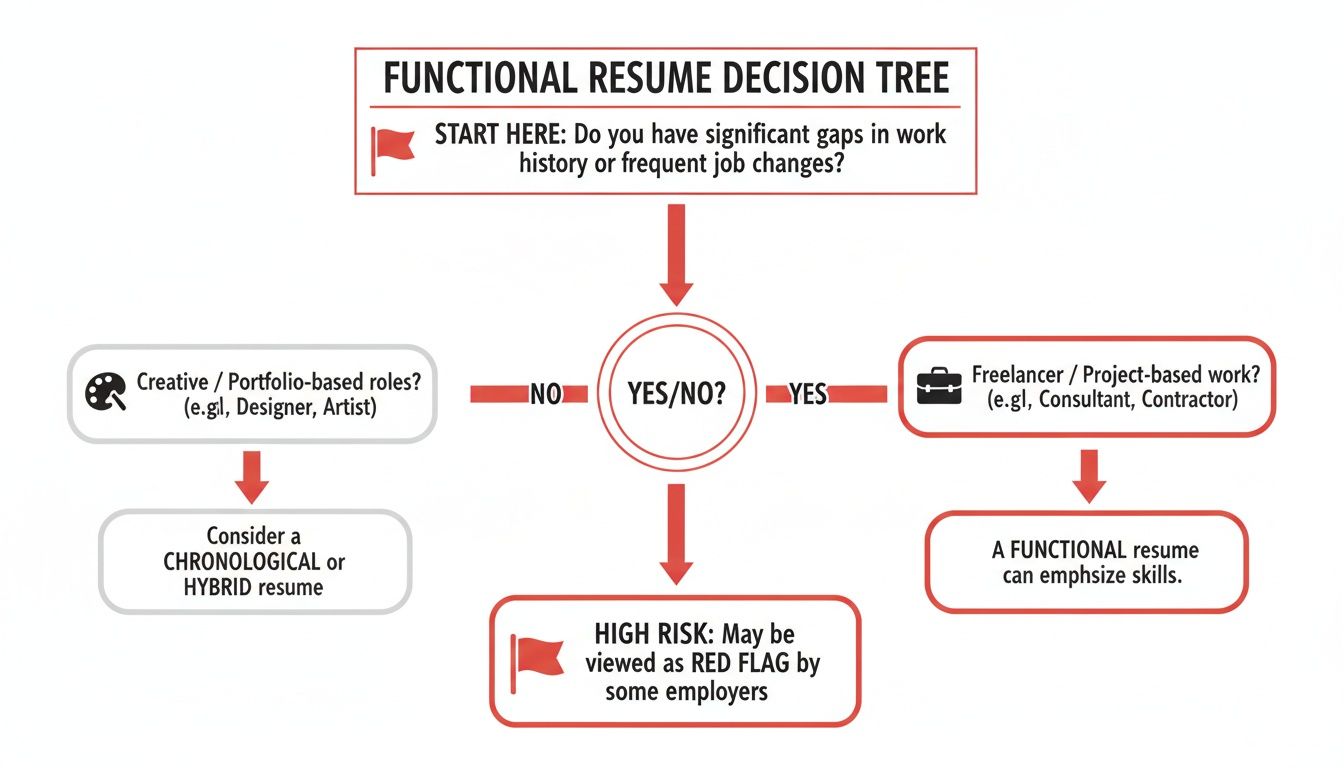
The key takeaway is that most job seekers should avoid the functional format. It can create suspicion.
For most people, the chronological resume is the safest and most effective choice. When you are ready to build yours, using a professional tool makes a huge difference. GainRep's resume builder provides ATS-friendly templates. They ensure your career story gets told clearly and effectively.
Optimizing Your Resume for Recruiters and ATS
Picking the right resume format is just the first step. Now, you have to get it past the gatekeepers. These include both automated systems and human decision-makers. The goal is to make your resume easy for both Applicant Tracking Systems (ATS) and recruiters to see your value.
An ATS is software that scans your resume for keywords and experience. If your resume is not structured correctly, it could be rejected. A person may never even see it. Over 75% of large companies use this software. Making your resume ATS-friendly is not optional.
Making Your Chronological Resume Shine
The chronological format is what recruiters expect. You need to make it count. The trick is to showcase measurable accomplishments, not just list duties.
- Lead with Action Verbs: Start every bullet point with a powerful verb. Use words like "Managed," "Executed," or "Increased." This frames your experience in terms of what you did.
- Quantify Everything You Can: Numbers are powerful. Do not just say you "managed social media." Instead, say you "Grew social media engagement by 40% over six months." It tells a much better story.
- Mirror the Job Description: Find keywords in the job posting related to skills and qualifications. Weave those exact phrases into your resume. This helps you pass the ATS scan.
Minimizing Risks with a Hybrid Resume
If you are a career changer using a hybrid format, your mission is to highlight transferable skills. You must do this without raising red flags. A clumsy hybrid resume can look as suspicious as a functional one.
The secret to a great hybrid resume is keeping the work history section crystal clear. Even if you lead with a skills summary, never bury your employment timeline.
To play it safe, make sure your work history lists the company name, your title, and dates of employment for every role. This transparency gives recruiters the context they need. It also lets your skills take center stage.
While you focus on the document, do not forget your online presence. A professional LinkedIn profile picture can make a huge difference. You can even use tools that generate AI headshots for LinkedIn to create a strong, professional image.
Let GainRep Handle the Optimization
Trying to tailor your resume for every application is a lot of work. The right tools can save you time and give you an edge.
The templates in GainRep's resume builder are designed to be ATS-friendly. They use clean, simple formatting that automated systems can read easily. This ensures your qualifications get noticed.
Our AI Auto-Apply tool takes it a step further. It intelligently scans your resume to understand your skills. Then it finds jobs that are a perfect match. It will even apply for you and write tailored cover letters with AI. Using a GainRep resume with our AI auto-apply feature means your application is not just seen. It is perfectly positioned for the right roles.
Got Questions? We've Got Answers
Figuring out resumes can feel like learning a new language. You have made the big decision between chronological or functional. But smaller details can make or break your job search. Let's clear up some common questions.
Can I Use a Hybrid Resume Format?
Yes, and in many cases, it is a smart move. A hybrid resume leads with a powerful skills summary. This is like a functional resume. It immediately grabs a recruiter's attention. Right after that, it shows a traditional reverse-chronological work history.
This format is a game-changer for a few situations:
- Career Changers: It lets you put your most relevant, transferable skills first for your new field.
- Professionals with Diverse Skills: It's a perfect way to organize a wide-ranging skill set so it makes sense to a hiring manager.
- Those with Small Employment Gaps: By highlighting your abilities first, any minor gaps in your work history become less noticeable.
Think of the hybrid format as the best of both worlds. You showcase your key skills right away. You also give recruiters and the ATS the clear timeline they expect.
How Do I Explain Employment Gaps on a Chronological Resume?
Handle employment gaps with strategy and honesty. If you were out of work for less than a year, you can use years instead of months for your dates. For example, write "2022–2024." This simple tweak can make short breaks nearly invisible.
For longer gaps, address them directly but positively.
One thing to never do: use a functional resume just to hide an employment gap. Recruiters spot this easily. They often assume you have something to conceal. Honesty is always the better policy.
You could add a simple line item like "Professional Development." Then list any courses or certifications you earned during that time. If the break was for personal reasons, something like "Planned Career Break" works well. The goal is to show you were proactive, not just leaving a blank space.
Is a Functional Resume Ever a Good Choice?
Almost never. The hard truth is that most recruiters and every ATS are built to read chronological resumes. A functional resume often gets scrambled or rejected by the software. A human may never see it.
Hiring managers are also wary of them. They tend to assume the candidate is covering up red flags. These include job-hopping, a lack of direct experience, or major employment gaps. The only rare exceptions might be for highly creative, portfolio-driven fields. In these cases, a standard work history is less important. For over 99% of job seekers, sticking with a chronological or hybrid resume is a much safer, more effective choice.
For more deep dives into job search tactics and career growth, you'll find great material on BuddyPro's comprehensive career blog.
How Can GainRep Help Me Create the Right Resume?
GainRep takes the guesswork out of the process. Our platform includes a professional resume builder with optimized templates. They are designed for the chronological format, guaranteeing they are ATS-friendly. It helps you build a sharp, modern resume without stress.
Better yet, our AI Auto-Apply feature works seamlessly with a clear, chronological resume. The AI scans your work history and skills to find perfect-fit jobs and then applies for you. A well-structured resume from our builder gives the tool the best information. This seriously boosts your chances of landing more interviews. Your job application process becomes faster and more effective when you let technology handle the heavy lifting.
Ready to build a resume that gets you noticed? With GainRep, you can create a professional, ATS-friendly resume. Then let our AI handle the work of finding and applying to the best jobs for you. Take the stress out of your job search with our AI auto-apply feature.
