

The term "professional networking" can sound formal and intimidating. It might bring to mind awkward talks at corporate events. But it's not really about that.
Networking is about building real connections with people in your field. It is not about collecting business cards or asking strangers for a job. Think of it as creating a personal advisory board. This is a trusted circle of people you can ask for advice. You can share ideas with them. They can also point you to new opportunities.
Demystifying Professional Networking
Forget the corporate jargon. Networking is a human skill. It is not a business school exercise. Anyone can become good at it.
A helpful way to think about it is to imagine you're building a personal library of experts. Each new person you connect with is like a new, valuable book. When you face a problem or need a new idea, you know which "book" to consult. This mindset changes your focus from "what can I get?" to "what can we share and learn together?"
To make it clearer, let's look at what networking is and what it is not.
Networking at a Glance
| What Networking Is | What Networking Is Not |
|---|---|
| Building genuine, long-term relationships. | A one-time transaction or asking for a job immediately. |
| A two-way street of giving and receiving value. | Just collecting as many contacts as possible. |
| Being curious about others and their work. | Only reaching out when you need something. |
| Actively listening to learn from different perspectives. | A formal, scripted conversation you have to memorize. |
Seeing it this way helps remove the pressure. It is about mutual respect and support, not a scorecard of favors.
The Growing Importance of Connections
This relationship-first approach is not just a nice idea. It is becoming a huge part of the professional world. The global professional networking market is expected to grow from USD 65.64 billion in 2025 to USD 201.12 billion by 2030. That is a fundamental shift. You can read the full research about the professional networking market to see how critical these connections are.
Professional networking is less about what you can get. It's more about what you can give and learn. It is a two-way street built on trust, respect, and shared knowledge.
Good networking comes down to being genuinely interested in other people. It means you offer help as often as you ask for it. If you do that, you will build a strong community. This community will support you throughout your career.
Why Networking Is So Important for Your Career
Professional networking is about more than just finding your next job. It is your entry into the hidden job market. This is the large pool of jobs filled through referrals. These roles are often never posted on public job boards.
A strong network is also your best source for real-world mentorship. Having experienced professionals who can offer honest advice on career decisions is invaluable. They have been there and made mistakes. They can help you avoid common traps.
Unlocking Real Career Benefits
Building relationships also helps you build a reputation. When you share knowledge and help others, you become known as a reliable person in your field. This can lead to unexpected collaborations, speaking opportunities, and a faster path to promotion.
The data supports this. A large 80% of professionals view networking as vital to their success. These connections lead to an estimated 122 million interviews and 35.5 million jobs. Yet, only 41% of people actively try to expand their network. This leaves a big opportunity for those willing to make an effort. For more details, you can look at the full networking research and stats.
Think of your network as both a career safety net and a launchpad. It is there to support you during tough times and to propel you toward new opportunities.
The Power of Giving and Receiving
A good network is a powerful circle of mutual support. These are the people you can discuss ideas with. You can get a fresh perspective from them. They will also celebrate your successes. Here are a few direct benefits:
- Insider Information: You learn about industry trends, company culture, and new projects before others do.
- Skill Growth: You can learn new skills and gain insights from the experts in your network.
- A Real Confidence Boost: Knowing you have supportive peers and mentors makes it easier to take on big challenges.
Every genuine connection you make adds strength to your career. It makes your professional journey less about surviving and more about thriving.
Proven Methods for Effective Networking
Building a professional network requires a plan. You can create powerful connections in many places. These include online communities and in-person events. Each environment offers a different way to meet people who can help you advance.
Online platforms are a good place to start. Sites like LinkedIn are great for connecting with colleagues. More focused communities like GainRep allow for deeper career discussions. The key is to be an active participant, not just a passive observer.
Face-to-face interaction is also very valuable. Industry conferences, local meetups, and workshops are great for starting natural conversations. These events help you build a genuine connection that is hard to create online. Just be prepared to listen more than you talk.
This infographic shows how important networking is for your job search.
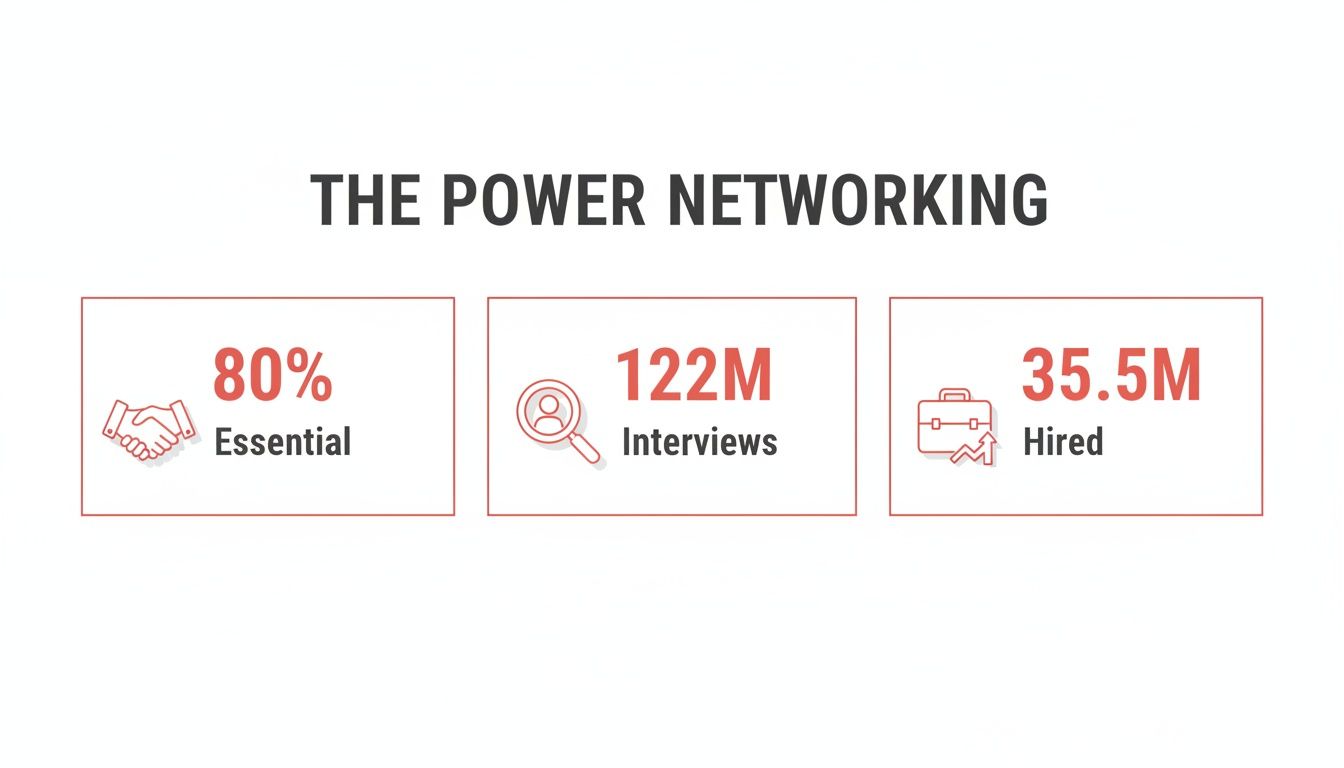
The data is clear. A significant 80% of professionals believe it is essential. It also directly leads to millions of interviews and job offers.
Mastering the Informational Interview
One of the most effective networking tools is the informational interview. This is not a job interview. It is a short, casual chat. You ask for advice from someone in an industry or role you are interested in.
These conversations are very valuable. You get insider information and make a good impression. You do this without the pressure of a formal interview. Most people are happy to share their story and offer guidance. They appreciate it when someone shows real interest in their work.
An informational interview is your chance to learn from someone's story. It's about gathering intelligence and building a relationship, not asking for a job.
To do this well, follow these simple steps.
- Find the Right People: Use LinkedIn or your alumni network. Look for professionals whose careers you admire. Find people who are a step or two ahead of where you want to be.
- Send a Quick, Clear Request: Write a short, respectful message. Introduce yourself. Say what you admire about their work. Ask for just 15-20 minutes of their time to hear about their journey.
- Come Prepared with Good Questions: Research their background before you meet. Prepare a few questions about their role, the company culture, and important skills in their field.
- Always Say Thank You: Send a follow-up note within 24 hours. A simple thank-you note shows your gratitude for their time and advice. It makes a lasting impression.
This approach shows you are professional and respectful. This leaves a positive, lasting impression. To improve your ability to build connections, explore proven business networking strategies that focus on quality over quantity.
Your First Steps to Building a Strong Network
Building a professional network from scratch can feel difficult. It does not have to be. The key is to focus on small, consistent actions.
Think of it like tending a garden. You plant a few seeds, give them attention, and watch them grow over time. Breaking the process into simple steps makes it feel more manageable.
Create Your Networking Game Plan
Starting is often the hardest part. Follow these five steps to build a solid foundation. Remember, the goal is not to collect contacts. The goal is to be intentional and authentic in every interaction.
1. Define Your Career Goals
You must know your goals before you reach out to anyone. Are you trying to get a promotion, change industries, or learn a new skill? Clear goals help you identify who you need to talk to. This makes your efforts more focused and effective.
2. Sharpen Your Online Presence
Your profiles on platforms like LinkedIn and GainRep are your digital introduction. Make sure they are up-to-date and professional. They should clearly show who you are and what you want. A polished profile does half the work for you.
3. Start with Familiar Ground
You do not have to start by contacting complete strangers. Begin with people you know. Reach out to alumni from your university, former colleagues, or people with similar hobbies. These connections are often more receptive. They offer a low-pressure way to practice your approach.
Your resume is a powerful networking tool. Having a polished, professional document ready to share makes a fantastic first impression when a new connection asks for it. You can build an impressive one with a dedicated resume builder at https://www.gainrep.com/resumes.
4. Craft a Simple Outreach Message
Keep your first message short and friendly. Introduce yourself. Mention how you found them or what you have in common. Make a simple request, like a quick 15-minute chat to learn about their career journey.
5. Master the Follow-Up
A relationship does not end after one conversation. Always send a thank-you note after you chat. Stay in touch by sharing a relevant article or congratulating them on a recent achievement. These small actions turn a single conversation into a lasting connection.
How Modern Tools Can Supercharge Your Networking
Technology has made professional networking much easier and more efficient. Modern platforms help you connect with the right people in a more meaningful way.
Tools like GainRep have features like skill endorsements and career-focused discussions. They help you build credibility and find your professional community without the usual awkwardness. These tools cut through the noise and lead you to valuable conversations.
Leveraging The Big Players
Some platforms have become industry leaders for a reason. LinkedIn now has 1.2 billion members worldwide. This makes it a powerful tool for connection. The data shows its impact: 122 million users got interviews, and 35.5 million were hired through connections on the site. You can find more insights about the impact of LinkedIn on hiring.
Using these tools effectively means more than just having a profile. It means actively participating. Share your knowledge, join discussions, and show your expertise to build a strong professional reputation.
To get the most out of these platforms, you need to understand how they work. For example, learning how to effectively post articles on LinkedIn is a great way to build authority and attract the right connections. You are showing your expertise, not just talking about it.
When your networking leads to job opportunities, the right tools can help you succeed. A professional resume builder ensures you can quickly create an outstanding document. It helps you be ready to seize any opportunity that comes your way.
Your Networking Questions, Answered
Starting with networking can feel a bit awkward. Many people have the same questions about how to do it right. Let's address some common questions to help you start with confidence.
How Many Connections Do I Really Need?
Forget about the number of connections. Quality is more important than quantity.
Having 50 strong, genuine connections is more valuable than having 500 contacts you barely know. A smaller, engaged network is your real support system. Focus on building real relationships with people in your industry or in roles you admire. Aim to add a few meaningful contacts each month instead of collecting hundreds of random names.
Can Introverts Actually Be Good at This?
Yes, absolutely. Networking is not just about attending crowded events. Introverts often have an advantage because they excel at one-on-one conversations. These conversations build the deepest connections.
If you are more reserved, try these strategies:
- Use Online Platforms: Use sites like LinkedIn or GainRep. You can write thoughtful messages and join discussions from a comfortable space.
- Keep it Short: Ask for a quick, 15-minute online chat. It is a low-pressure way to connect. These structured conversations can feel less draining than open-ended socializing.
- Play to Your Strengths: Introverts are often great listeners. Use this skill. Ask good questions and make the other person feel heard. This is one of the best ways to build a connection.
How Do I Ask for Help Without Sounding Pushy?
The key is to give before you receive. You must build the relationship first.
Offer help, share a useful article, or engage with their posts online. This builds goodwill. It shows you see them as more than just a means to an end.
When you do need help, like asking for a referral, be direct but make it easy for them. Send your resume and a short, personalized note explaining why you are a good fit. Always say thank you, no matter the outcome.
How Does Networking Actually Help Me Land a Job Faster?
A strong network gives you access to the “hidden job market.” These are jobs filled through referrals before they are posted publicly.
When someone in your network recommends you, it gives your application immediate credibility. It can help you bypass the initial screening process and get an interview.
When you find promising job openings, you need to act quickly. Having the right tools makes a big difference. For instance, GainRep's AI Auto-Apply feature helps you send out tailored applications much faster. It automates the job application process, saving you valuable time.
Ready to build a professional reputation that opens doors? GainRep gives you the tools you need, from securing powerful endorsements to creating a resume that stands out. Start building a network that truly works for you by exploring our career-focused community.
