What is the point of a cover letter? Your resume already lists all your skills and experience. So, why write one?
Think of it this way. Your resume is a list of ingredients. Your cover letter is the recipe. It is your first handshake. It shows the person behind the bullet points. A cover letter connects your skills to a specific job.
Your Cover Letter Is Your First Handshake

Many job seekers see the cover letter as just another task. This is a missed opportunity. A resume is a collection of facts. It shows what you did and where you did it. A cover letter is a persuasive conversation. It lets you show your personality and excitement for the role.
This letter is your direct line to the hiring manager. It is where you explain why you want the job. You are not just listing your qualifications. You can highlight a key achievement from your resume. Then, you can explain how it solves a problem the company faces.
The Core Functions of a Cover Letter
A great cover letter does more than repeat your resume. It builds on your most relevant qualifications. It proves you have researched the company. This extra effort can make a big difference.
The numbers support this. A well-written cover letter can increase your chances of getting an interview by 49%. Research from The Interview Guys blog shows that candidates with a tailored letter are 1.9 times more likely to land an interview. A cover letter helps you build a strong case for yourself.
Here is a quick look at what your cover letter does for you.
The Core Purposes of a Cover Letter at a Glance
This table shows the main jobs of a cover letter. It makes clear why it is a key part of your application.
| Purpose | Why It Matters |
|---|---|
| Introduce Yourself Personally | It shows personality and enthusiasm a resume cannot capture. |
| Connect Skills to Job Needs | You directly explain how your experience solves the employer's specific problems. |
| Demonstrate Genuine Interest | It proves you researched the company and are not just sending mass applications. |
| Explain Unique Situations | It gives you space to provide context for career changes or employment gaps. |
A cover letter lets you tell a story your resume cannot. It connects your past accomplishments to the company's future needs. This makes you a more memorable candidate.
How to Go Beyond Your Resume Bullet Points
Your resume is the highlight reel. It lists your career facts in short, powerful statements. A cover letter's job is to tell the story behind those facts. This adds context and makes you memorable.
Think about a standard bullet point like, "Managed social media campaigns." This is informative but does not create a connection. Your cover letter brings that statement to life. It shows the person behind the accomplishment.
Turning Facts into Stories
A cover letter lets you go deeper than just restating your resume. You can talk about a specific campaign you led. You can describe the challenge, your strategy, and the results. This narrative connects the dots for a hiring manager.
It shows them not just what you did. It shows how you think and why your work matters to their company. This is your chance to frame your achievements as solutions to their problems.
By telling a short, impactful story about a key achievement, you give the hiring manager a clear example of your problem-solving skills in action. This makes your value tangible and easy to remember.
Selecting Your Best Achievements
You do not need to tell a story for every bullet point on your resume. The key is to be selective. Read the job description carefully. Figure out the company's biggest challenges. Then, pick one or two of your past achievements that address those issues.
Here is a simple way to frame your story to get their attention:
- Set the Scene: Briefly explain the situation or the problem. (e.g., "Our online engagement was flat.")
- Explain Your Action: Detail what you did to fix it. (e.g., "I launched a video series targeting a new audience.")
- Showcase the Result: Use numbers to prove your success. (e.g., "This boosted engagement by 35% in just three months.")
This storytelling approach is a powerful way to show your potential impact. For more help building a resume that spotlights your best work, check out our resume-building resources.
Why a Cover Letter Can Make or Break Your Application
Imagine two candidates with almost identical resumes. What sets them apart? Often, it is the cover letter. It is your one chance to speak directly to the hiring manager. You can show you have put in the work and are not just sending generic applications.
A great cover letter can make a good resume even better. A lazy, generic one can send a great resume to the trash. Taking the time to write a good one is a smart move. It shows your communication skills and real interest in a way a resume cannot. This single document can get you in the door.
The Deciding Factor
One survey of hiring managers found that 49% believe a compelling cover letter can help a candidate with a weaker resume get an interview. On the other hand, 18% said a bad cover letter is enough to disqualify a strong applicant. These cover letter statistics show how much it matters.
This tells us that your letter often becomes the tiebreaker. It is the final piece of the puzzle that can put you ahead of the competition.
The biggest mistake you can make is using a generic template. The whole point of a cover letter is to be personal. It’s your opportunity to prove you’ve done your homework and are genuinely excited about this specific job.
Here are a few simple rules to follow:
- Do: Focus on the specific needs mentioned in the job description.
- Don't: Send a letter with typos or grammar errors. It looks sloppy.
- Do: Let your personality and genuine enthusiasm show.
- Don't: Just repeat the bullet points from your resume. They have already read that.
It all comes down to whether you can write engaging content that makes someone want to meet you. A thoughtful, tailored letter shows you are a serious, detail-oriented person. That is the kind of candidate employers want to interview.
Structuring Your Cover Letter for Maximum Impact
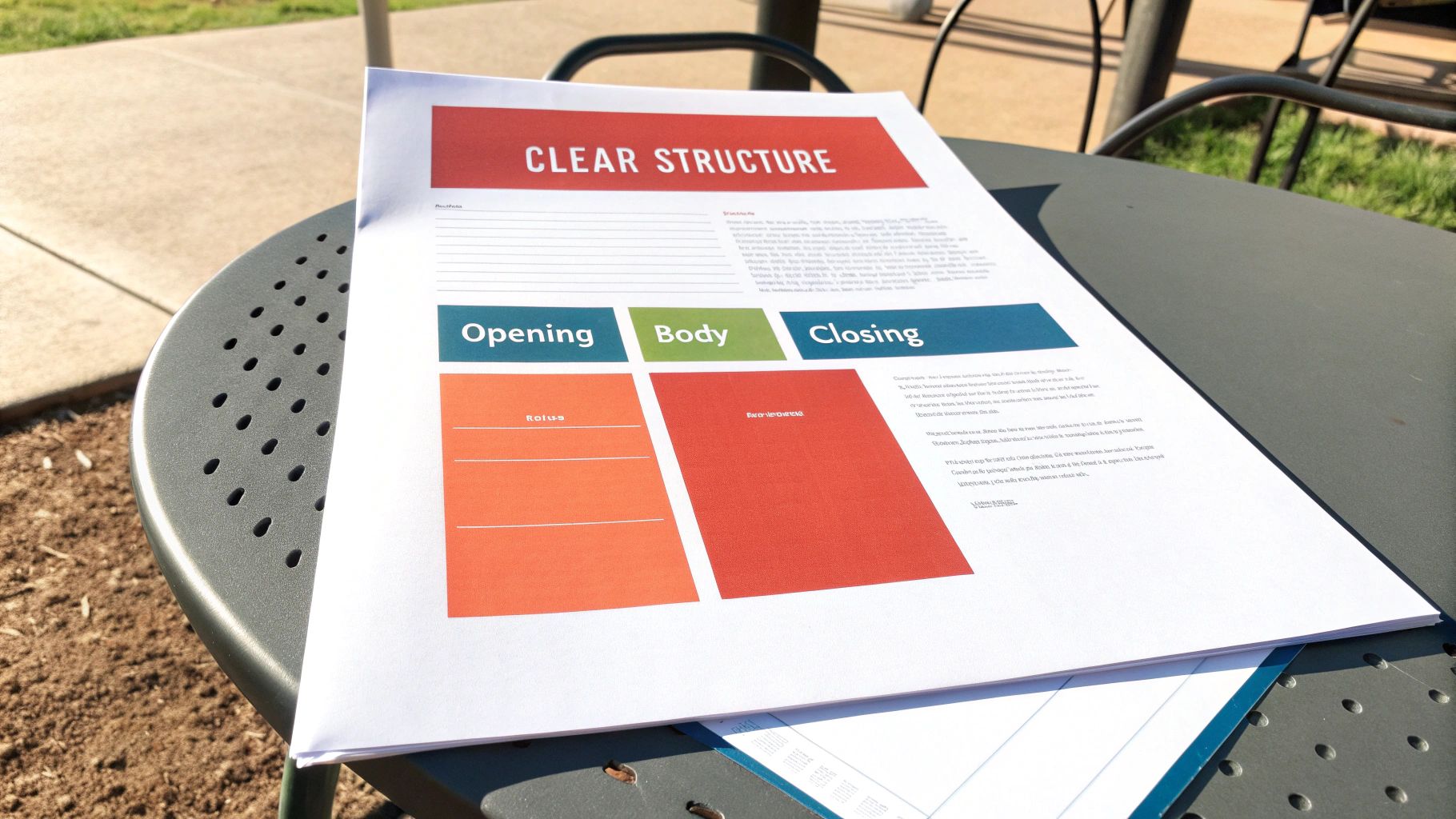
A well-organized cover letter is easier for a busy hiring manager to read. Think of it as a short, three-act play. It has an opening, a body, and a closing. Each part has a specific job. Together, they build a strong case for why you are the right person for the role.
Getting this structure right is a huge part of a cover letter's purpose. It is not just about what you say, but how you present it. A clear flow guides the reader through your points. It makes your qualifications easy to understand and remember.
The Opening Hook
Your first paragraph is your handshake. It needs to be direct and engaging. Your goal is to grab the reader's attention immediately. Make it clear why you are writing.
Start by stating the exact role you are applying for. Then, add a sentence that shows your excitement about the position or the company. This proves you have done your research. It shows you are not sending out generic applications.
The Body Paragraphs
This is where you make your case. Use one or two paragraphs to highlight your most relevant skills and experiences. Do not just list them. Connect them directly to the needs in the job description.
This is your chance to tell a short story about a key accomplishment. Show how a past success can solve a future problem for them. This turns your experience from a simple fact into a tangible benefit for the company.
The Confident Closing
Your final paragraph should wrap things up with confidence. Repeat your interest in the job. Explain again why you believe you are a strong fit. Most importantly, include a clear call to action.
This simply means you politely ask for an interview. You want to talk more about what you can bring to the team. End with a professional closing like "Sincerely" and your typed name. For a deeper dive, check out these practical tips for writing a cover letter.
The Power of Tailoring Your Cover Letter to Each Job

Here is one of the biggest mistakes in a job search. Do not send the same generic cover letter for every application. Hiring managers can spot a template from a mile away. It signals a lack of real interest.
Think of it like getting a form letter versus a handwritten note. Which one feels more valuable? Customizing your letter proves you have done your homework. It tells the recruiter you understand the company. It shows you have thought about the role and how you can fit in. This simple effort can put your application at the top of the pile.
How to Customize Your Letter Effectively
Tailoring your cover letter does not mean starting from scratch every time. It means being strategic. The goal is to draw a direct line between your skills and the job's needs. You show them you are not looking for any job. You are interested in this job.
When two candidates have similar resumes, the one who makes a personal connection often wins. A well-crafted letter tells a compelling story. It can show you align with their values. It can even explain a gap in your career history. You can discover more insights about the impact of a personal connection from recruiters.
Here is a quick guide to get it right:
- Do Your Research: Spend five minutes on the company’s website. What is their mission? What have they been in the news for recently? Mentioning something specific shows you are paying attention.
- Analyze the Job Description: Find the top three or four skills they want. Use their exact words in your letter. Give a quick example of how you have used those skills.
- Connect Your Value: Do not make them guess. Clearly state how your background makes you the perfect person to solve their problems or help them reach their goals.
This focused approach makes your application feel intentional and professional. The job application process can be long. To apply to more jobs with tailored applications, you can explore our AI auto-apply tool.
Common Questions About Cover Letters
Even after covering the basics, a few questions often come up. Let's tackle some of the most common ones. This will help you finish your application with confidence.
Do I Really Need a Cover Letter If It's Optional?
Yes, you almost always should. Think of it this way. When a company says a cover letter is optional, it is a test. They are giving you a chance to go the extra mile. Submitting one shows you are serious and willing to put in the effort.
Many recruiters rely on the cover letter to get the full story behind a resume. Skipping it means you miss a chance to make your case. You lose an opportunity to stand out from other candidates.
How Long Should a Cover Letter Be?
Keep it short and to the point. Aim for three or four tight paragraphs. This is usually between 250 and 400 words. The goal is to fit everything on a single page. It should not look like a wall of text.
Hiring managers are busy. A letter that gets straight to the point is more powerful than a long one. Show them you respect their time by being direct.
Who Should I Address My Cover Letter To?
Try to find a name whenever you can. A little research on the company website or LinkedIn can often reveal the hiring manager's name. A personal greeting like "Dear Ms. Chen" is much better than "To Whom It May Concern."
If you cannot find a name after searching, do not worry. Just use their title. A simple "Dear Hiring Manager" or "Dear Search Committee" is professional and works well.
What if I Have a Gap in My Employment History?
Your cover letter is the perfect place to address this. You do not need to write a long story. A brief, positive explanation can work wonders.
For example, you could mention that you spent that time building new skills through online courses. Maybe you were volunteering or focusing on family. Frame it in a way that shows you were still growing. Explain that you are now eager to get back to work. Addressing it directly shows honesty and self-awareness. These are qualities every employer values.
At Gainrep, we know that crafting the perfect application takes time and effort. Our tools help you stand out and land more interviews without the stress. To make your job search faster and more effective, check out our AI Auto-Apply tool.
